Forty-six years and 16 billion miles from home, Voyager 1 has gone quiet.
The spacecraft stopped sending data back to Earth on December 13, 2023. It can still receive commands. But the stream of scientific information that has flowed from the most distant human-made object in existence has cut out.
This is not the first glitch Voyager 1 has faced. It will not be the last. The machine was built in the 1970s. Its computers have less memory than a modern car key fob. That it still works at all is a kind of miracle of engineering patience.
NASA launched Voyager 1 on September 5, 1977, sixteen days after its twin, Voyager 2. The two spacecraft were designed for a four-year mission to Jupiter and Saturn. They kept going. Voyager 1 flew past Jupiter, then Saturn, then Saturn’s moon Titan. Each flyby sent back images and measurements that rewrote textbooks. The spacecraft revealed volcanoes on Io, a moon of Jupiter. It showed the intricate rings of Saturn. It gave humanity its first close look at Titan’s hazy atmosphere.
After Saturn, Voyager 1’s trajectory bent upward, out of the plane of the solar system. It had no more planets to visit. It kept flying.
In 2012, Voyager 1 crossed the heliopause. That is the boundary where the Sun’s bubble of solar wind ends and interstellar space begins. It became the first human object to leave the solar system. The data it sent back from that crossing changed how scientists understand the edge of the Sun’s influence.
Now the spacecraft sits at 172.59 astronomical units from Earth. One AU is the distance from Earth to the Sun. That is 25.8 billion kilometers, or 16 billion miles. A radio signal traveling at the speed of light takes more than 21 hours to reach Voyager 1. A reply takes another 21 hours to come back.
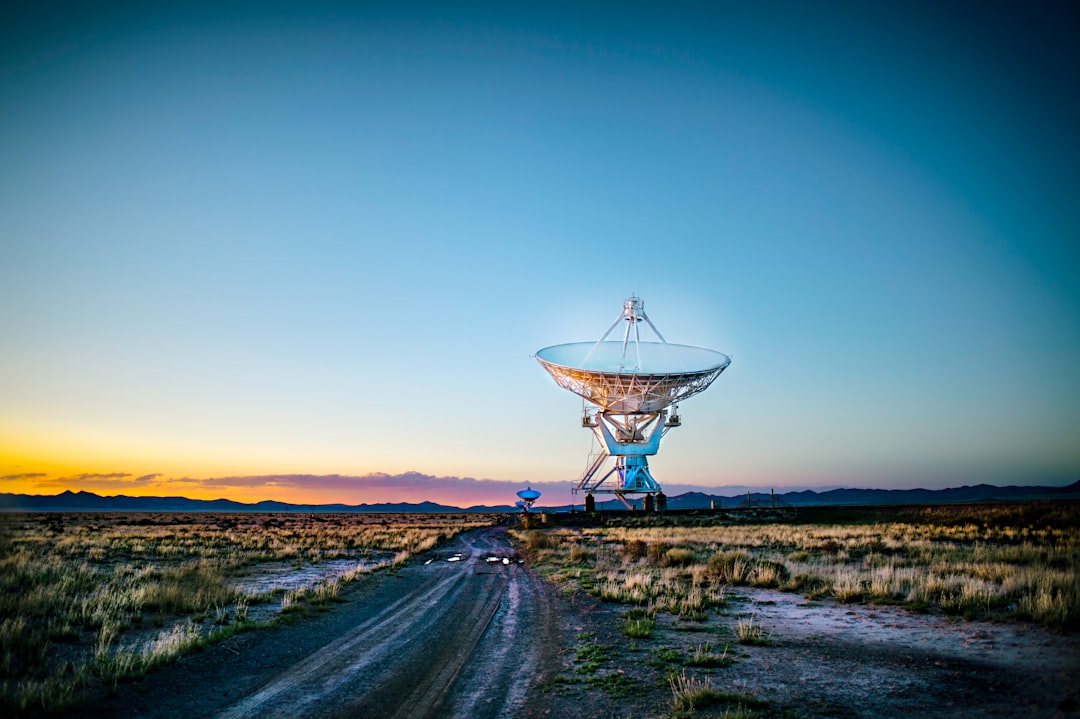
The NASA Deep Space Network handles that communication. It is a system of giant radio antennas in California, Spain, and Australia. They are the only way to talk to Voyager 1. They have been listening for decades. They are still listening.
The current problem is a technical issue with data transmission. The spacecraft’s flight data system, which packages information for sending to Earth, is not working correctly. The team at NASA’s Jet Propulsion Laboratory is working on it. They have solved similar problems before. Voyager 1 has a backup system for almost everything. But the spacecraft is old. Its wiring is old. Its power supply is old. The plutonium that fuels its radioisotope thermoelectric generators decays over time. Every year, there is a little less power to go around.
NASA has already turned off some instruments to save power. Others will have to go too, eventually. The science teams know this. They have known it for years. Every day Voyager 1 returns data is a day they did not expect to get when the spacecraft launched.
The Voyager program was conceived to study the outer solar system and the interstellar space beyond the Sun’s heliosphere. It has done that, and more. The spacecraft carries a Golden Record, a phonograph record with sounds and images of Earth, meant for any intelligent life that might find it. That record is still out there. The spacecraft is still out there. It just is not talking right now.
Engineers are trying to fix that. They have time. The spacecraft is stable. It is on course. It will keep flying whether it talks or not. But for the people who built it, who have spent their careers listening to its faint signal, the silence is hard.