For decades, fusion energy has been the promise that never arrives. Always thirty years away. Always a laboratory curiosity, not a power plant. That timeline just got compressed.
A German startup called Focused Energy has collected $240 million in Series A funding. The round was oversubscribed — meaning investors fought to get in. RWE, one of Europe’s largest utilities, led the charge. The money will go toward commercializing a laser-powered inertial confinement fusion system. This is not theoretical. The company has already run an experiment that produced net energy. That is the breakthrough. That is what drew the money.
Net energy from fusion means the reaction put out more power than it took to start it. For decades, scientists could not crack that. They could fuse atoms — in labs, in tokamaks, in giant laser arrays — but the energy cost of triggering the reaction always exceeded what came back. It was a physics problem that looked like a permanent dead end. Then it wasn’t.
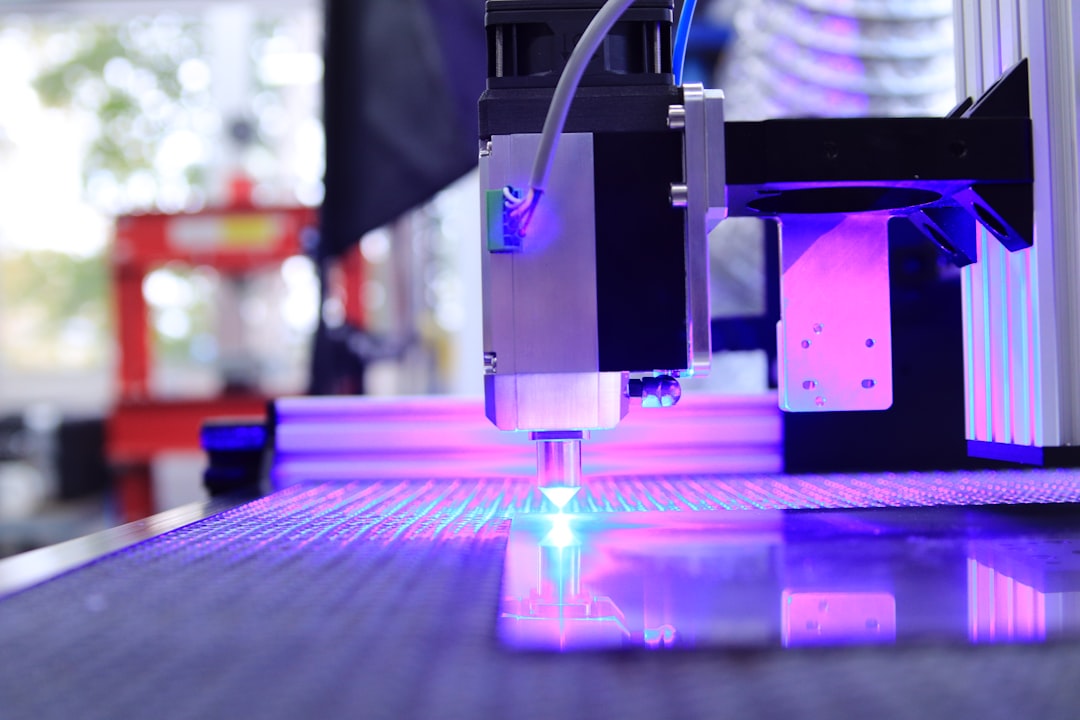
Focused Energy’s approach uses lasers. Compress a fuel pellet. Heat it to millions of degrees. Force hydrogen atoms to merge. The result is a tiny burst of energy that, scaled up and repeated fast enough, could run a city. That is the commercial vision. The $240 million is supposed to turn a historic physics experiment into something that sells electricity.
What is at stake is not just one company’s success. Fusion offers something no other energy source can match. No carbon emissions. No meltdown risk. No long-lived radioactive waste that must be buried for ten thousand years. Fuel is abundant — hydrogen isotopes can be extracted from seawater. A glass of water, in theory, could power a house for a year. That is the scale of what fusion promises.
But the gap between a net-energy experiment and a commercial reactor is brutal. Focused Energy must engineer lasers that fire many times per second, not once per day. It must build fuel pellets cheaply and reliably. It must design a chamber that survives repeated micro-explosions. It must connect the whole system to the grid and make power at a price people will pay. None of that is guaranteed.
The money says investors believe it can be done. RWE is a utility — it understands power plants, permitting, grid connections. Its involvement is not a bet on physics. It is a bet on deployment. The oversubscribed round means other investors agree.
Fusion investment has surged in recent years. Private money has poured into startups in the United States, Britain, Japan. Focused Energy is now among the best-funded. The German government has not committed public money to this particular project, but the private sector has decided the risk is worth taking.
If Focused Energy succeeds, the implications are enormous. A country that builds working fusion plants does not need to import natural gas. It does not need to worry about coal plant retirements. It does not need to cover entire landscapes with solar panels and wind turbines. Fusion is dense. A single plant could replace a coal station and run on water.
If Focused Energy fails — and most fusion startups have failed — the money is gone, but the knowledge remains. The net-energy experiment proved the physics works. Someone will commercialize it eventually. The question is who gets there first, and what happens to energy markets in the meantime.
Focused Energy is now worth watching. The company has the capital, the experiment, and a major utility as a partner. The next steps are engineering, not science. That is a different kind of hard. But it is also the kind of hard that, if solved, changes everything.