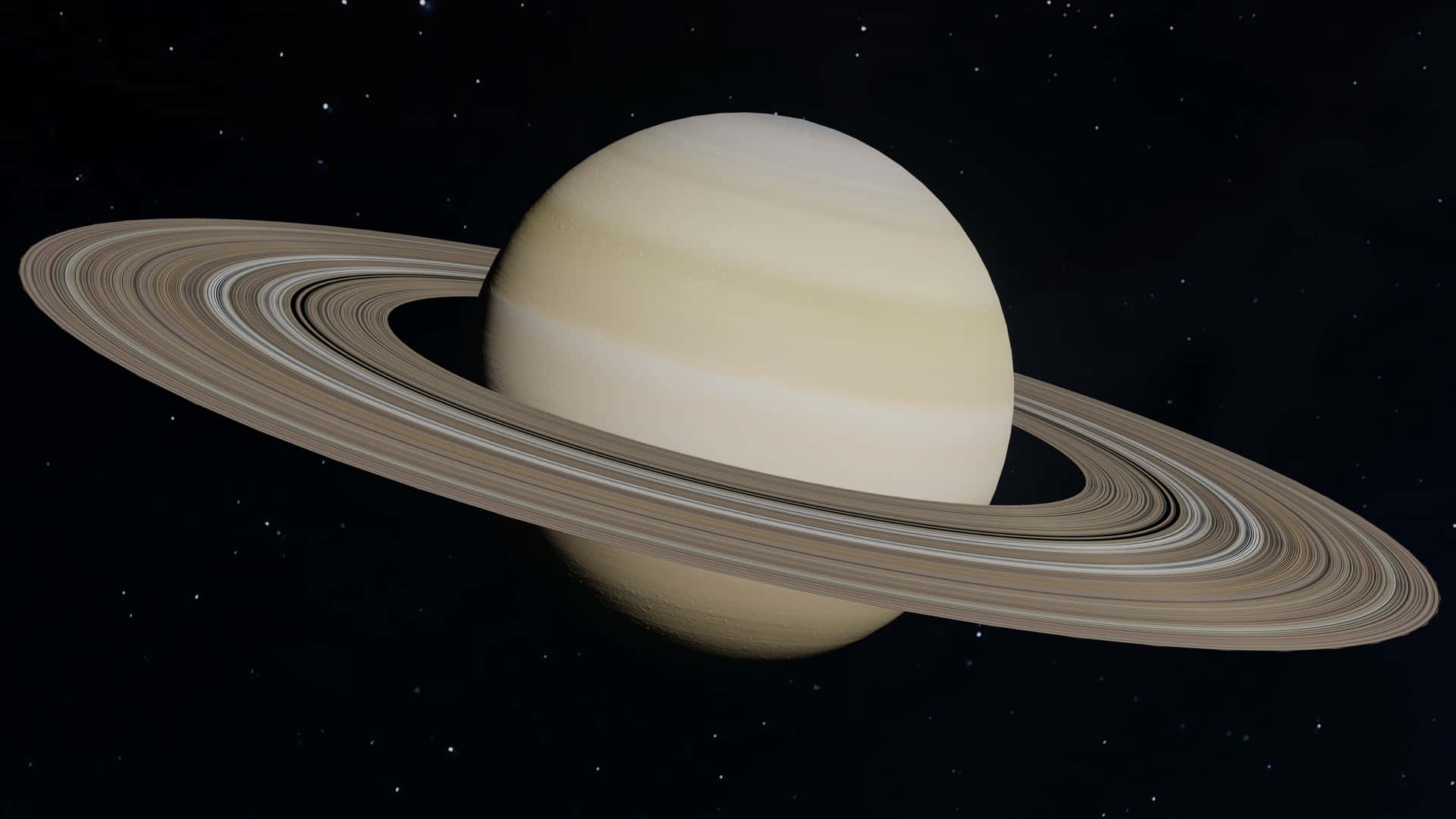
TEHRAN, June 6 — Saturn’s winds, famous for reaching extreme speeds, have been found to extend thousands of kilometers into the planet, a discovery that reshapes our understanding of giant gas planets. The analysis of data from the Cassini-Huygens mission reveals that the winds on Saturn are not just a surface phenomenon, but a deep-seated feature of the planet’s atmosphere, with equatorial flows possibly reaching depths of around 10,000 kilometers and high-latitude winds being shallower but still vast.
Below the clouds, winds can become even stronger than at the surface, a result of the planet’s unique composition, with no solid surface and a dense interior, combined with intense internal heat and rapid rotation, creating a planet-scale engine of continuous motion.
The Discovery
The deep flows of Saturn’s winds were detected by measuring tiny variations in the planet’s gravity field as the Cassini spacecraft passed close to the planet, a technique that allowed scientists to peer beneath the surface and uncover the true extent of the winds.
This finding has significant implications for our understanding of giant gas planets, suggesting that their weather is not a thin surface layer, but a phenomenon that is deeply intertwined with the body of the planet, with implications for studying Jupiter and distant exoplanets. Scientists were previously unsure whether Saturn’s jet streams were shallow weather or something far larger, but the new analysis provides a clear answer, revealing the winds to be a fundamental aspect of the planet’s atmosphere.
Implications and Future Research
The discovery of Saturn’s deep winds opens up new avenues for research, as scientists seek to understand the complex dynamics at play on the planet and how they compare to other gas giants in our solar system and beyond. As researchers continue to study Saturn and its unique features, we can expect a deeper understanding of the planet’s internal dynamics and its place in the broader context of our solar system, with potential breakthroughs in our understanding of planetary formation and evolution.
With this new knowledge, scientists will be able to refine their models of giant gas planets and make more accurate predictions about the behavior of these complex and fascinating worlds, paving the way for future discoveries and a deeper understanding of the universe.