
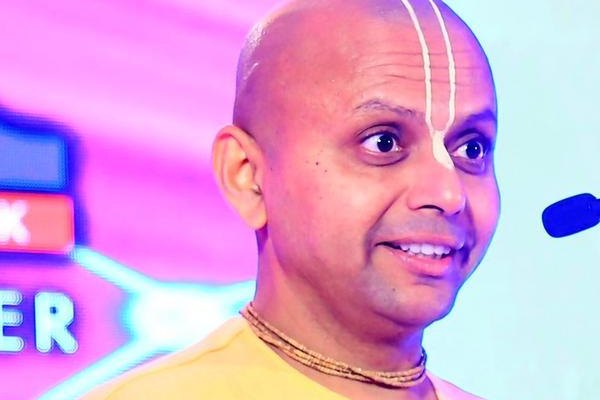
MUMBAI, June 27 — Gaur Gopal Das, the engineer-turned-monk who now speaks to millions about life and purpose, has a simple prescription for the noise of modern life: feed your mind wisely. “What you nourish will flourish,” Das says in his quote of the day, a line that lands with particular weight in an era of endless scrolling and algorithmic feeds. The monk, a former engineer who became a life coach and motivational speaker, is talking about something more fundamental than willpower.
He is talking about what we put in. From childhood, Das observes, we learn by absorbing what is around us.
Language, walking style, table manners, expressions, hand movements — almost everything we do is shaped by what we see. That does not stop when we grow up. Our area of interest, our habits, our friend circle, and the particular type of content we consume online define what grows in our minds and who we become.
The mind as a garden
Das compares the mind to a living garden. Whatever we consistently give attention to will usually grow stronger. Feed it learning, kindness, discipline, and hope, and we are more likely to become thoughtful and steady.
Feed it negativity, fear, comparison, and constant distraction, and those patterns grow too, shaping how we live and who we become. It is a metaphor that cuts through the complexity of modern psychology.
Many of us think mental strength is only about willpower, Das says. We tend to overlook the idea that it is also about input. What we read, watch, listen to, and repeat in our own minds matters more than we often realise.
Over time, these feedings to the brain can impact and drive our confidence, stress levels, focus, and even the way we treat others. For families and for patients struggling with anxiety or distraction, this reframes the problem.
It is not just about fighting bad habits. It is about choosing what to let in.
Relevance in an age of algorithms
Das’s message is particularly relevant today, he says. There is an information overload online, and social media algorithms influence our career choices. Once we begin consuming a particular category of videos, reels, or images in our feed, more content of that type is pushed toward us.
Modern life makes it easy to consume too much information and too little wisdom. Content can keep the mind busy but not always nourished.
The human side of this is what Das is reaching for. Behind the breakthrough of any personal change, he suggests, is the quiet, daily decision of what to watch, read, and listen to. For those who follow his work, the quote is a reminder that the most important filter is not the algorithm.
It is the one we apply ourselves.




