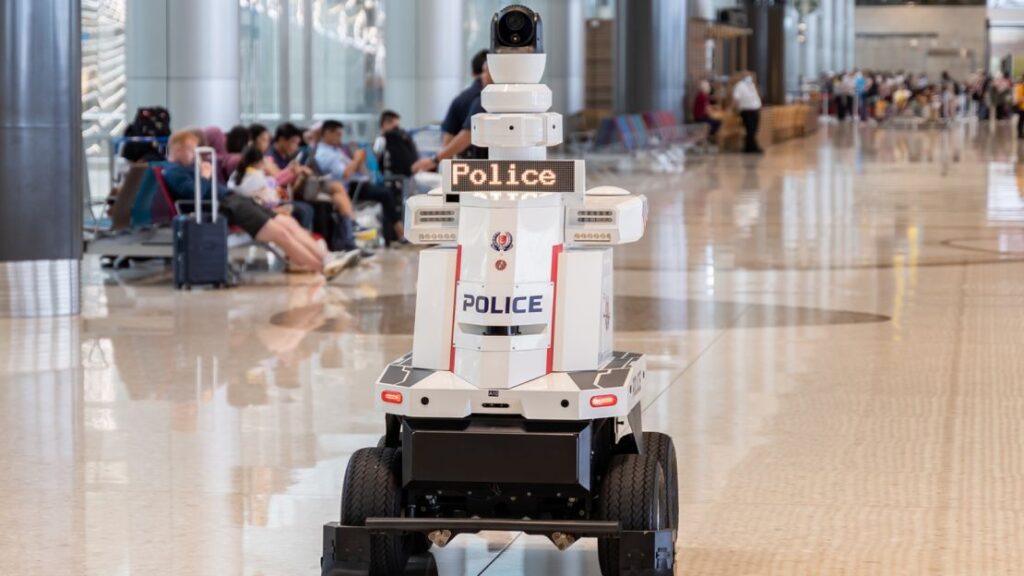
Xavier rolls on four wheels, carries 360 degree cameras and dozens of sensors, and has one job: catch people doing small things wrong. Singapore put the machine on patrol in one of its main districts for a three-week trial, according to a Daily Star report from early September 2021.
The target list is short and petty. Smoking where it is banned. Illegal hawking. Badly parked bicycles, and cycling on pavements. Xavier was also told to break up public gatherings of more than five people, which matched the city state’s strict Covid-19 rules at the time.
The mechanics are simple. When the robot spots a rule-breaker, it fires a real-time alert to a central command and control centre and barks orders through a loudspeaker. The Daily Star calls it AI-powered and says it roams the streets on its own, with no human steering it.
The case for the machine is manpower. Lily Ling, a director at the Singapore Food Agency who helped develop the robot, said ground robots “will help to augment our surveillance and enforcement resources.” Her example was illegal hawkers. Watching for them “can be manpower intensive as officers need to be deployed at various areas across the island,” she said, and robotics could make that work easier.
The catch is the setting. Singapore already watches its residents closely. Beyond ordinary CCTV, the government uses drones, sensors and facial recognition, and it can reach private mobile phone and internet data, a power that has drawn controversy.
Other cities have run into the limits of police robots. In April, the NYPD had to put down a robotic police dog after public backlash over privacy concerns and its cost.