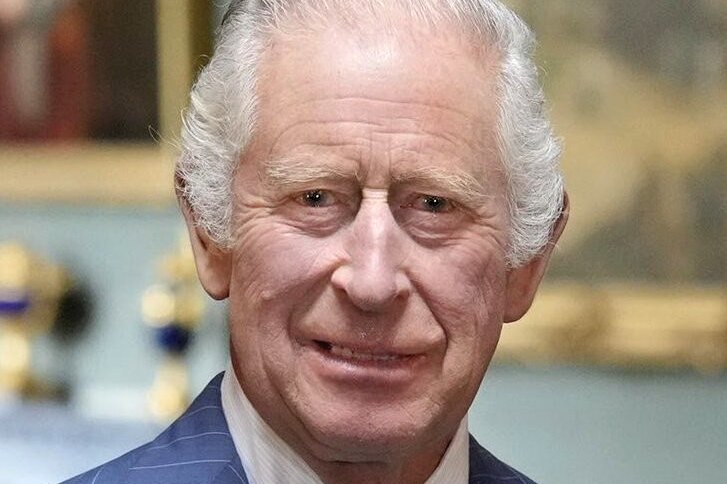
“I come not to be served but to serve.” With those words, spoken inside Westminster Abbey on Saturday 6 May 2023, Charles III began the service that made him king. He was 74, the oldest sovereign to be enthroned in the abbey and the 40th in line.
Archbishop of Canterbury Justin Welby placed St. Edward’s Crown on his head as he sat in the 700-year-old Coronation Chair. Before that, Charles had been anointed with oil from the Mount of Olives, a moment screened from view. He was handed the Sovereign’s Orb and other regalia. Camilla was crowned as queen.
The liturgy was Anglican and old, but it had been adjusted. A preface to the coronation oath said the Church “will seek to foster an environment where people of all faiths and beliefs may live freely.” Representatives of the Buddhist, Hindu, Jewish, Muslim and Sikh faiths took part for the first time, as did female clergy. Penny Mordaunt, leader of the House of Commons, carried the Sword of State, the first woman to do so in the procession. A Kyrie was sung in Welsh, a first at a coronation.
Charles has sought a smaller, less expensive monarchy, and the ceremony was shorter and smaller than his mother’s in 1953. The abbey held about 2,000 people, according to the Associated Press, among them Jill Biden, Olena Zelenska, French President Emmanuel Macron and eight current and former British prime ministers.
The royal family on show
Prince William knelt before his father near the end of the service, pledged loyalty and kissed him on the cheek. Prince Harry sat apart from that show of unity: he came alone, his wife Meghan and their children having stayed in California, and he left by car after the ceremony.
Welby invited those in the abbey to swear “true allegiance” and said viewers at home could pay homage too. That element was toned down after critics called it a demand for a public oath.
Afterwards Charles and Camilla rode in the Gold State Carriage to Buckingham Palace, escorted by 4,000 troops and military bands. Crowds cheered in the rain, and many of them had camped overnight. The king and queen waved from the palace balcony.
Cheers, shrugs and arrests
Not everyone cared. Cherie Duffy, in London from Anglesey, watched on television only because someone else switched it on. “There’s a general not-botheredness,” she said. Most Britons, the AP wrote, view the monarchy somewhere between apathy and mild interest, and support is waning, especially among the young.
Hundreds of republicans gathered to shout “Not my king.” The group Republic said several of its members, including its chief executive, were arrested as they arrived at a protest in central London. Metropolitan Police, who had warned of a “low tolerance” for disruption, reported 52 arrests. Human Rights Watch said arrests of peaceful protesters were “something you would expect to see in Moscow, not London.” The cost of the occasion, never given as an exact figure but in the millions of pounds, also drew complaints during a cost-of-living crisis.
In Cardiff, where the ceremony was broadcast at the castle, one crowd waved Union Jacks and another waved the Welsh flag and chanted against the king. A poll taken in April found 43 percent of Welsh respondents thought the monarchy was good for Britain and 24 percent disagreed.
Sources
- Coronation: King Charles III crowned with regal pomp and some shrugs
- King Charles III crowned with regal pomp, cheers and shrugs
- King Charles III coronation: Charles III Is Crowned King (Published 2023)