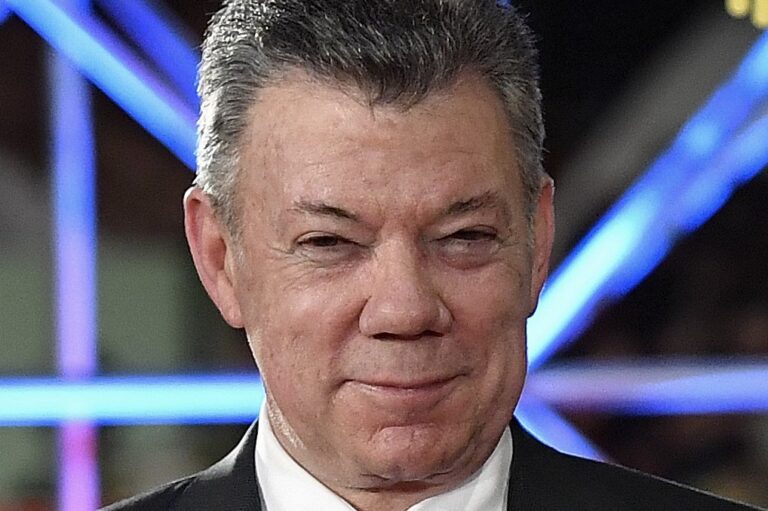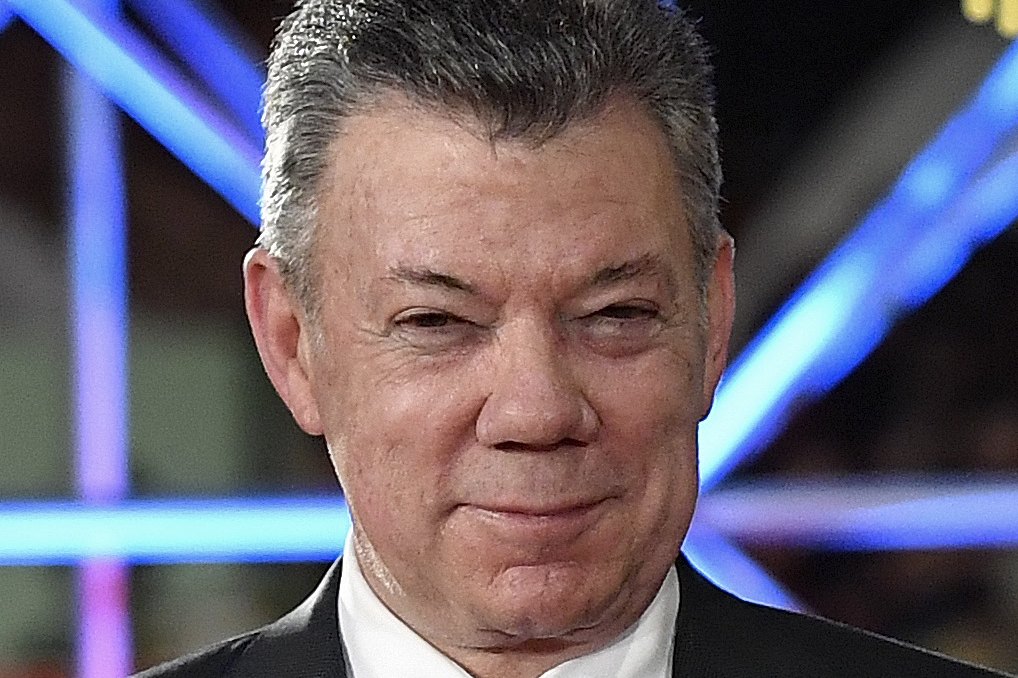
“I don’t think it’s a secret – the president himself said it – that the government is an enemy of the peace agreement. That’s very clear.” The man saying this, Juan Fernando Cristo, helped write that agreement.
Cristo was elected to the senate in 1998 and became interior minister under Juan Manuel Santos in 2014, then a lead government negotiator in the talks with the FARC. He served as interior minister again under Gustavo Petro in 2024. Now, with Abelardo de la Espriella in the presidency, he describes what he sees as a slow strangling of the accord rather than a repeal.
Money and empty chairs
The 2027 national budget, Cristo says, substantially cuts funding for the peace agreement. The JEP transitional justice court loses 20% of its budget. The government has not named a new peace commissioner or a director of the implementation unit, so, in his words, “these entities are headless.”
Why the back-door approach? The constitution and international commitments protect the agreement. “The government’s objective is to dismantle the agreement through the back door because they can’t do it through the front door.” At the UN Security Council, where the UK plays an important role, the government has asked for the UN Verification Mission to be reduced to a minimum focus on reintegration and security. It has also asked that oversight of rural reform be removed from the mission’s mandate. Cristo expects the UN to agree. “It is very difficult to reject a request from a country’s government,” he said, adding that the government also has the United States’ support.
Has the peace failed?
Foreign Minister Omar Bula has said there has been no peace since 2016. Cristo calls that naive. The foreign minister, he said, is “childish to think that signing the agreement meant conflict would end the next day. This is impossible.”
He points to the numbers instead: fewer kidnappings, fewer homicides, fewer deaths among soldiers and police, and calmer regions. The homicide rate fell between 2015 and 2026. He accuses Bula of counting every death in the country as a conflict death, traffic accidents and domestic violence included, to leave the impression of failure. “It’s a false narrative.”
He does not claim the peace is complete. Dissident groups and gaps in implementation have done damage in Catatumbo, Cauca and Nariño. Transformation in some territories, he admits, is “less than we’d hoped for.”
Land at the centre
For Cristo the deepest gap is land. Colombia’s armed conflict, he says, arose 60 years ago over land and the dispute never went away. Rural reform is the first point of the agreement, and it was meant for more than 10 million Colombian peasants who still live in rural areas, not for former FARC combatants. He says the new agriculture minister told congress that discussion of campesino issues had to end, and that the government favours large industrial agriculture projects. Petro’s government made progress, he says, but not enough. The new one will buy no more land for small farmers and fund no more title formalisation.
The 2027 budget will also cut state capacity to pay reparations under the Victims’ Law of 2011, which he helped create.
Where it began
Santos signed a revised deal with the FARC on 24 November 2016, after the “No” campaign led by Alvaro Uribe’s Democratic Center narrowly won the referendum on the first text. Both houses of Congress ratified it on 29 and 30 November. Santos had already been named the Nobel Peace Prize recipient on 7 October that year. The treaty brought deep divisions, and he left office with one of the lowest levels of popular approval ever. His successor, Ivan Duque, was a moderate critic of the peace deal.
Cristo also warns about a new anti-terrorism statute that the government has not yet presented to congress. The drafts he has seen, he says, are “very bad, very undemocratic,” and the Supreme Court of Justice and civil society groups have voiced concern.
Sources
- Juan Manuel Santos
- 'The goverment wants to dismantle the peace agreement': former foreign minister Cristo – justice for colombia
- Brazilian presidential runoff: Lula’s final reinvention? – Latinoamérica 21
- Has Colombia’s Historic Peace Deal Failed?
- Here’s what happened to Real Madrid youngster after his €3 million summer arrival
Photo: Cancillería de Perú on Flickr. (CC BY-SA 2.0)