
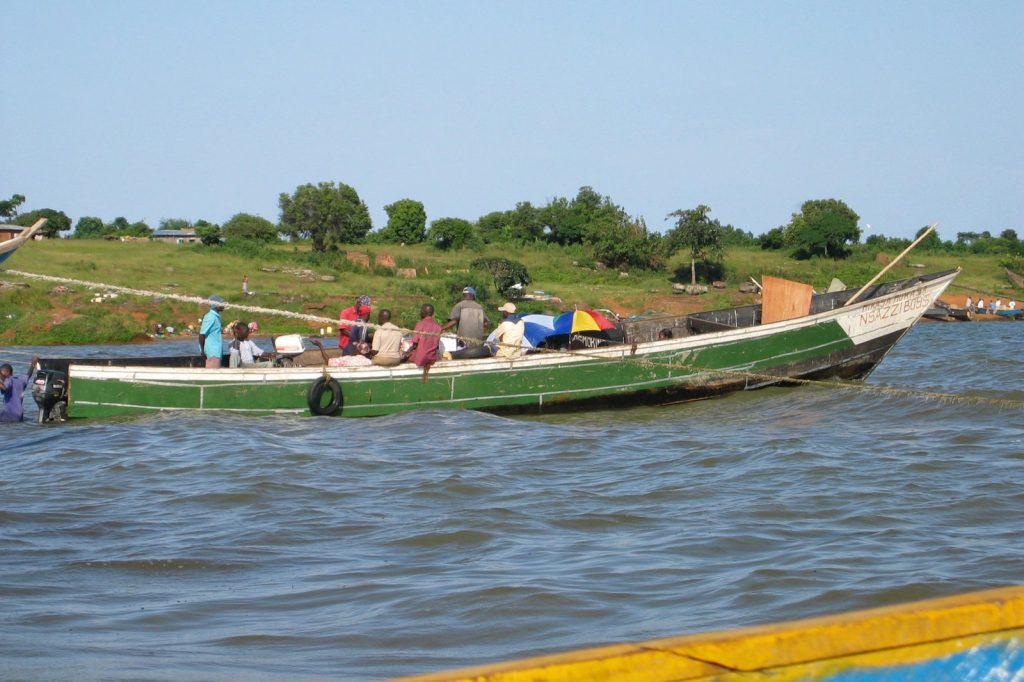
LAKE VICTORIA, Uganda — The cargo was charcoal. Twenty people are dead. Five are still missing.
Nine were pulled from the water alive. The boat went down in Ugandan waters, carrying food and the black, lightweight fuel that millions here cook with every day.
Charcoal is not an afterthought in this story. It is the center of it. The boat that capsized was hauling the stuff across Lake Victoria, one of the largest freshwater lakes in the world.
The same lake that gives life — fish, transport, trade — took it back on that crossing. Look at what charcoal means here.
It is a black carbon residue. You make it by heating wood or other plant material in very little oxygen. The process is ancient.
People have been doing it for centuries. You put the wood in a kiln or a closed retort. You heat it.
The water and volatile stuff boil off. What remains is nearly pure carbon.
It burns hot. It burns clean enough for indoor cooking. It is cheap.
It is available. That availability comes from wood.
Wood is abundant in many parts of Uganda and the wider region. So charcoal is what people use. It is not a niche product for weekend barbecues.
It is the everyday fuel for millions of households. The boat was moving that fuel. It was also carrying food.
That is the economic reality: food and fuel move together across the same dangerous water. The danger is the lake itself.
Lake Victoria is vast. It is shared by Uganda, Kenya, and Tanzania. Storms come up fast.
Boats are often overloaded. Safety regulations exist on paper but are rarely enforced on the water.
Night travel is common even though it is risky. This boat went down carrying a cargo that probably made it top-heavy. Charcoal is light, but a full load shifts.
A wave, a gust, a turn — and the balance is gone. Twenty people are dead. That is the number the authorities have confirmed.
Five more are still missing. That number could rise.
Nine were rescued. The survivors are the ones who made it out before the boat went under or were pulled from the water afterward. This is not the first such accident.
It will not be the last. The lake takes lives every year.
The reasons are always the same: bad boats, bad weather, bad enforcement. But the deeper reason is that people have no choice. They need to move goods.
They need to get food to market. They need to get charcoal to the people who cook with it. There is no railway.
There is no reliable road network across the water. There is the lake, and there are boats, and there is risk.
Charcoal production itself has its own costs. Cutting wood for charcoal drives deforestation. The kilns produce smoke and emissions.
But for the people who use it, those are distant concerns. The immediate problem is dinner.
The immediate problem is heat. Charcoal solves that problem. That is why it was on the boat.
That is why the boat was on the lake. That is why twenty people are dead. Rescue efforts continue.
The missing are still missing. The nine survivors are somewhere on shore, likely in a hospital or a police station, giving statements.
The families of the dead are beginning the work of mourning. The families of the missing are beginning the work of waiting. And somewhere else on Lake Victoria, another boat is loading charcoal.
Another captain is checking the sky. Another crossing is beginning.
The cargo has not changed. The need has not changed. The lake has not changed.




