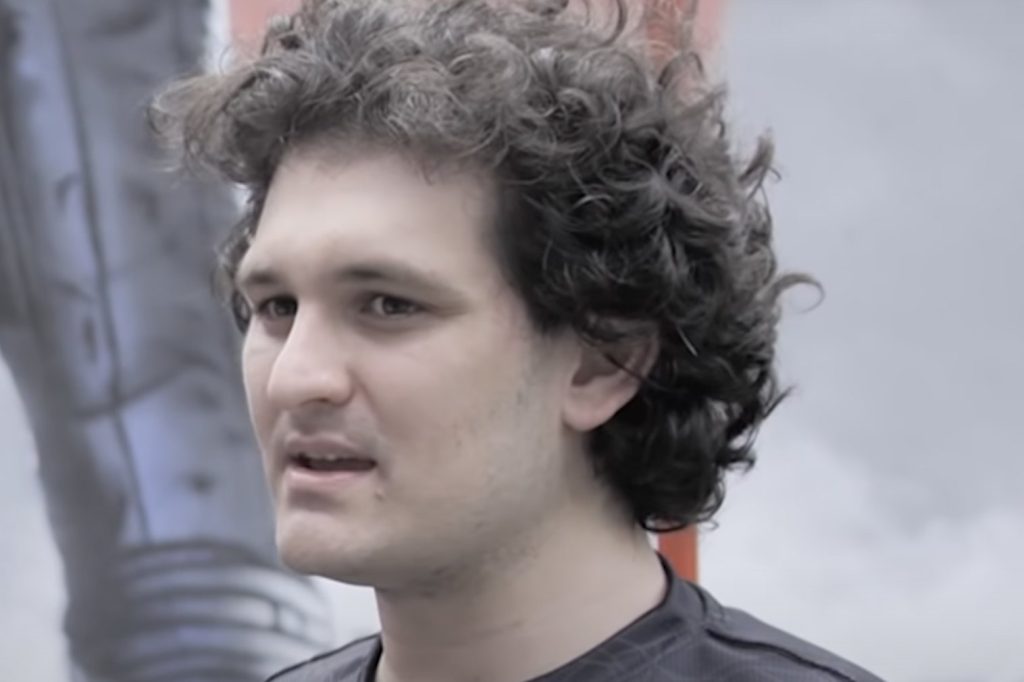
Before Judge Lewis Kaplan read out the sentence, Sam Bankman-Fried turned to the court and spoke quietly. “I’m sorry about that. I’m sorry about what happened at every stage,” he said, acknowledging that “a lot of people” felt “really let down.”
The judge then gave the co-founder of the failed crypto exchange FTX 25 years in prison for defrauding customers and investors. He also ordered Bankman-Fried, 32, to forfeit $11bn that can be used to compensate victims. The sentence came on Thursday, 28 March 2024. Bankman-Fried’s lawyers will appeal the conviction. In a message shared with the BBC, his parents said: “We are heartbroken and will continue to fight for our son.”
What the jury heard
A New York jury convicted him last year on charges including wire fraud and conspiracy to commit money laundering. The trial heard how he took more than $8bn from customers and spent it on property, political donations and other investments. FTX was among the world’s biggest crypto exchanges, with millions of customers, until a run on deposits in 2022 brought it down.
Kaplan was blunt. He said Bankman-Fried had lied on the stand when he claimed he did not realise until the last minute that his companies were using customers’ money for other purposes. “He knew it was wrong. He knew it was criminal,” the judge said. “He regrets that he made a very bad bet about the likelihood of getting caught but he’s not going to admit a thing.”
Bankman-Fried had spoken of sorrow over customer losses, but never, Kaplan said, “a word of remorse for the commission of terrible crimes.”
How the number was reached
Official guidelines allowed more than 100 years. Federal prosecutors in New York had told the judge that was not necessary, but asked for at least 40, citing a massive fraud and “brazen disrespect” for the law. The defence wanted roughly five to 6.5 years. It pointed to his status as a non-violent first-time offender, to mental health struggles, and to a bankruptcy plan under which customers were poised to recover significant sums.
“The victims want their money back and they should get it,” lawyer Marc Mukasey told the court. “Sentence him to work hard and give it all away.”
Kaplan said what could amount to a life sentence was unnecessary, but that the punishment had to stop Bankman-Fried from offending again. “There is a risk that this man will be in a position to do something very bad in the future and it’s not a trivial risk, not a trivial risk at all,” he said. He declined to recommend a maximum security prison, since nothing suggested Bankman-Fried was violent, and took into account his lawyers’ and parents’ worry that social awkwardness linked to autism spectrum disorder would leave him vulnerable inside.
The government has already seized some assets, including Bankman-Fried’s Robinhood shares, which raised more than $600m when sold last year.
Reaction
Bankman-Fried showed little visible reaction. Ahead of sentencing he maintained that FTX had the holdings to repay customers when it collapsed, and said the customers had been “failed by more people than I can count”, himself included. He also apologised to former employees, among them Caroline Ellison and Gary Wang, who testified against him. “They all built something really beautiful, they threw themselves into it and then I threw it all away,” he said. “It haunts me every day.”
Former prosecutor Mitchell Epner said he was “very surprised”, noting that Bankman-Fried could be out in about 13 years. Jennifer Taub, a white-collar crime expert at Western New England University, called it “the right balance between how old he is and what is the purpose of deterrence.”
Louis Dorigny, a California customer of FTX, called it a “bittersweet moment for creditors”. He said 25 years is a very long time, but “it does nothing to compensate the victims for the loss of their cryptocurrency.” Samuel Hapak, chief executive of the crypto fund Wincent, which represented 200 investors at FTX, told the BBC the ruling was “fair”.
Karl Sebastian Greenwood, who worked with “Cryptoqueen” Ruja Ignatova, got 20 years last year for his part in the $4bn OneCoin scheme. Bernie Madoff received 150 years for a $64bn Ponzi scheme. Marc Litt, a former prosecutor on the Madoff case, noted that Madoff was older, offended over decades and stole from people he knew, and said he believed the lower sentence here was warranted and unlikely to be disturbed on appeal.