
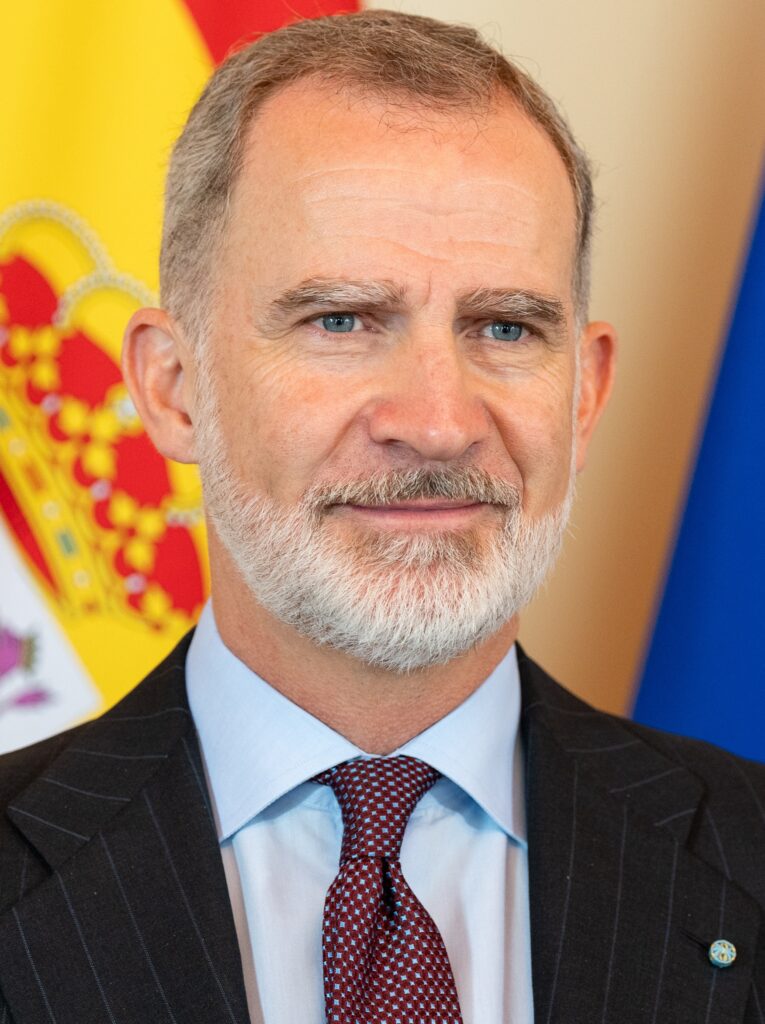
On 3 November 2024, a crowd in the town of Paiporta, near Valencia, turned a scheduled appearance by Spain’s King Felipe VI, Queen Letizia, Prime Minister Pedro Sánchez and Valencian President Carlos Mazón into a hostile confrontation. Protesters hurled objects, including mud and a shovel, at the delegation, shouting insults that labeled the leaders “murderers.” The aggression escalated to the point where Prime Minister Sánchez was struck with a shovel and required immediate evacuation for his safety.
The visit had been arranged as a symbolic gesture of solidarity with the local community, but the atmosphere quickly deteriorated. Participants in the protest shouted slogans, brandished signs condemning both the government and the monarchy, and repeatedly booed the officials as they passed. The king and queen endured a barrage of projectiles, while the prime minister’s injury prompted a rapid withdrawal of the entire entourage, underscoring the volatility of the scene.
Felipe VI, who ascended the throne in 2014, has faced a series of challenges throughout his reign, including high‑profile corruption scandals, economic downturns and separatist pressures. Born in Madrid in 1968, he received his early education at Santa María de los Rosales School before attending Lakefield College School in Canada. He was named Prince of Asturias in 1977 and formally sworn in as heir in 1986. Despite efforts to modernise the monarchy and promote national unity, the king has encountered criticism from left‑wing activists and separatist groups.
The Paiporta incident highlights persistent social and economic strains across Spain. Unemployment, income inequality and regional tensions have fostered a climate of discontent, with many citizens feeling that the government’s response has been insufficient. Prime Minister Sánchez’s administration has pursued reforms aimed at addressing these issues, yet progress has been described by some observers as slow, fueling frustration among segments of the population.
International observers are monitoring the fallout. The United States, a long‑standing ally of Spain, has reiterated its support for Spanish democracy and stability under President Joe Biden. Bilateral cooperation on matters such as counter‑terrorism and trade is expected to continue, while Washington watches closely for any further domestic unrest that could affect broader European security dynamics.
In the aftermath, Spanish authorities are expected to review security protocols for high‑profile visits and consider how to better manage public dissent. The monarchy may also face renewed debate over its contemporary role and how it can more effectively engage with ordinary citizens. Analysts suggest that the episode could serve as a catalyst for the government to reassess its policy priorities and communication strategies.
As Spain confronts these internal challenges, the nation’s leadership will need to balance domestic pressures with its international commitments. The coming weeks are likely to involve a period of reflection within both the executive branch and the royal household, as they seek pathways to restore public confidence and mitigate further unrest.




