
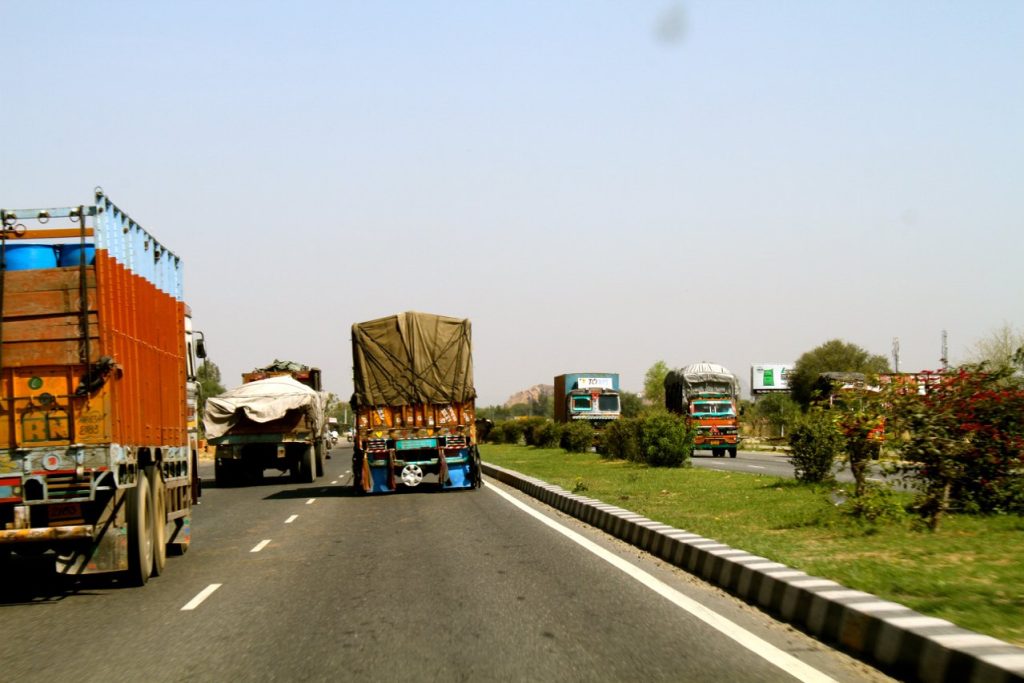
A sleeper bus and a trailer collided on February 27 on a recently widened segment of National Highway 25, a route that links Barmer with Beawar in Rajasthan. The crash claimed six lives and left several passengers injured.
The National Highways Authority of India (NHAI) had completed a four‑lane expansion of this stretch only weeks earlier, promoting the project as a means to ease congestion and improve traffic flow. However, the tragedy highlights a disparity between engineering upgrades and on‑ground safety outcomes. India’s road‑fatality statistics underscore the gravity of the issue. Although the nation possesses roughly 1 % of the world’s vehicles, it accounts for about 10 % of global road deaths.
The addition of lanes often encourages higher travel speeds; a collision at 80 km/h can be far more lethal than one at 40 km/h, a factor that likely contributed to the severity of this accident. While the widened highway now offers more lanes, the report notes that essential safety features such as median barriers and adequate lighting were not universally incorporated into the widening contracts.
The absence of these measures can transform a broader road into a more hazardous environment, especially when drivers drift across center lines. Human factors also play a critical role. Drivers of sleeper buses frequently operate overnight, confronting fatigue and pressure to maintain schedules.
Meanwhile, trailers may stop on shoulders or travel at low speeds, creating unpredictable interactions. The combination of driver exhaustion, vehicle positioning, and increased speeds can produce fatal outcomes that no amount of additional asphalt can prevent.
Taxpayer funds were allocated to upgrade NH‑25, and the NHAI can point to the increased kilometerage and lane count as achievements. Yet families of the victims argue that the core problem lies in the collision between a bus and a trailer that, under safer conditions, should not have occurred. Authorities are expected to issue official statements and may announce compensation for the victims’ families.
Nonetheless, the broader pattern remains: road widening projects across India have accelerated, but safety enhancements—median barriers, proper lighting, and stricter traffic‑rule enforcement—have not kept pace. Rajasthan’s highways serve as major corridors for both goods and passenger traffic, making safety upgrades essential.
Without them, a four‑lane road lacking dividers can become a “wider killing field” when vehicles cross into opposing lanes. The NH‑25 incident is not an isolated event but part of a recurring trend on India’s expanding road network, where added lanes often bring higher speeds and, consequently, higher fatality rates. While the NHAI continues its expansion agenda, the pressing challenge remains the implementation of comprehensive safety measures that address driver behavior, road design, and enforcement.




