
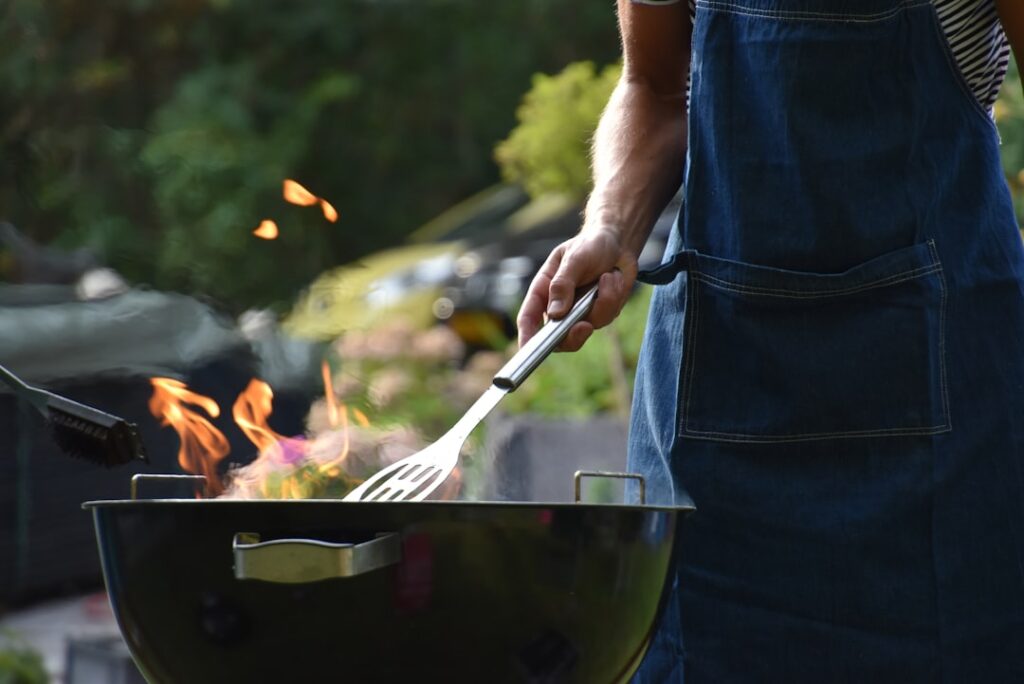
Gatlinburg, Tenn. – As the smoke from brisket and ribs began to clear at Meatstock 2026, the event’s cultural vibe gave way to a clear political undertone. Two high‑profile figures linked to the Make America Healthy Again (MAHA) initiative were on the festival grounds: Calley Means, a senior adviser to the U.S. Department of Health and Human Services, and Vani Hari, the self‑styled “Food Babe,” who has previously met with White House officials to argue for bans on artificial dyes and pesticides. The MAHA brand, which is copyrighted by Robert F.
Kennedy Jr. and generates licensing fees, has migrated from online hashtags to discussions inside federal nutrition circles. Meatstock 2026 served as a live illustration of that transition, with attendees sharing plates of brisket, bacon, butter‑basted steaks and even raw milk while wearing novelty apparel emblazoned with the movement’s logo.
According to Brian Bienkowski, managing editor of The New Ledge, the MAHA coalition is a “broad and varied” alliance. Its members range from advocates seeking to cut ultra‑processed foods and pesticide use to individuals who question vaccine mandates. The unifying slogan across these groups is the call for Americans to consume “real food,” a category that, for MAMA supporters, prominently includes meat.
The presence of Means and Hari at a meat‑centric festival signals that the movement’s messaging is no longer confined to activist circles. Both have direct lines to federal decision‑makers, suggesting that MAHA’s ideas are poised to influence upcoming nutrition policy.
The exact shape of that policy, however, remains uncertain. Scientific consensus continues to favor plant‑forward diets for both health and the environment. Multiple studies have linked higher consumption of meat, especially from industrial sources, to increased risks of chronic disease and greater greenhouse‑gas emissions. Environmental groups have long urged reductions in meat intake as a dual solution for public health and climate change.
MAHA counters this narrative by positioning meat as an essential component of “real food.” Critics point out a paradox: while the movement promotes natural, healthy eating, the majority of meat sold in the United States comes from feedlots, slaughterhouses and large‑scale factory farms—operations that are far from natural. This disconnect between rhetoric and reality was evident throughout Meatstock 2026, where enthusiastic meat consumption unfolded alongside political networking.
Means, who advises HHS, and Hari, who has met with White House staff, are not fringe participants; their involvement underscores how the MAHA agenda has moved from the periphery of food politics to a central role in policy discussions. The festival’s branding, whether displayed overtly or subtly, reinforced the movement’s vision of an American diet that shuns ultra‑processed foods yet embraces the most resource‑intensive sector of the food system. Inside the coalition, divergent viewpoints coexist.
Anti‑pesticide activism sits alongside vaccine skepticism, while meat enthusiasm aligns with critiques of processed foods. Whether these strands can sustain a cohesive policy platform under legislative scrutiny is still an open question.
For now, the MAHA movement appears to have gained momentum and a visible platform. Gatlinburg served as a showcase in June; the next stage may well be Washington, where the ideas championed at Meatstock could translate into concrete regulatory action.




