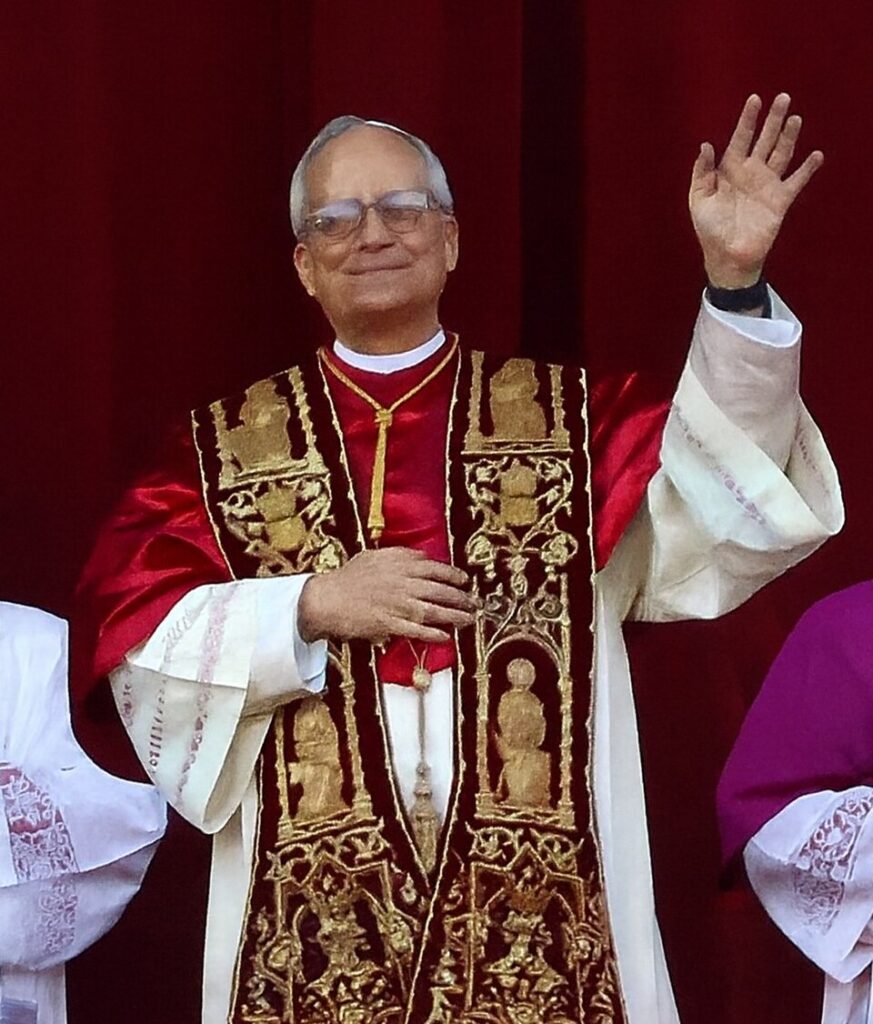
More than 1.2 million people lined the streets near Cibeles Square in Madrid for Sunday Mass, and Pope Leo XIV used the moment to tell national leaders to stop dividing their people. The American-born pontiff, once Robert Francis Prevost of Chicago, landed in Spain on Saturday and has met near-rapturous crowds since.
Weeks earlier it was Washington that put Spain in the headlines. Prime Minister Pedro Sánchez had defied President Donald Trump’s war plans in Iran, and for a short stretch his country sat at the centre of global friction. Now the visitor is an American who carries moral authority instead of military force.
A speech to Parliament
On Monday Leo became the first Pope to address the Spanish Parliament. He got a long standing ovation. Among his messages: a widespread disregard for human rights has produced a global crisis.
He pressed the same theme on social media. “We understand that ideologies pass away, while truth remains,” he wrote. In a country split bitterly along political lines, he has urged young Spaniards to reject tribalism and extreme positions.
Migration took a central place in the Parliament speech. Leo called it a challenge to the world’s “moral foundations” and asked nations to offer migrants “safe and legal pathways” out of dire circumstances. He also said countries must work to “ensure that no one has to leave their home due to a lack of peace.”
What Sánchez gets out of it
Papal visits are officially pastoral and nonpartisan. Sánchez has treated this one as a political opening anyway, saying repeatedly that his government’s most contentious policies are “on the same wavelength” as the pontiff’s. After meeting Leo in Madrid, before the Parliament speech, he said the two “share the commitment to defend the value of migrations and the rights of all people.”
Grégoire Roos, who directs the Europe, Russia and Eurasia programmes at Chatham House in London, said it is “very difficult not to imagine that a papal visit cannot give the host a political boost.” That, he said, is part of why Pope Francis visited so few countries. Francis never returned to his native Argentina after his election in 2013 “because he never wanted to be used politically.”
Sánchez, 54, has led the government for eight years and has survived repeated predictions of his downfall. He has taken heavy election losses and seen his wife charged in a corruption probe. “We say he’s like the phoenix, because he keeps standing up, and while many things have happened, nothing tears him down,” said Sonia Andolz Rodríguez, an international politics professor at the University of Barcelona.
The problems are real. His Socialist Workers’ Party has been battered by corruption allegations, and the right-wing Partido Popular and Vox have gained ground. His brother is on trial for influence peddling, and close allies face money laundering allegations. The next general election is due in 2027, possibly earlier.
The Trump break and the migrant bet
Sánchez wrecked Spain’s relationship with Trump by refusing the U.S. military use of two airbases for strikes on Iran, then closing Spanish airspace to American aircraft. Trump called Spain a terrible partner and threatened it economically. At home, the fight seemed to help the prime minister. “When Trump started to mention Spain almost every day for two weeks in a row, people here were like, ‘How did we become famous suddenly?’” Andolz Rodríguez said. “We took it with humor, but I would also say a kind of pride.”
Madrid has also found itself isolated in Europe over its sharp condemnation of Israel for the death and destruction in Gaza and Lebanon.
Migration may turn out to be the government’s defining policy. While most European states harden their borders, Spain has approved legislation granting legal work and residency status to more than 500,000 undocumented migrants. The government argues that an aging population needs them to pay for welfare and keep the economy running. Andolz Rodríguez said the measure has proved less divisive at home than expected. “Many of the businesspeople know that they are hiring people in a non-legal way. So it was more like a pragmatic thing,” she told CBC News.
Leo stays in Spain until June 12. On Thursday he travels to the Canary Islands to meet migrants at a detention centre in Tenerife. Migrant advocates say as many as 15,000 people have died since 2024 trying to reach the EU’s southernmost point.
Sources
- ANALYSIS | Pope Leo gives Spain’s 'phoenix-like' prime minister another turn in the global spotlight | CBC News
- Pope Leo gives Spain’s 'phoenix' prime minister another turn in the global spotlight