Chloe Chapin once complimented an actor on his tuxedo. It took her years to see where that small moment was heading.
The actor was Daniel Radcliffe, the year was 2008, and the occasion was the opening night party for the Broadway play “Equus,” for which Chapin had designed the costumes. His tuxedo was midnight blue. Radcliffe told her that British royalty had a history of wearing that shade for formalwear, a detail she found glamorous. She told the Harvard Gazette in an edited interview, published July 1, 2026, that this conversation was where her new book began.
A question from the costume shop
Chapin, who holds a Ph.D. from Harvard (class of 2023), spent more than two decades as a costume designer. A few years after “Equus,” she was researching the opera “La Traviata,” set in the 1860s, when her interest in formalwear came back. Designers, she said, build a mental database of images, and as she scrolled through hers she noticed something odd. Men had worn formal black and white for half a century by then. Yet in the 18th century they had not worn black and white at all.
“Why did they suddenly adopt this plain uniform?” she asked. The project started as a history of formalwear and grew into a book on all suits, “Suitable: The Sartorial Revolution and the Fashioning of Modern Men.” Her answer sits in a 75-year stretch between the 18th and 19th centuries, when Enlightenment ideas of liberty and equality helped give rise to the American and French revolutions.
Fashion usually keeps shifting, she said. What strikes her as weird is when it stops. The suit is one of the biggest outliers in the history of dress, she argued, because it is so plain, so uniform and has changed so little.
Peacocks to penguins
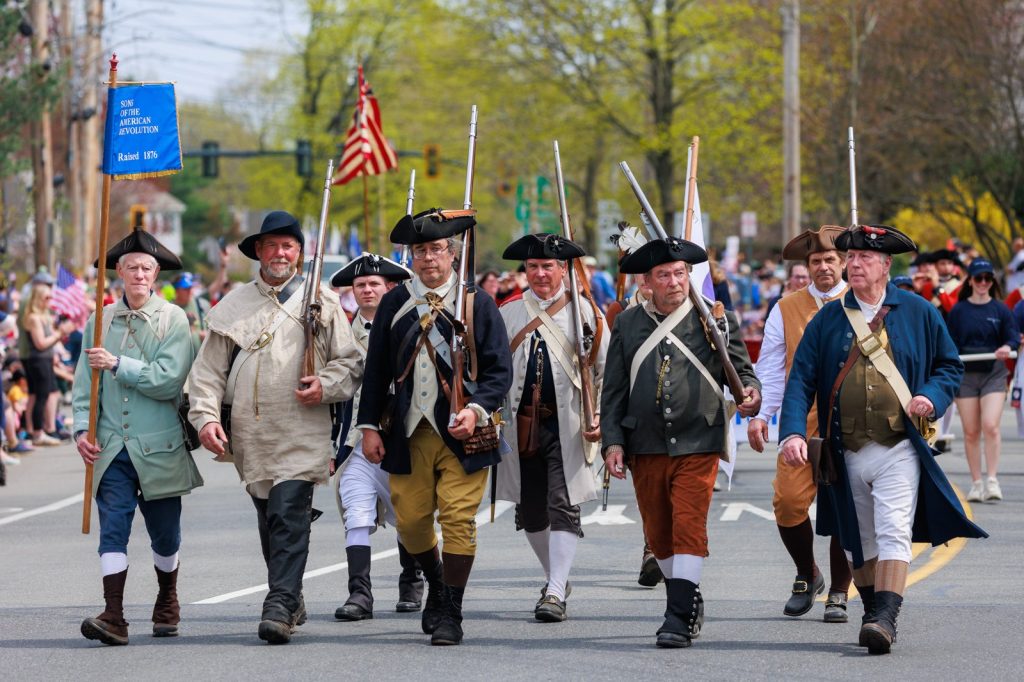
The book’s first chapter is titled “Peacocks to Penguins.” Through the 18th century, Chapin said, men’s clothes came in rich grays, baby blues, hot pinks and deep reds, cut from silk, wool and velvet and decorated with sequins, beads and embroidery.
She points to John Quincy Adams as a man who lived through the change. As a young diplomat abroad he wore silk suits with knee-length breeches. By the time he was elected president in 1825 he dressed in a shapely tailcoat and tight pantaloons, which his father, John, absolutely hated. In a later photograph, from his years as a senator, he wears trousers.
Two forces drove the shift, in her telling. Philosophically, the American Revolution pushed the Founding Fathers to reject flashy aristocratic extravagance for plain, dark clothing that stood for equality and democracy. Practically, the Industrial Revolution mechanized fabric making and eventually made plain woolen suits cheaper and easier to produce, so the new uniform spread quickly among ordinary men. She cautioned that plain does not always mean cheap, only less decorated.
Washington’s tailor
Chapin said she never expected the book to be about the Founding Fathers, but their online archives turned out to be a treasure trove. She found letters in which George Washington complained to his London tailor that his pants never fit. “He basically had a wedgie for 10 years!” she said, calling it a rare record of how a man felt about his clothes.
Washington, she said, also had to think about what a president should wear when there was no precedent and people debated whether to call him “Your Majesty.” He did not want to look like a king. The change was slow and far from inevitable, she added: James Madison wears a black suit in his 1816 presidential portrait, but in a miniature from 1790 he looks like a dandy.
Her book stops around the Civil War, but she pointed to what came after. In the second half of the 19th century, she said, democracy and the suit were offered to, or forced on, cultures around the world. Today many jobs no longer require a suit, she conceded, yet people with the most cultural authority in politics, law and finance still wear one. “If you follow money and power, you’ll find suits.”