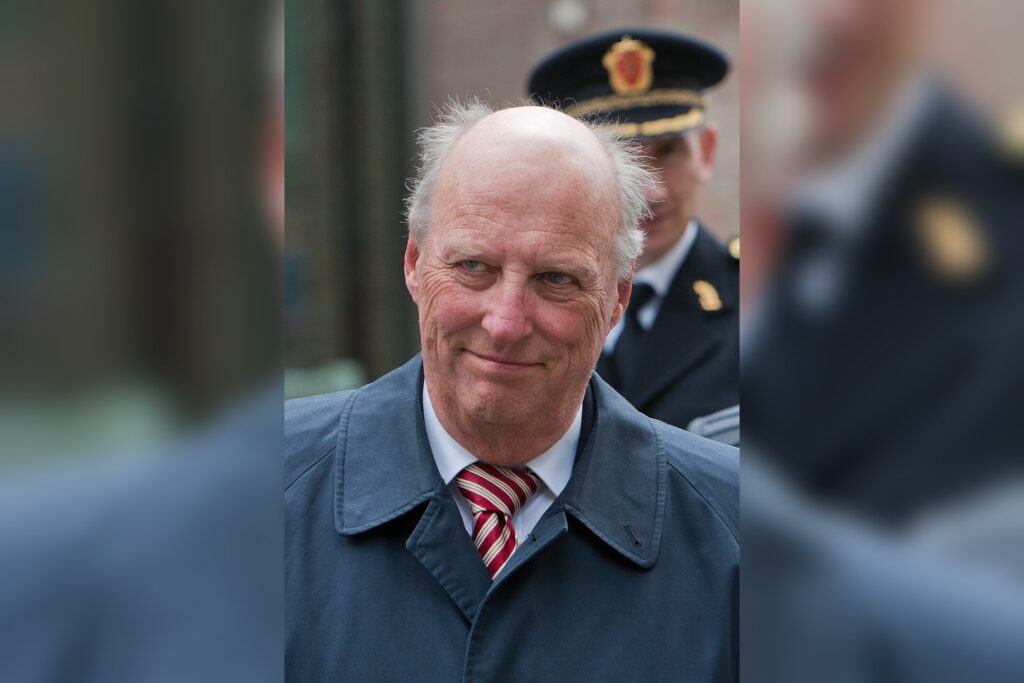
OSLO — Church bells rang across the Norwegian capital on Friday, August 28, 2026, and thousands of people lined the streets as a motorcade of black cars carried the coffin of King Harald V to the Royal Palace. The king had died that morning at 6:35, peacefully in his sleep, at Oslo University Hospital Rikshospitalet. He was 89, Europe’s oldest monarch, and had reigned for 35 years.
A short, steep decline
The palace said Harald was admitted on August 17 and placed on sick leave, after corticosteroid treatment for haemolytic anaemia caused fluid retention that needed hospital care. His son, Crown Prince Haakon, 53, served as regent. On August 23 the palace reported that the king’s condition had worsened and that he needed antibiotics for a bacterial infection in his bloodstream. When the royal household described his state as “very serious,” Norwegians began leaving flowers outside the palace.
Prime Minister Jonas Gahr Støre spoke for a country in mourning. “For more than three decades as monarch, Harald V demonstrated an unwavering faith in the Norwegian people,” he said. “He helped us to see the best in ourselves and in one another.”
Haakon takes the throne
In Norway there is no gap. The next in line becomes king the moment the monarch dies. Though a 1990 constitutional amendment gave daughters and sons equal standing, it did not apply to those born before it, so Haakon, the only son, inherited ahead of his older sister Märtha Louise. At 11:30 that morning the government held an extraordinary cabinet meeting at the palace, where ministers met the new King Haakon VIII. He kept the motto used by his father, grandfather and great-grandfather: “All for Norway.”
There will be no coronation. Parliament dropped the requirement in 1908, judging the ceremony outdated and undemocratic. Mette-Marit becomes queen, Queen Sonja keeps her title, and the couple’s daughter Ingrid Alexandra is now crown princess and heir. Haakon studied at the University of California, Berkeley, graduating in political science in 1999, and married Mette-Marit in 2001. Funeral arrangements and a date had not yet been announced, and flags at royal residences, government buildings and military installations stay at half-mast during the mourning period.
The king who modernised the crown
Harald’s marriage broke with convention. In 1968 he married Sonja Haraldsen, who was not royal, after a long struggle to win permission from his family. In a much-noted 2016 speech in the palace garden he described Norwegianness as including immigrants, people of different religions and members of the LGBTQ+ community. He attended the Norwegian Military Academy in Oslo and was made a general and admiral in 1977, as tradition gives a crown prince the highest ranks at 40. The monarch’s role is largely symbolic, with legislative power resting with the elected parliament, which said his reign “was marked by closeness to the people.”
Tributes arrived from across the continent. King Charles III, a cousin, spoke of “the most profound sadness” and of a “much-loved kinsman and friend.” EU foreign policy chief Kaja Kallas called him “truly the people’s King.” NATO’s Mark Rutte noted his military roots and friendship with the alliance, and Emmanuel Macron said Harald had worked to strengthen the bonds between Norway and France.
Sources
- Norway’s Harald V Dies as Haakon Becomes King Haakon VIII — IJR News
- Meet King Harald V of Norway's Successor Haakon Amid Family Controversy