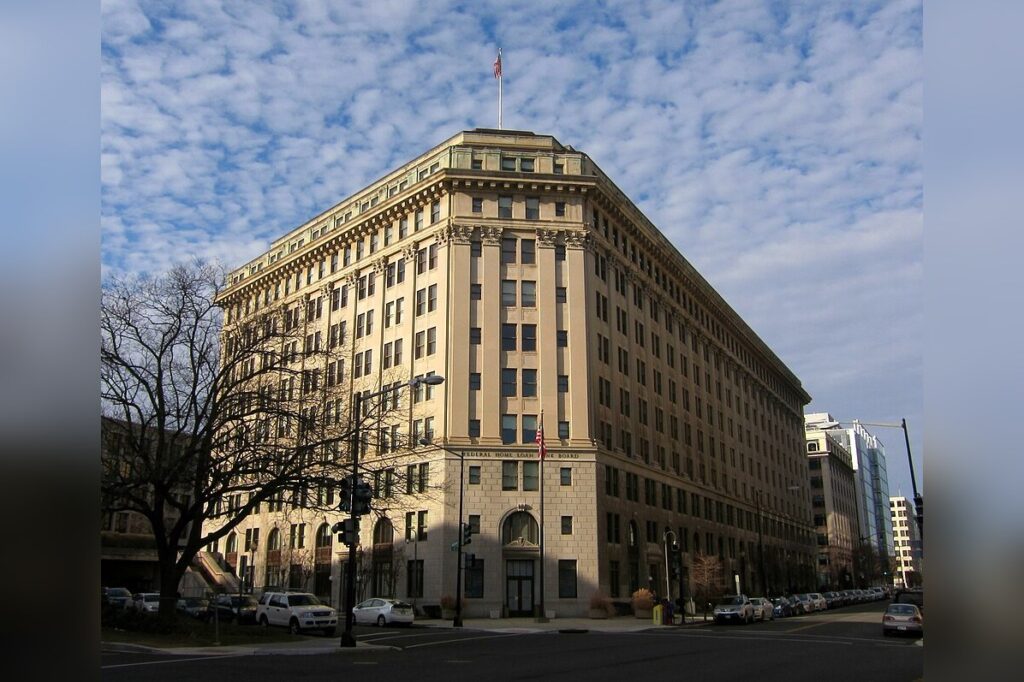
In 1932, with the Depression strangling American credit, Congress built a second system of regional banks to serve home lenders. Each of the twelve Federal Home Loan Banks was deliberately placed in a city without a Federal Reserve Bank, so the new system would stand apart from the central bank. Nearly a century on, a new question hangs over those banks: how much extra lending do their loans actually produce?
A study by the Urban Institute, a Washington think tank, offers an answer. The Council of Federal Home Loan Banks, the system’s public voice, commissioned the work and highlighted the results on January 14, 2026. Its finding is that rising Federal Home Loan Bank advances go together with more lending.
What the study found
The researchers analysed more than two decades of data, 2002 to 2024, drawn from quarterly bank reports, mortgage disclosure records and Community Reinvestment Act data, using several statistical approaches. The council described it as the second in a three-part series and the first independent study to examine the link directly.
The headline numbers, as the council presented them:
Over the period, increases in advances contributed to more than $1.8 trillion in additional total lending by bank and credit union members, and roughly $850 billion in additional residential real estate lending. A $100 increase in advances relative to assets was associated with a $22 increase in mortgage originations relative to assets.
Smaller commercial and savings banks lifted their lending by even more. Advances were also linked with more lending to small businesses, small farms, and low- and moderate-income households. The tie grew stronger after the post-crisis regulatory reforms, when other funding sources tightened and members leaned harder on the banks.
“The clear takeaway from this study is that the FHLBanks turn liquidity into action,” said Ryan Donovan, the council’s president and chief executive. He said the system supplies liquidity to roughly 6,500 financial institutions.
Why the history matters
The system started out serving savings and loans. Their widespread failure in the 1980s thinned the membership, and in 1989 Congress opened it to commercial banks that held at least 10 percent of their assets in residential mortgages. Commercial banks have made up most of the membership since the mid-1990s.
The banks have also shown limits. They can lend to members only if they can raise money by selling debt, and in times of market stress that has sometimes been hard. In 1955 and 1966 the system restricted advances. In 2008 and 2020, both the Home Loan Banks and the Federal Reserve lent heavily to commercial banks, and the Home Loan Banks eventually had trouble reaching the debt markets while the Fed kept lending. The Federal Housing Finance Agency has said the banks “are not designed or equipped to take on the function of the lender of last resort.”
Because the council commissioned the Urban Institute series, its findings come with a sponsor attached. The authors’ own estimate, $22 of extra mortgage lending for every $100 of advances, is the figure on which the argument rests.
Sources
- Federal Home Loan Bank Advances
- New research from the Urban Institute confirms what #FHLBank members see every day: when local lenders have reliable access to Federal Home Loan Bank advances, communities see more #housing and… | Ryan Donovan
- New Urban Institute Study Finds Federal Home Loan Bank Advances Lead to Significant Increases in Housing and Community Lending – FHLBanks