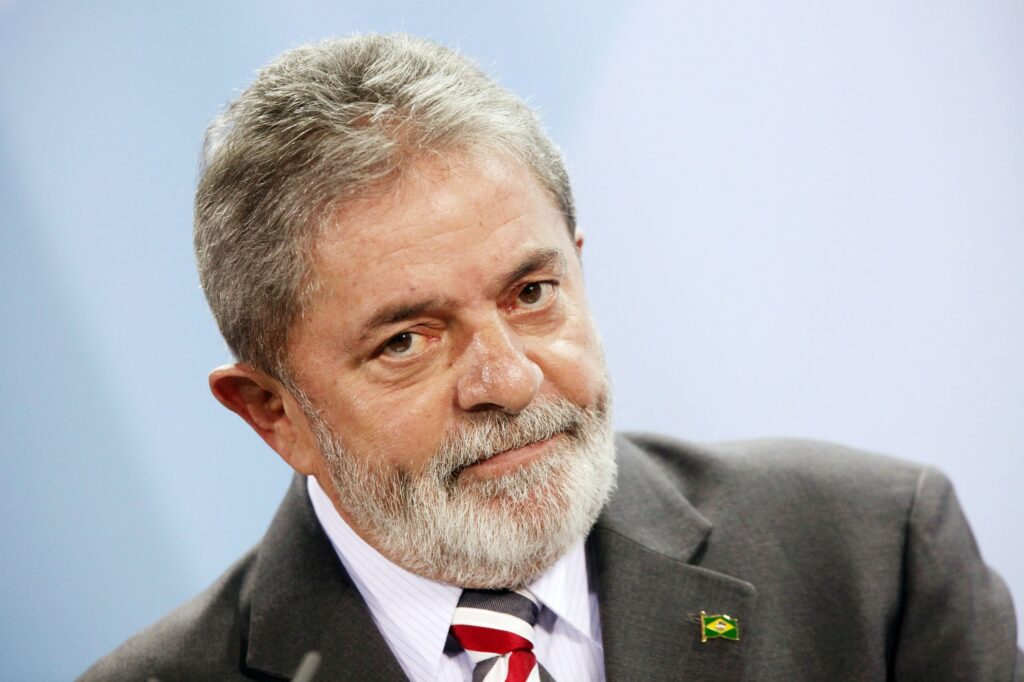
Brazil’s 80-year-old president, Luiz Inacio Lula da Silva, won a fourth term, taking 51.79% of the vote and beating Flavio Bolsonaro, son of the imprisoned Jair Bolsonaro. He did it two days before his 81st birthday, with a margin of more than four million votes. Pollsters had predicted his demise, and reports said Washington was lobbying to restore the Bolsonaro dynasty. Neither stopped him.
The economy he inherits is not easy. Public debt has surged more than 10% since his 2023 term, interest rates sit at 13.75% and inflation is 4.6%. Lula promises lower rates through fiscal discipline that spares social programs. Most economists say rates fall faster only if Brazil cuts spending, and it is unclear how he squares the two. He will also work alongside a Congress packed with Bolsonaro allies. In his victory speech he conceded that talk of national unity “doesn’t always fit the reality of this country.”
From Pernambuco to the factory floor
Lula was born on 27 October 1945, the seventh child of illiterate tenant farmers in drought-hit Pernambuco. His father went south to work in the Sao Paulo factories while his mother and the children lived on flour and beans. When Lula was seven, she sold her watch and a donkey to pay for a 13-day journey to Santos. At ten he was in a rented backroom of a bar, where he learned to read.
He sold peanuts, shined shoes and delivered laundry, and left school at 14 for a factory that made screws. Trade school followed, and he trained as a machinist and metallurgist. In 1964 a press he was fixing crushed his little finger. The missing digit became a symbol of his working-class roots. On the campaign trail, Flavio Bolsonaro mocked him as “Nine Fingers,” and the jab backfired. Lula brushed it off as the words of “some rich guy” who “doesn’t know what hunger is.”
Loss, the union and the Workers’ Party
In 1969 Lula was elected a substitute on the board of the metalworkers union in Sao Bernardo do Campo. That year he married Maria de Lourdes Ribeiro. She developed hepatitis in the seventh month of pregnancy, and both she and the baby died. “Three years of craziness” followed, he later said, and he spent more time at the union. He was elected its president in 1975 with 92% of the votes, married Marisa Leticia Casa in 1974, and led the metalworkers’ strikes of 1979 and 1980 against a junta that had outlawed strikes. In 1980 he helped found the Workers’ Party.
He lost presidential races in 1989, 1994 and 1998. A landslide in 2002 finally carried him in. He kept conservative fiscal and monetary policies that estranged some of his base, and won a second landslide in 2006 with nearly 61% despite corruption allegations.
Car Wash and 580 days
Operation Car Wash, which began in 2014, toppled dozens of politicians and business figures. Lula was charged in 2016 with leading a corruption scheme at the state oil company Petrobras. In 2017 he was convicted of corruption and money laundering tied to a beachfront apartment that prosecutors said was promised to him as a kickback from the construction company OAS. His wife Marisa suffered a stroke in January 2017 and died a little over a week later.
He turned himself in to police in April 2018, after a two-night standoff at a steelworkers’ building in Sao Paulo, where thousands of supporters blocked him from leaving. He spent 580 days in jail in Curitiba before his release in 2019. Lula always said the trial was politically motivated. The Supreme Court annulled the convictions in 2021.
He won a third term in late 2022 and took office in January, displacing Jair Bolsonaro. That May he married Rosangela da Silva. The fourth term followed.