
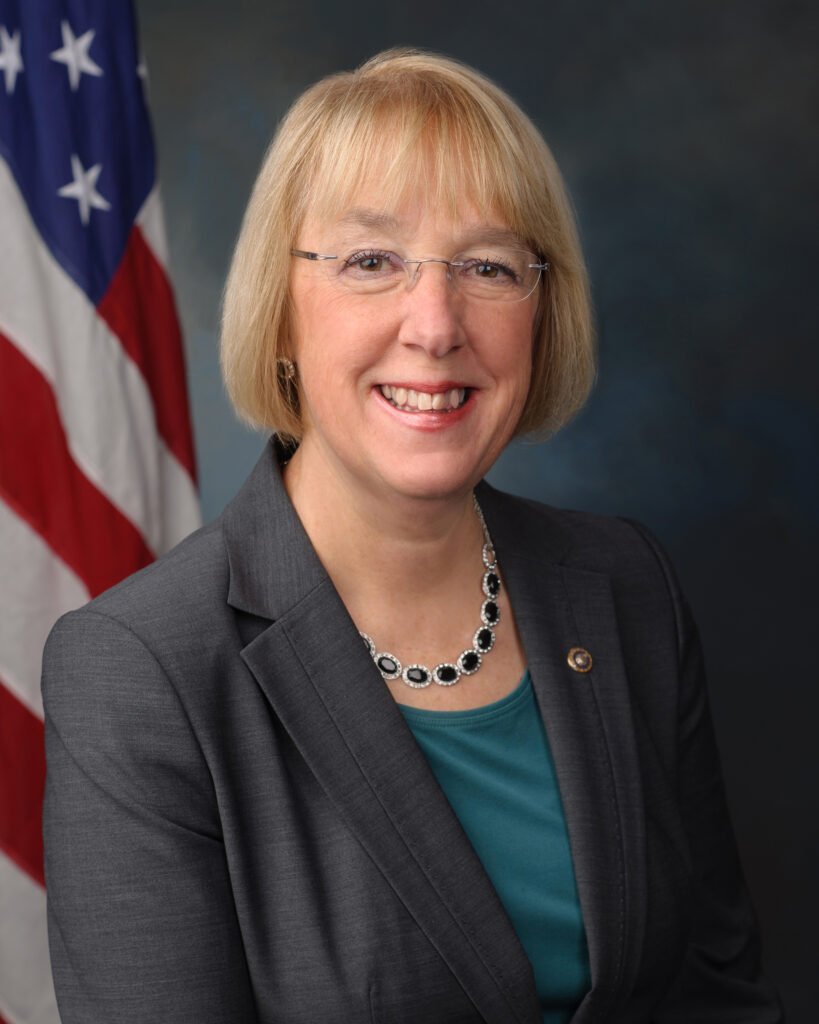
On This Day: Murray Joins Bloc Blocking Stop Insider Trading Act
On September 30, 2026, U.S. Senator Patty Murray (D-WA) was among the 47 senators of the Democratic caucus, including independents Angus King and Bernie Sanders, who voted against cloture on Roll Call Vote #253 in the 119th Congress, 2nd session. The vote concerned a motion to proceed to H.R. 7008, the “Stop Insider Trading Act.”
With 53 votes in favor and 47 opposed, the cloture motion failed, falling short of the 60-vote threshold required to end debate and advance the bill to the Senate floor. As a result, the motion to proceed was blocked, and H.R. 7008 did not move forward to a final vote on passage. All 53 votes in favor came from Republican senators; all 47 votes against came from the Democratic caucus and its aligned independents.
What the Senate Actually Voted On
H.R. 7008 contained two distinct sections as confirmed in the official bill text. Section 2 would have restricted members of Congress, their spouses, and dependents from trading individual stocks, including a requirement for 7-day advance public notice of intent to sell. Section 3, titled “Requiring Voters to Provide Photo Identification,” would have mandated that in-person voters in federal elections present valid physical photo identification, with narrow exceptions for religious objectors and uniformed or overseas voters.
Senate Democratic leaders, including Majority Leader Chuck Schumer, stated they opposed the bill because the voter-ID provision constituted a “poison pill” and argued the stock-trading restrictions were insufficiently strong, describing them as “toothless.” Supporters of the bill countered that Democrats could have advanced the stock-trading ban separately and amended it later, rather than blocking a measure that combined two policies each broadly popular with the public according to national polling.
How Murray Got to the Senate
Patty Murray began her career as a preschool teacher before serving in the Washington State Senate. She described herself as a “mom in tennis shoes” during her political ascent. She won election to the U.S.
Senate in 1992, capturing the open seat left vacant after incumbent Senator Brock Adams withdrew amid sexual-misconduct allegations. Murray defeated Republican Rod Chandler in that race with 54% of the vote to his 46%. By 2026, she had served six terms in the Senate.
She was not considered a new senator at the time of the September 30, 2026 vote. In her most recent re-election campaign in 2024, Murray defeated Republican challenger Tiffany Smiley, winning 57.15% of the vote to Smiley’s 42.63%, a margin of +14.5 percentage points. Since 2023, Murray has held the position of President Pro Tempore of the Senate, placing her third in the presidential line of succession.
She also serves as chair of the Senate Appropriations Committee. A documented past controversy from her record states: In December 2002, remarks to Washington state students describing Osama bin Laden as having built goodwill through schools, roads, and infrastructure were widely criticized as misreading his record. The outcome of this incident was public criticism; no formal charges or sanctions were imposed.
Two Measures Americans Broadly Support
National polling consistently shows strong public support for the two core components of H.R. 7008. Regarding voter identification, Gallup found in a 2024-10-01 to 2024-10-12 field period (reported in a 2026 update) that 84% of Americans favored requiring voters to show government-issued photo identification in order to vote. The Pew Research Center, in a 2025-08-04 to 2025-08-10 survey, reported 83% support and 16% opposition to the same proposition.
Earlier, the Monmouth University Polling Institute found in June 2021 that 80% of Americans supported requiring voters to show photo identification to vote, a figure frequently cited in subsequent coverage through 2026. On the issue of congressional stock trading, multiple national polls have shown broad, bipartisan majorities in favor of banning members of Congress from trading individual stocks, commonly reported at 70% or higher; these polls are attributed generally without specifying a single unverified figure. Supporters of voter ID laws argue that such requirements ensure only eligible citizens vote and note that photo ID is routinely required for everyday activities like boarding aircraft or entering federal buildings.
Opponents of strict voter ID laws contend that such measures can create barriers to ballot access for certain groups, including low-income voters, elderly individuals, and minorities, a concern attributed to voting rights advocates and civil rights organizations.
Editorial Commentary: Oath of Office and Public Mandate
Senator Murray’s vote to block H.R. 7008 represents a refusal to honor the clearly expressed will of the American people as demonstrated by consistent, high-level public support for both voter ID and congressional stock trading bans. The polling data leaves no ambiguity: overwhelming majorities across party lines want these reforms enacted. By voting with her caucus to prevent cloture, Murray chose to prioritize party strategy over the policy outcomes voters have repeatedly demanded. This is not a neutral procedural stance; it is an active decision to stand against measures the public explicitly supports.
When senators use their office to obstruct broadly supported reforms in order to gain leverage against the opposing party, they fail in the fundamental duty entrusted to them by their constituents. The oath of office requires public servants to execute the responsibilities voters sent them to fulfill, not to weaponize legislative procedure for partisan advantage. Blocking a bill that pairs two popular reforms — one to protect election integrity, the other to curb potential conflicts of interest among lawmakers — serves neither good governance nor public trust. It substitutes political gamesmanship for the steady, accountable leadership the office demands.
Respect for the institutions of government, including the presidency, is a civic baseline that applies regardless of which individual holds office at any given time. Americans have expressed dissatisfaction with presidents from both parties throughout history, including Barack Obama and Joe Biden, yet the country has continued to function because officials upheld their constitutional roles. When senators instead treat the Senate as a platform for perpetual partisan warfare, they erode the very foundation of representative democracy. The citizens who elected Murray to solve problems, not to perpetuate stalemate, deserve representatives who act on the mandates given at the ballot box.
Documented Past Controversy
In December 2002, remarks to Washington state students describing Osama bin Laden as having built goodwill through schools, roads, and infrastructure were widely criticized as misreading his record. The outcome was public criticism; no formal charges, sanctions, or legal actions were imposed.
Looking Ahead to Voter Accountability
The public’s will on protecting election integrity and preventing lawmakers from profiting from non-public information is unmistakable, as shown by repeated, high-level support in independent polling. Voters will have the opportunity to assess which senators stood with these clear majorities and which chose to block action on reforms they claim to support. At the next election, the record shows who honored the mandate to advance commonsense safeguards for democracy and who placed party interests above the duty to serve the people who sent them to Washington.




