
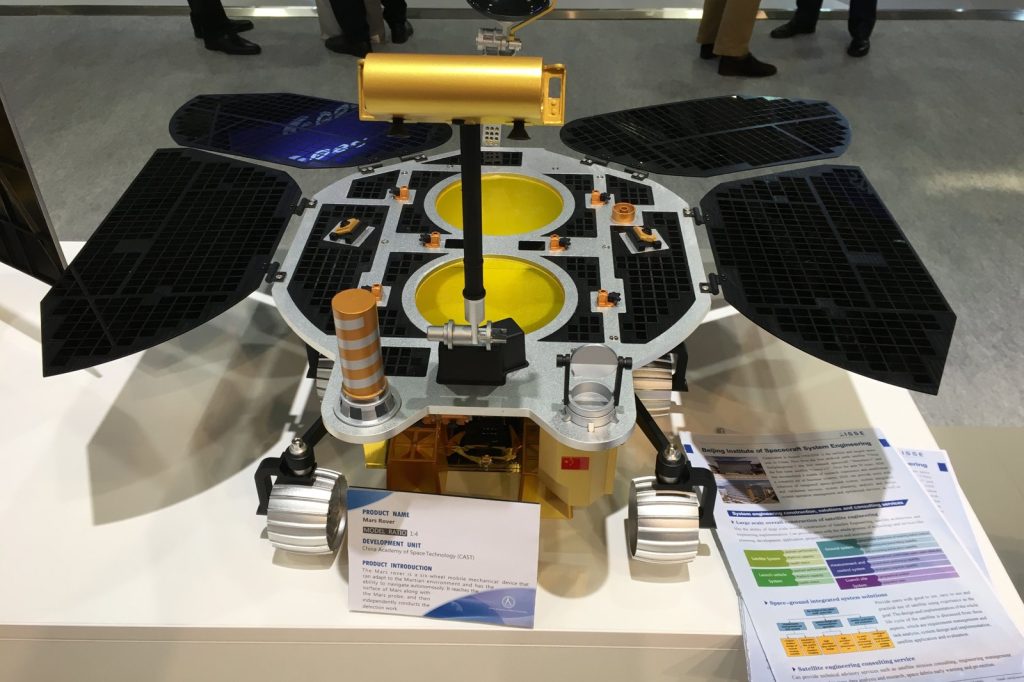
BEIJING, October 10 — China aims to return samples from Mars to Earth around 2031, according to a scientist involved in the nation’s deep space exploration program. The timeline was disclosed during a recent briefing on China’s long-term planetary exploration goals, which include advancing capabilities in interplanetary travel, autonomous sampling, and high-speed re-entry technologies. The mission, if successful, would make China the second country after the United States to achieve a round-trip sample return from Mars, following NASA’s Perseverance rover mission that is currently collecting Martian samples for future retrieval.
China’s Mars exploration efforts began with the Tianwen-1 mission, which launched in July 2020 and successfully entered Mars orbit in February 2021, deploying the Zhurong rover to the Martian surface in May 2021. Zhurong operated for over a year before entering hibernation due to harsh winter conditions, having traveled approximately 1.9 kilometers and gathered data on Martian topography, soil composition, and atmospheric conditions.
The planned 2031 sample return mission would involve a multi-launch architecture, likely including an orbiter, lander, ascent vehicle, and return capsule, drawing on lessons from China’s successful lunar sample return mission, Chang’e-5, which brought back 1.731 kilograms of lunar regolith in December 2020. Chang’e-5 demonstrated China’s proficiency in automated docking in lunar orbit and high-speed atmospheric re-entry, critical technologies for a Mars sample return. The 2031 target aligns with favorable launch windows for Mars missions, which occur approximately every 26 months due to orbital mechanics.
Previous Chinese statements have indicated interest in Mars sample return as part of a broader strategy to establish a permanent presence in deep space exploration, including potential crewed missions to Mars in the longer term. The mission would require significant advances in propulsion, autonomous navigation, and sample containment to prevent forward and backward contamination, in accordance with international planetary protection guidelines.
No specific budget figure for the Mars sample return program was disclosed in the scientist’s remarks, though China’s annual space budget has been estimated by international analysts at over $12 billion USD in recent years, supporting a growing portfolio of missions across lunar, Martian, and Earth observation domains. The United States, through NASA and ESA collaboration, is also pursuing a Mars sample return campaign, with plans to launch the Sample Retrieval Lander and Earth Return Orbiter in the mid-2020s, aiming to deliver samples to Earth by the early 2030s.
China’s independent effort would represent a parallel and competitive track in the global quest to analyze Martian material for signs of past life and to prepare for future human exploration. As of this writing, no further details on China’s mission architecture or international coordination have been made public. The coming years will test whether Beijing can translate its lunar success into a Martian milestone.




