
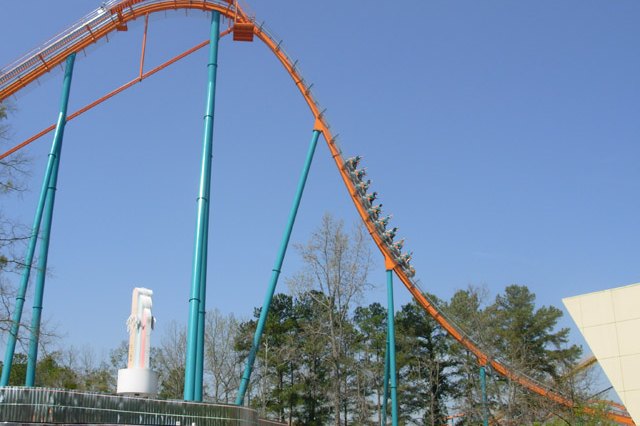
Austell, October 16 The story begins with a celebration. Hassan Kariem was at Six Flags Over Georgia to mark his niece’s 13th birthday, a day meant for joy and family. What unfolded on the Goliath roller coaster turned that afternoon into tragedy.
At its heart, Kariem had recently survived a car fire weeks before visiting the park. He was riding the coaster with his niece, who was seated beside him when he was ejected from the ride.
The Goliath, a 200-foot steel hyper coaster built by Bolliger & Mabillard and opened in 2006, was last inspected by the Georgia Office of Commissioner of Insurance and Safety Fire on March 16, 2026. That inspection found no violations, deficiencies, citations, or red flags. However, there was a notation that bushings needed to be replaced — machine parts that reduce vibrations and friction.
The investigation into the accident continues, and the Goliath remains closed. Similar rides at other Six Flags amusement parks also remain closed as a precaution.
The park president released a statement expressing condolences and emphasizing the park’s safety protocols. Authorities are reviewing the incident as they work to determine what caused the ejection. What to watch next includes the findings of the ongoing investigation, any updates on the status of the Goliath and comparable rides, and whether further safety actions will be taken by regulators or the park operator.
Amusement parks in the United States operate under a multi‑layered safety framework that includes regular mechanical inspections, routine maintenance checks, and compliance with federal and state regulations. rides of the hyper‑coaster category, which feature tall steel structures and high speeds, are subject to heightened scrutiny because their complex restraint systems and track connections must function flawlessly under extreme forces. Regulatory agencies typically review documented maintenance records, perform visual and functional inspections of critical components such as bearings, bushings, and safety latches, and issue citations when deficiencies are identified.
When a rider is ejected from a coaster, the incident is treated as a critical safety breach that can prompt immediate operational changes. Parks often suspend not only the affected ride but also similar models across the property to allow investigators to examine shared design features, manufacturing processes, and maintenance practices.
This precautionary approach helps prevent potential secondary failures while engineers and regulators work to pinpoint whether the cause was a component malfunction, a procedural lapse, or an unforeseen interaction between the ride’s mechanics and a passenger.
The aftermath of such an event usually includes a thorough forensic analysis, a review




