A playboy with a taste for fast cars
Paulo Maluf is 95 now, and he spends his days under house arrest in São Paulo, held there because of poor health and advanced age. It is a quiet finish for a man who spent more than four decades in Brazilian politics as mayor, governor, congressman and presidential candidate, and who built his base on populism and big public works.
The story begins with an engineering student. Maluf was born on 3 September 1931 in São Paulo, the son of Lebanese Christian immigrants Salim Farah Maluf and Maria Stephan Maluf. He graduated from the University of São Paulo in 1954, where his classmate was Mário Covas, later one of his biggest political rivals. By his own account he was a playboy with a taste for fast sportscars.
Politics came through a family friendship. The then military president, Artur da Costa e Silva, shared Maluf’s interest in horse racing bets, and in 1969 Maluf was appointed mayor of São Paulo, replacing the hugely popular Faria Lima.
The Big Earthworm
Like New York’s Robert Moses, Maluf thought in concrete. He suspended construction of the São Paulo Metro and built the Costa e Silva elevated expressway, known as the Minhocão, or “Big Earthworm.” It runs as a high-traffic road through a residential area. It is blamed for degrading a large part of downtown and is seen as the hallmark of the dictatorship’s private-car-friendly urban policy. It could be built, in the source’s phrase, only because the surrounding community had no way to protest.
Climbing through ARENA
In 1972, after his mayorship, Maluf became the state’s transport secretary. Then he went after the nomination of ARENA, the dictatorship’s ruling party. The convention was supposed to be a rubber stamp for former governor Laudo Natel. Maluf got himself named the official candidate for the indirect election by the state legislature instead, through abundant and generous personal promises to its members. He was elected governor in 1978.
His term, from 1979 to 1983, was spent advertising a presidential bid. He donated ambulances to poor municipalities in the Northeast and flew influential people to São Paulo for state decorations, free of charge and with luxury hotels. He also spent heavily on public works, including a failed plan to move the state capital. The best-known corruption accusation of the period concerned Paulipetro, a state oil company he founded. It spent about US$500 million drilling 21 holes and found only a few pockets of natural gas and water.
In 1982 he won a federal deputy seat with a then national record of 672,629 votes. But his overreaching strategy alienated the party bosses and split his party, and the opposition’s Tancredo Neves won the 1985 presidential election. Maluf won executive office only once more, as São Paulo mayor in 1992, and his 1989 presidential run is remembered mainly for a crude joke. When he left office in 1996, he had an 80% approval rating. A 2011 Datafolha survey still ranked him the best mayor the city had ever had, with 47%.
Accusations, a conviction and a Red Notice
Corruption allegations followed him throughout. Critics point to the Ayrton Senna tunnel, which allegedly cost more than US$400 million over what it should have. They also point to money laundering investigations involving accounts in Jersey. His supporters trace his wealth to family companies such as the plywood maker Eucatex. The verb malufar, meaning to steal public money, entered Portuguese. He was arrested briefly in 2005, and was a congressional candidate again in 2006, 2010 and 2014.
In 2007 the Manhattan District Attorney’s office indicted him for money laundering tied to an alleged kickback scheme that took US$11.6 million from a road contract. Interpol has issued a Red Notice seeking his arrest and extradition to the United States on charges of conspiracy and criminal possession. Because Brazil does not extradite its citizens, in practice the notice means he would be arrested if he left the country. A French court sentenced him to three years in 2016.
Brazil’s Supreme Court convicted him of corruption, and he surrendered to police on 20 December 2017. On 30 March 2018 he was moved to house arrest on humanitarian grounds. That August the Chamber of Deputies declared his seat vacant. He still heads the São Paulo state branch of the right-wing Progressive Party, the heir to ARENA.
Sources
- Paulo Maluf
- Ruiz Coffees seeks court-supervised reorganization over R$775m in debt
- Sao Paulo news & latest pictures from latintimes.com
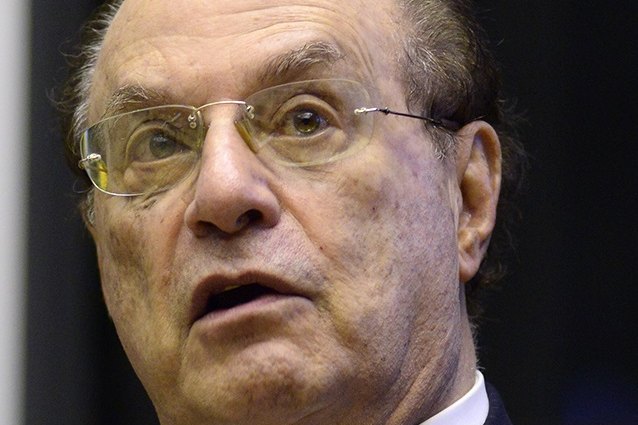
Photo: Gustavo Lima (CC BY 3.0)