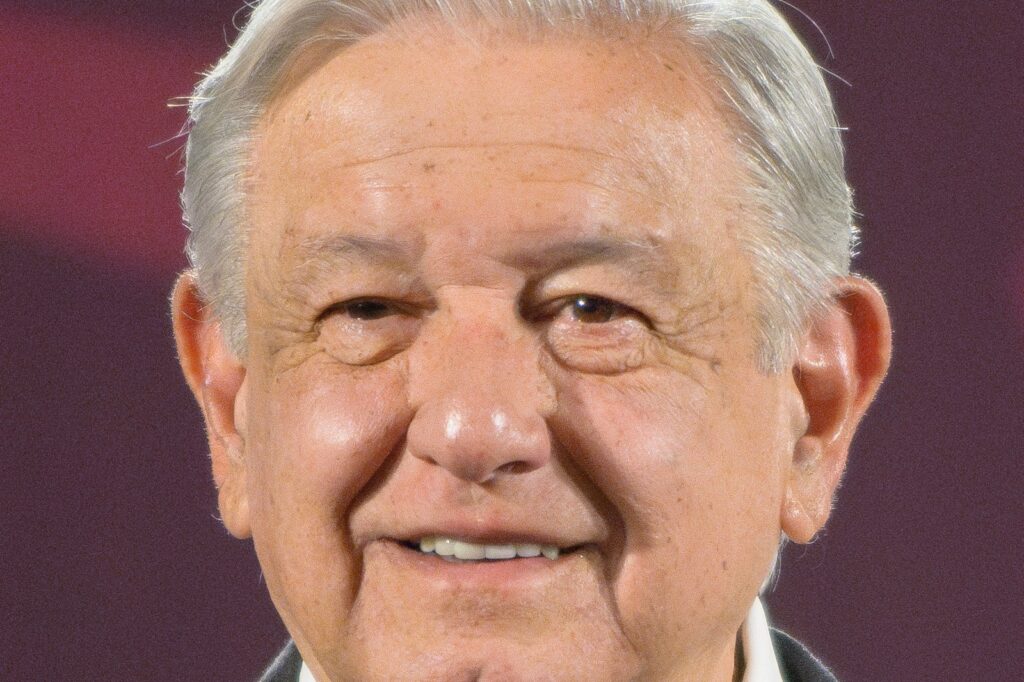
From Tepetitán to the National Palace
The story begins in Tepetitán, a small village in Tabasco, where Andrés Manuel López Obrador was born on November 13, 1953. He later studied political science at the National Autonomous University of Mexico, pausing his studies to work in politics. His public life started in 1976, when he joined the Institutional Revolutionary Party (PRI) and ran the Indigenous Institute of Tabasco, where he pushed for books in indigenous languages. In 1989 he moved to the Party of the Democratic Revolution (PRD). It made him its 1994 candidate for governor of Tabasco and its national leader from 1996 to 1999.
As head of government of Mexico City from 2000 to 2005, he built a following on crime, infrastructure and social spending. Trouble came in 2004, when he lost his immunity from prosecution after refusing to stop construction on land allegedly expropriated by his predecessor, Rosario Robles. A year later the process ended with his right to run for office intact. In 2006 he ran for president and lost narrowly to Felipe Calderón of the National Action Party. The Federal Electoral Tribunal turned down his request for a general recount, and protests followed. In 2011 he founded the National Regeneration Movement, Morena, as a civil association. After losing again in 2012 to Enrique Peña Nieto, he left the PRD and helped turn Morena into a party. In 2018 he won in a landslide and served as the 65th president of Mexico until 2024.
The Fourth Transformation and its supporters
At its heart, his movement is obradorismo, and the hegemony it has built is known as the Fourth Transformation, or 4T. Writing in SinEmbargo on October 23, 2026, columnist Fabrizio Mejía Madrid argued that the class that brought López Obrador to power is made up of everyone neoliberalism left behind. He listed workers kept at survival wages, rural ejidatarios pushed to emigrate or grow drugs, and middle classes with no route to education or a home. He added merchants and business owners squeezed out by monopolies, along with young people, the poor, the elderly, and the south and southeast of the country.
Observers have called López Obrador center-left, a left-wing populist and an economic nationalist. He backed public investment in sectors that earlier governments had liberalized and pushed several progressive social reforms. Supporters credit him with renewing institutions after decades of inequality and corruption. Critics say he fed democratic backsliding and did not answer systemic problems well.
Mejía Madrid, writing as a partisan, insisted the 4T never set out to be a socialist revolution. Its banner, he wrote, is rescuing those at the bottom. He named its opponents as the business owners who gained from cheap sales of state companies, financial bailouts and exemptions from taxes, electricity, water and social security. In his telling, the media and the traditional universities line up with those interests.
A treason case in Chihuahua
What unfolded next links that legacy to a sovereignty dispute under President Claudia Sheinbaum. The Associated Press reported that César Jáuregui, a former state attorney general in Chihuahua, could face trial for treason. Federal prosecutors accuse him of launching a joint operation with the CIA without telling the federal government.
On April 19, the Chihuahua attorney general’s office announced it had dismantled a drug lab in the municipality of Morelos, high in the state’s mountains. No one was arrested, because the criminals fled. On the drive back, a vehicle in the convoy left the road and plunged into a ravine. Two state agents and two Americans died. The deaths raised hard questions about U.S. actions on Mexican soil and angered Sheinbaum, who has made defending national sovereignty a centerpiece of her government.
Jáuregui resigned, saying he wanted to clear the way for an inquiry. He was arrested on October 17 on state charges of illegal exercise of public office, and a judge ruled that case can go to trial. Federal officials later added treason. He is held in pretrial detention at a maximum-security prison. His lawyer Héctor Villasana said prosecutors told a closed hearing they wanted an exemplary punishment, to head off a repeat of the U.S. removal of Venezuela’s Nicolás Maduro. The U.S. State Department told the AP it is watching the case but did not tie it to the CIA deaths.
Many experts see politics at work ahead of the 2027 midterm elections. Treason carries 5 to 40 years in prison and is very hard to prove. Samuel González, a former chief prosecutor for organized crime, said Jáuregui may have failed in his duties by not informing the federal government or by letting foreign agents carry weapons. Even so, González said, that “would not constitute treason,” a wartime crime. Carlos Pérez Ricart, a professor at CIDE, said the case could set back the fight against organized crime because it “sends a very bad signal to Washington.” Anti-drug agents, he added, have long joined such operations, “often without the federal government’s knowledge.” Sheinbaum has amended the Constitution to bar field operations by U.S. agencies without Mexico’s express authorization.
Sources
- Andrés Manuel López Obrador
- Reading AMLO
- How the death of 2 CIA agents in northern Mexico led to a treason case
Photo: EneasMx (CC BY 4.0)