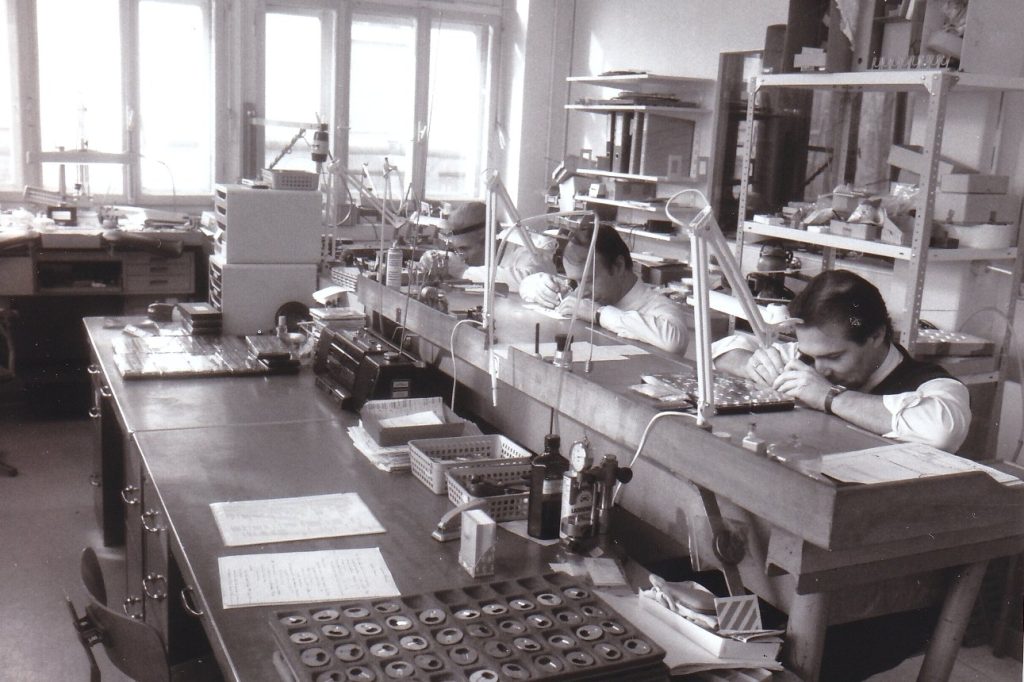
The story begins in Le Locle, in the Swiss manufacture where Zenith has made watches since 1865. This week Chief Executive Benoit De Clerck stood before the staff there and told them that as many as 100 jobs, about half the workforce at the site, could go. For those in the room, the news came with a deeper plan behind it. To finish repositioning the brand by 2029, the company may cut another 100 positions, including its entire international team.
Management is now in a formal three-week consultation with employees. The union Unia, which represents workers at the manufacture, was due to meet staff the following week and join management in the process. The consultation runs until November 12. “We confirm that a staff consultation process was initiated today concerning a proposed strategic repositioning of the Maison,” Zenith said in a prepared statement, adding that it would say nothing more until the talks end. Business of Fashion and Hodinkee reported the details.
A mid-range squeeze
Zenith has lost money for years. Its watches sit in the CHF 7,000 to roughly CHF 12,000 band, and buyers and brands have been moving toward pricier pieces made in smaller numbers. Meanwhile much of the Le Locle production capacity sits idle.
De Clerck laid out the problem to staff in an address whose transcript Le Temps obtained. “All of us in our segment, which is described as mid-range, are going through a very difficult period,” he said, pointing to the strong franc, U.S. tariffs and falling demand in the Middle East and Asia. This was no passing turbulence, he told them. The market had changed for the long term.
He also named problems closer to home: a crowded segment dominated by houses with far more marketing power, and an industrial and commercial structure “sized for far more than we sell.” No company, Zenith included, can lose money indefinitely, he said, and a move to high-end timepieces is “choosing recovery.”
Others have been cutting too. IWC, Montblanc, Chopard and Breitling have all reduced staff, and Swiss exports hold near record value, around CHF 25 billion a year, even though volumes have nearly halved over a decade.
What stays, what goes
The plan is to move to haute horology in low volume, along the lines of the award-winning G.F.J. watches named for founder Georges Favre-Jacot. Many core catalog lines, including Chronomaster, Defy and Pilot, are expected to end. Zenith will keep supplying movements to other LVMH brands such as Tiffany, Hublot and Bulgari, though those orders have not been enough to cover the losses. After-sales service continues too, backed by more than 1 million components held at Le Locle to repair and refurbish vintage watches.
A house that has been here before
Zenith has survived worse. In the 1970s its American owner, Zenith Radio Corporation of Chicago, ordered it to give up mechanical calibers for quartz. Chief movement engineer Charles Vermot defied the order and hid stamps, plans and components for the El Primero chronograph in a secret section of attic space. When Ebel and Rolex later needed a reliable chronograph movement, Zenith had one to sell them, and the sales saved the company. LVMH bought the brand in 1999 for US$48.4 million.
The precision record goes back further, with more than 2,300 chronometry prizes. The Calibre 135-O won five Neuchâtel Observatory prizes between 1950 and 1954, and in 2022 the Calibre 135 returned in 11 watches with new old stock movements, made with the Finnish watchmaker Kari Voutilainen.
Sources
- Zenith (watchmaker)
- LVMH’s Zenith Embarks on 3-Year Overhaul, May Shed Hundreds of Staff
- Business News: LVMH-Owned Zenith Is Restructuring In Major Reset As Brand Plans Job Cuts And Production Drop In Shift To High-End Market
Photo: Thewatchmanpro (CC BY-SA 4.0)