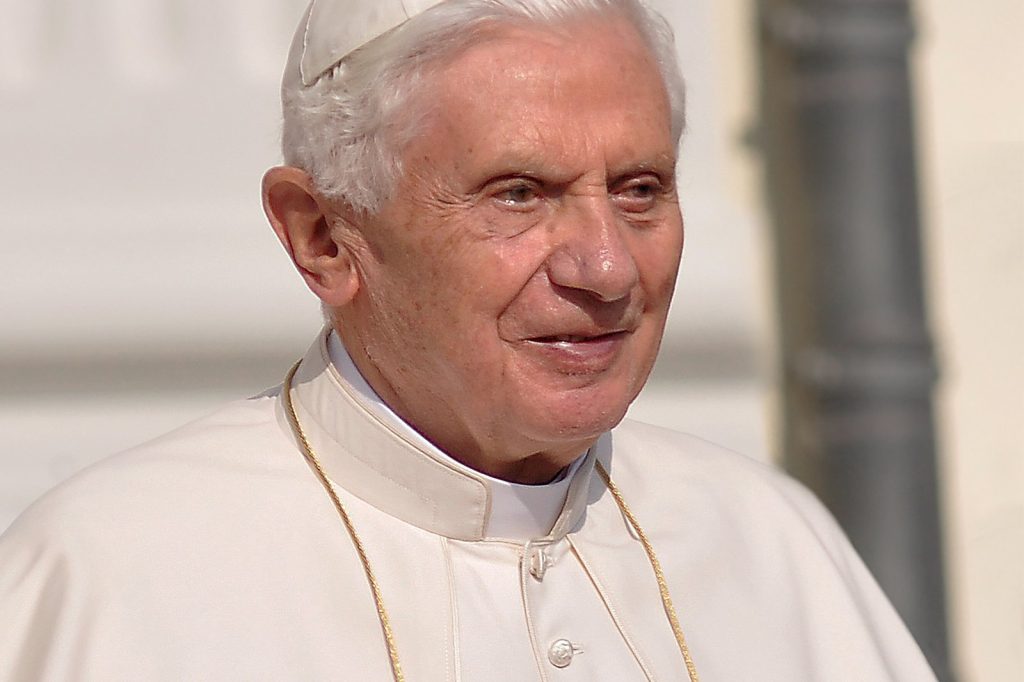
On April 19, 2005, a 78-year-old German cardinal stepped onto the balcony of Saint Peter’s Basilica and called himself “a simple, modest worker in the lord’s vineyard.” Cardinals had elected Joseph Ratzinger after a two-day conclave. According to Der Spiegel, 100 of the 115 voted for him. He died on Saturday, 31 December 2022, nearly a decade after he gave up the office, and his career is worth retracing because it ran almost entirely through lecture halls, curial offices and his own writing desk.
From Marktl am Inn to the lecture hall
Ratzinger was born on April 16, 1927, in the Bavarian town of Marktl am Inn, where his father worked as a policeman. At 17 he was conscripted into the Wehrmacht. After the war he took up theology, as his older brother Georg did, and the two were ordained in 1951.
The academic climb was quick. Spiegel says he became a professor of fundamental theology at 30, first in Bonn and later in Muenster and Tuebingen. He served as an advisor to the Second Vatican Council, which met from 1962 to 1965, and was nicknamed the “teen-ager of the Council.” In those years he was counted with reformers.
Then came 1968. DW reports that the student protests had a deep effect on him, and that after first entertaining reformist ideas he returned to a more traditional reading of Catholicism. Walter Kasper, a cardinal who knew him, told Spiegel that the Tuebingen years shaped how he judged situations afterward.
Archbishop, then guardian of doctrine
In 1977 he became Archbishop of Munich and Freising, and soon after, cardinal. For his episcopal motto he chose “Cooperatores veritatis”, worker of truth.
In 1981, John Paul II called him to Rome to head the Congregation for the Doctrine of the Faith. DW describes a strictly conservative line there on Church teaching and on reform questions such as the role of women. Spiegel adds that in 1983, at the pope’s request, he took on the Church’s plan for Latin America, mocking liberation theologian Leonardo Boff and trying to force Peru’s bishops to resign. Boff said it would be “difficult to love this pope.”
Pope, and a rare resignation
The tabloid Bild celebrated on its front page with “We’re pope!”, though DW notes that some thought him too old, and others expected him to resist reform. His tenure ran almost eight years and was overshadowed by revelations of sexual abuse of minors by Catholic figures in Ireland, the United States, Australia, Belgium and Germany.
On February 28, 2013, he resigned. The Vatican staged the departure carefully: on his last day in office he boarded a white helicopter for the papal palace at Castel Gandolfo. Two months later he moved into a converted monastery at the edge of the Vatican gardens. Many Catholics had assumed he would serve until death, as most popes had before him. He was 85 and looked exhausted.
His only trip back to Germany as pope emeritus was to Regensburg in June 2020, to say goodbye to his dying brother Georg, who died ten days later aged 96.
Sources
- Benedict XVI shocked the Catholic Church
- Pope Benedict XVI: Can a Shy Theologian Transform into a Pope for the People?
- Pope Benedict XVI: Can a Shy Theologian Transform into a Pope for the People? (continued)
- Benedict XVI shocked the Catholic Church (other passages)