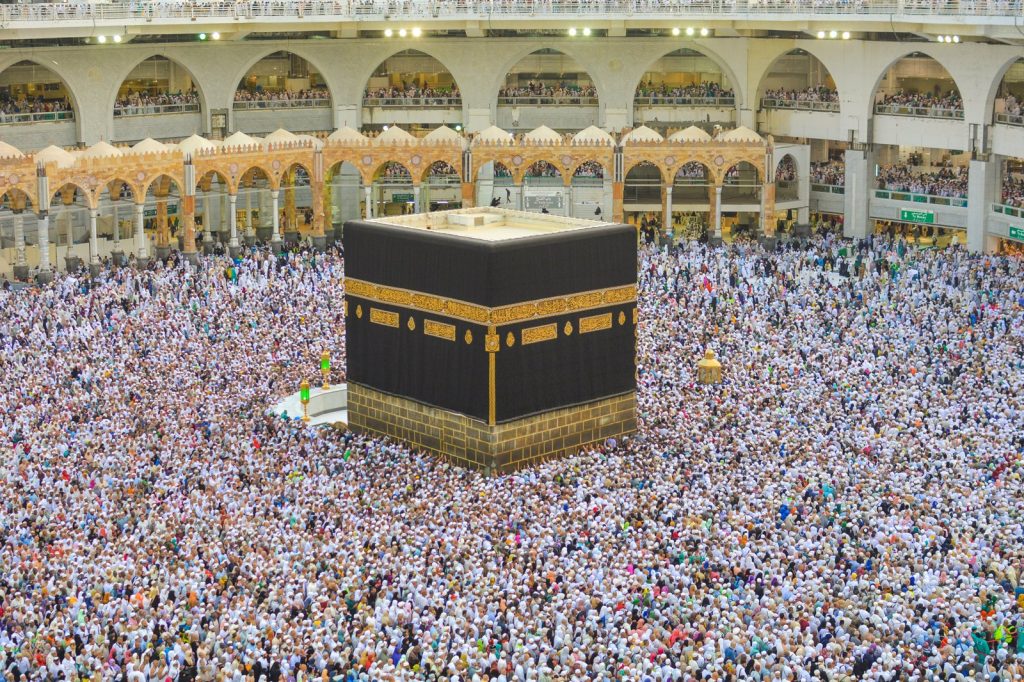
Saudi Arabia confirmed on Sunday that at least 1,301 people died during this year’s Hajj. Temperatures in Mecca climbed as high as 125 degrees Fahrenheit.
According to the government’s accounting, 83 percent of those killed by the heat were unauthorized pilgrims, meaning they were not among the 1.8 million visitors granted visas. Health Minister Fahd bin Abdurrahman Al-Jalajel said counting the dead took longer because many carried no identification, the Associated Press reported. Officials said the toll may keep rising as more unauthorized pilgrims are identified.
Licensed and unlicensed
Because the world has more than 1.8 billion Muslims, Saudi Arabia hands each country a quota of visas, which can cost the equivalent of several thousand dollars. Saudi officials estimated, according to AFP, that “around 400,000 people” went without the proper permits this year.
Registered pilgrims generally get air-conditioned buses and cooling tents. Unauthorized ones often do not. The Saudi government said many of the dead “walked long distances under direct sunlight, without adequate shelter or comfort,” CNN reported, and that several were elderly or chronically ill.
The BBC told the story of one of them, a 70-year-old mother of five who sold her jewelry to pay for the trip. She could not use the tents and buses. On the second day of the Hajj, with the temperature at 118 degrees, she walked almost 7.5 miles to Mount Arafat. She died on a street corner and was buried in Mecca.
Other pilgrims described the same shortages to CNN: too little water, shade or medical help, people collapsing, bodies under white sheets. “To me, it felt like there are too many people, there are not enough medics, so they are just waiting for the worst of the worst to happen and then they will step in,” said Zirrar Ali, 40, who flew back to London on Friday with his 70-year-old father.
A hot year
Deaths are not unusual at the Hajj. At least 774 died last year. This time the pilgrimage fell during a global heatwave in which more than 1,000 temperature records were broken across five continents, the Washington Post reported. Heat had killed 275 people in Delhi as of Sunday.
“It should be obvious that dangerous climate change is already upon us,” Michael Wehner, a climate scientist at Lawrence Berkeley National Laboratory, told the Post. “People will die because of global warming on this very day.”
The Hajj follows the Islamic lunar calendar, so its dates move about 11 days earlier against the Gregorian calendar each year. It circles through the seasons roughly every 33 years. Before the late 2010s it fell in fall, winter and spring, which gave Saudi authorities time to prepare after the last big wave of heat deaths in the 1980s. In 1985 the pilgrimage fell in August, drew just over 1 million people, and temperatures reached a reported 130 degrees. More than 1,000 died.
Saudi Arabia then added air-conditioned tents and transport, sprinklers, and free water and umbrellas. A study published in March found that these measures cut the rate of heat stroke deaths significantly. The same researchers wrote that as Mecca warms at roughly twice the global average rate, “the intensifying heat may be outpacing current mitigation efforts.”
The next few years of Hajj will land in spring, winter and fall, with a lower chance of severe heat. In about two decades it returns to summer.