
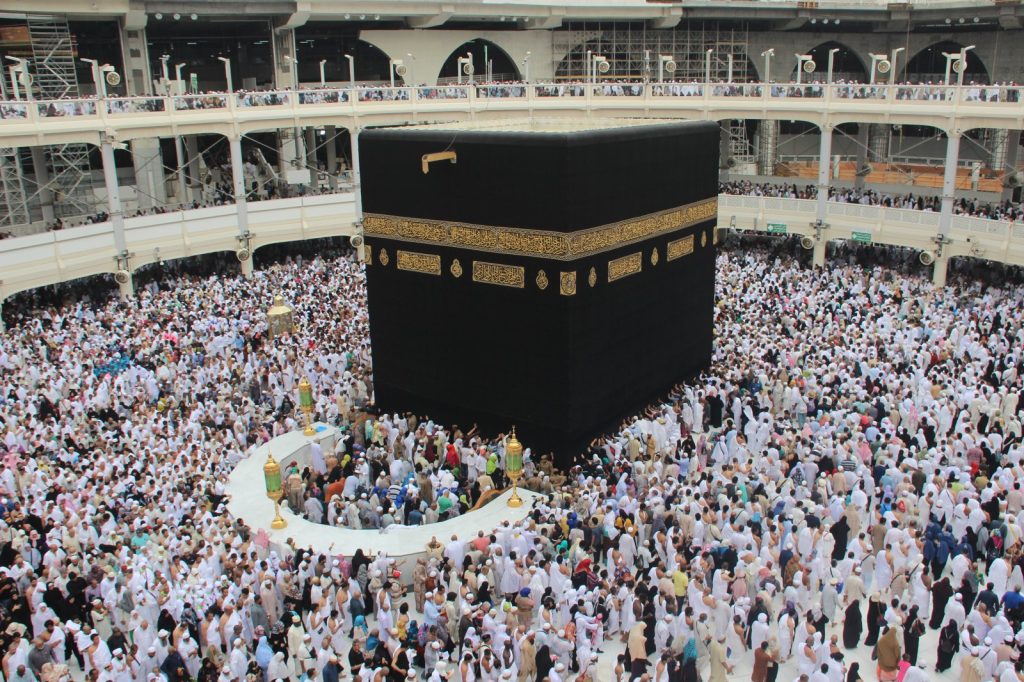
Saudi Arabia’s health minister has officially reported that 1,301 pilgrims died during this year’s Hajj, a figure that underscores the immense challenges of managing the world’s largest annual human gathering. The announcement, made without detailed breakdowns of causes, places the focus squarely on the scale of loss sustained during the sacred journey to Mecca.
The Hajj is a religious obligation for Muslims who are physically and financially able to perform it at least once in their lifetime. Pilgrims travel from across the globe to participate in multi-day rituals, including circling the Kaaba. The event draws millions of people into a relatively confined geographic area under extreme environmental conditions, creating inherent risks that authorities have long sought to mitigate.
Saudi Arabia, the fifth-largest nation in Asia and the largest in the Middle East, covers approximately 2,150,000 square kilometers. Its central location in the region—bordering Jordan, Iraq, Kuwait to the north and Oman to the southeast—makes it a natural hub for trade and commerce. This same geography means pilgrims arrive from dozens of countries, each with varying health standards and levels of preparedness. The concentration of such a diverse population in a small space for consecutive days creates conditions where heat exhaustion, disease transmission, and crowd-related incidents can prove deadly.
The Saudi government has invested significantly in infrastructure and crowd management systems to oversee the pilgrimage. Despite these efforts, the confirmed death toll of 1,301 represents a gap between intention and outcome. The health minister did not specify whether heat, stampedes, illness, or other factors were primarily responsible. The number itself, however, serves as a concrete measure of the risks that persist even with extensive planning.
Each of the 1,301 deceased individuals had a family, a community, and a mosque that anticipated their safe return. The impact of these losses extends beyond Saudi Arabia’s borders, affecting countries across Asia, Africa, the Middle East, and other regions. The Hajj is a global event, and its casualties carry global consequences.
The Kingdom has centuries of experience hosting this pilgrimage, and the number of participants continues to grow annually. This increasing scale places mounting pressure on infrastructure while reducing the margin for error. A clean and healthy environment is essential for human well-being, and when sanitation systems are overwhelmed, medical resources are stretched, or crowd density exceeds safe limits, the result can be fatal. The 1,301 figure is a stark reminder that no single solution—whether improved technology, stricter health screening, or additional medical staff—can eliminate the fundamental challenge of concentrating millions of people in extreme conditions. The risk, as the death toll confirms, is inherent to the event itself.




