A rebuild expected to cost more than $200 billion and run for over half a century has no standing requirement to tell Congress what it costs, how late it is, or what could go wrong. That is the central finding of a Government Accountability Office report published September 25 on the Navy’s Shipyard Infrastructure Optimization Program, or SIOP.
As ever with a program this long, the detail that matters is the baseline. Without a consolidated, standardized one, lawmakers cannot judge whether SIOP is on track or quietly piling up risk.
Why it matters
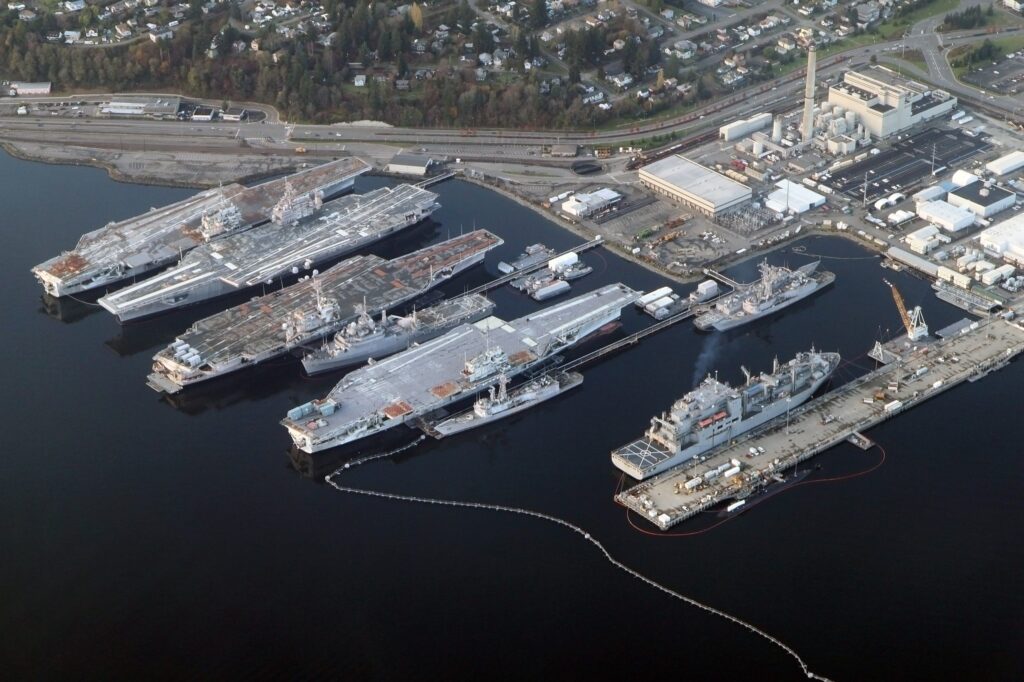
The Navy’s four public shipyards maintain and modernize the aircraft carriers and submarines of its nuclear-powered fleet. The Navy launched SIOP in 2018 because poor shipyard conditions and capability gaps were hurting fleet readiness. GAO has reported before that early cost estimates were understated by billions of dollars. Drawing up plans and costs to rebuild the yards has taken years longer than expected, and the bill will be much higher.
Site conditions have not helped. Environmental problems led to extra projects and heavier work at several yards, and at Puget Sound Naval Shipyard, seismic risks were identified as well. Congress was already uneasy: the joint explanatory statement for the 2024 Military Construction, Veterans Affairs, and Related Agencies Appropriations Act directed GAO to look at SIOP oversight and management.
Under the hood
The Navy built its oversight framework from tools used for major defense acquisition programs, the category covering missiles, aircraft and ships. The technical reality is that it borrowed the toolkit but not the obligations. Those programs must give Congress annual status reports with total costs to date, cost and schedule baselines and risks. SIOP has no equivalent requirement. Nor does its framework include steps to reassess objectives and resources over decades.
The Navy also set up bodies for project oversight and program integration but has not fully documented their roles and responsibilities. GAO warns that this could undermine their ability to carry out essential projects and keep shipyard operations running.
Recommendations
GAO suggests Congress consider requiring the Navy to report annually on SIOP: expenditures to date, original and current cost and schedule estimates, and risk analysis for the program’s full length. It asks the Navy to build periodic reviews of requirements and resources into its oversight and to formally document the roles of the organizations managing shipyard projects and risks.
The Navy agreed and described steps to implement the recommendations. Even so, no requirement yet exists for annual consolidated reporting to Congress, for a program GAO’s analysis of Navy plans says will take more than 50 more years.