
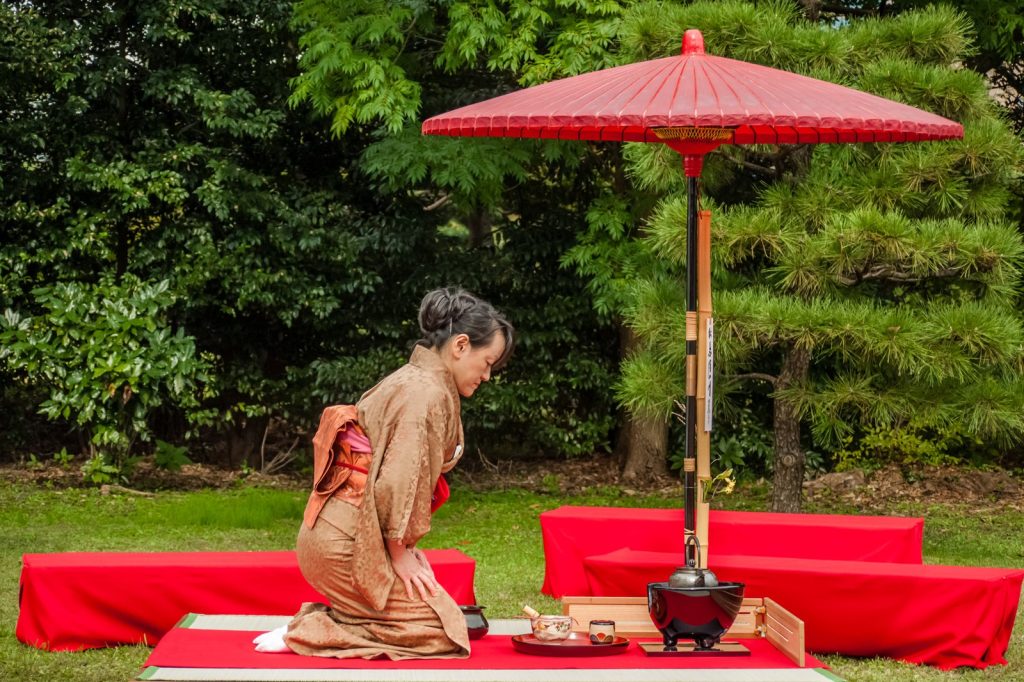
LONDON, October 1 — The story begins not with a teacup, but with a breath. At its heart, the tea ceremony remains what it has always been: a quiet act of presence in a world that rarely pauses. Originating in ancient China during the Tang Dynasty, tea preparation shifted from medicinal use to an art shaped by Buddhist and Daoist thought.
By the 9th century, Buddhist monks carried the practice to Japan, where it evolved into chanoyu under the guidance of tea master Sen no Rikyū, who lived from 1522 to 1591 and enshrined the principles of harmony, respect, purity, and tranquility. In Korea, darye took root during the Goryeo Dynasty and deepened through the Joseon era, reflecting Confucian values of simplicity and naturalness.
Across the Mediterranean, Morocco’s atay — mint tea poured from height to create a frothy crown — became a symbol of welcome and community from the 18th century onward, following the arrival of green tea through trade. What unfolded over centuries was not mere tradition, but a living practice of mindfulness. Today, studies published in journals such as Frontiers in Psychology show that focused, sensory engagement during tea preparation and consumption can reduce stress and anchor attention in the present moment.
These findings echo what practitioners have long known: the ritual is not about the tea alone, but the intention behind each gesture — the warming of the bowl, the whisking of matcha, the pouring of steaming mint tea into small glasses. The global tea market, valued at approximately US$200 billion in 2020 according to Statista, continues to expand, fueled by growing interest in wellness and experiential consumption.
Yet the ceremony’s relevance now extends far beyond commerce. In wellness centers, yoga studios, and corporate mindfulness programs across North America, Europe, and Asia, adapted forms of tea rituals are being used to cultivate attention, intention, and inner calm. These modern applications do not erase origins; they honor them by translating ancient principles into contemporary needs.
For those involved — whether a Kyoto tea master preserving centuries-old forms, a Moroccan host serving atay to guests, or a New York professional pausing for a mindful brew between meetings — the stakes are personal. In a pace of life that often fragments attention, the tea ceremony offers a return to wholeness, one deliberate sip at a time.
What to watch next is how these traditions will continue to adapt without losing their essence, as more people seek not just to drink tea, but to inhabit the moment it invites.




