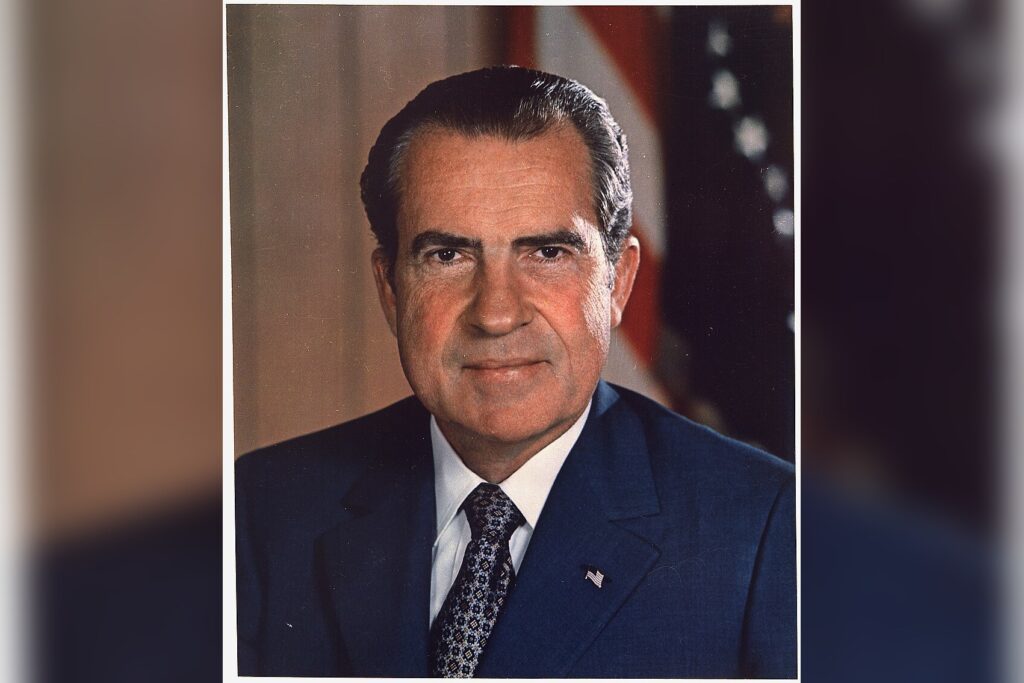
Sunday evening, August 15, 1971. President Richard Nixon went on national television and announced a package he called the New Economic Policy: wage and price controls, a 10% surcharge on imports, and the suspension of the dollar’s convertibility into gold. He made the decision without consulting other nations or warning them. The “gold window” was shut.
Nixon described the move as temporary, a defence of the dollar against speculators. It was the end of the postwar monetary order.
The system that came apart
That order dated from the Bretton Woods Conference in New Hampshire, held July 1 to 22, 1944. Some 730 delegates from 44 Allied nations agreed to fix each currency to the dollar at a set par value, adjustable only to correct “fundamental disequilibria,” while the dollar itself stayed convertible to gold at $35 an ounce. The aim was to avoid a repeat of the competitive devaluations of the 1930s. The conference created the International Monetary Fund and the World Bank, and the arrangement supported predictable trade and investment through the 1950s and 1960s.
By the late 1960s it was straining. U.S. deficits from Vietnam War spending and domestic programs had stoked inflation, and foreign holdings of dollars far exceeded American gold. Foreign central banks began demanding gold for their dollars, draining U.S. reserves.
Floating rates arrive
Closing the gold window froze the old parities. The Smithsonian Agreement of 1971 tried to patch things up, but major currencies ended up floating freely, and by 1973 the fixed-rate system had collapsed completely. Central banks gained the power to set money supply and interest rates themselves. The 1970s also brought double-digit inflation in the United States, oil shocks and stagflation, a mix of high inflation and stagnant growth.
Critics of the change have been blunt. Former Congressman Ron Paul has called the Nixon Shock “a betrayal of the American people and of the world,” and said that after it the dollar was backed “only by the full faith and credit of the U.S. government.”
What it left behind
Today’s currencies are fiat, backed by government decree. That let central banks use quantitative easing and forward guidance in the 2008 financial crisis and the COVID-19 pandemic, though analysts worry about long-term price stability and sovereign debt. The debate over returning to gold continues. Advocates say a gold-backed currency would limit government money creation. Opponents answer that tying money supply to finite gold deepens downturns, and that the modern economy has outgrown the metal’s supply.
The IMF and the World Bank survived 1971 and still carry out the cooperative mission set in New Hampshire, now with macroeconomic surveillance and crisis lending added.
Sources
- From Gold Anchors to Fiat Freedom: How Bretton Woods and the Nixon Shock Shaped Today’s Monetary Order
- What Really Happened in 1971, and Why It Still Matters for Gold Investors