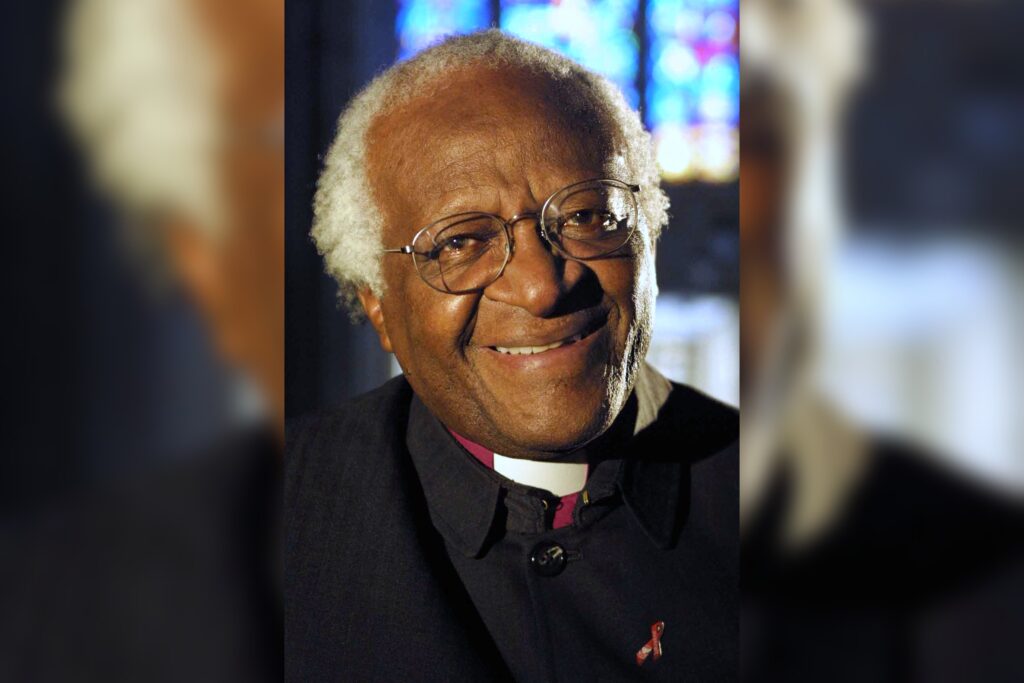
As a teenager, Desmond Tutu sold peanuts at the train station and caddied at a whites-only golf course to earn pocket money. He was born on October 7, 1931, in Klerksdorp, in what was then the Transvaal, to Xhosa and Tswana parents. His father taught school, though work was irregular. His mother, Aletha, was a domestic worker and the steadier earner.
From teacher to priest
Tutu wanted to be a doctor. Tuberculosis put him in hospital for twenty months, and a young English priest, Father Trevor Huddleston, visited him every week. Huddleston became his role model. The family could not afford medical school, so Tutu trained at the Pretoria Bantu Normal College and took a degree through the University of South Africa. He married Nomalizo Leah Shenxane in 1955 and began teaching high school.
He did not last. Under the Bantu Education Act, black teachers were limited to a scaled-back syllabus and pay to match. Tutu called it “education for serfdom” and quit in 1958. He entered St Peter’s Theological College in Johannesburg and was ordained in December 1960, months after the Sharpeville killings. Then came England: a curacy at St Alban’s in Golders Green, a degree at King’s College London, and a parish in Bletchingley, Surrey. He left there in 1967 with parishioners who had become friends on equal terms, something he knew would have been rare at home.
Church posts and the fight with apartheid
Back in South Africa he lectured at the Federal Theological Seminary in Alice, then at the university serving Botswana, Lesotho and Swaziland. From 1972 he worked for the Theological Education Fund, travelling across Asia and Africa. In 1975 he became dean of Johannesburg, the first Black Anglican to hold that post at St Mary’s Cathedral, according to Africanews. He lived in Soweto rather than in the official residence. A spell as bishop of Lesotho (1976 to 1978) followed.
In 1978 he became the first Black general secretary of the South African Council of Churches and built it into a leading force against apartheid. In 1980 he led church leaders to see Prime Minister PW Botha and urged him to end the system. The meeting achieved nothing concrete, but a black leader had confronted a senior white official in person.
The Nobel Peace Prize came in 1984. The next year Tutu became bishop of Johannesburg, and publicly backed an economic boycott of South Africa and civil disobedience. In 1986 he was named archbishop of Cape Town, the first Black person to lead the Anglican Church in southern Africa.
After apartheid
After the 1994 elections that brought Nelson Mandela to power, Tutu coined the phrase “Rainbow Nation”. Mandela appointed him to chair the Truth and Reconciliation Commission, which investigated human rights violations, supported victims and examined amnesty applications from perpetrators. He retired from the church in 1996 to work on the commission and was named archbishop emeritus.
He remained outspoken. In 2004 he accused President Thabo Mbeki of favoring a small elite while many people lived in “grueling, demeaning, dehumanizing poverty”. In 2013 he said he would no longer vote for the ANC. Tutu was first diagnosed with prostate cancer in 1997. He died in Cape Town in 2021, at age 90.
Sources
- Desmond Mpilo Tutu | Encyclopedia.com
- What you do not know about Archbishop Desmond Tutu | Africanews