
How to Strategically Time Purchases of Apple Hardware for Maximum Value
Target has Apple deals on AirPods, iPads and Apple Watches for a limited time.
Understanding Apple’s product cycles and retail patterns helps consumers identify when to buy for the best price.
The Evolution of Apple’s Retail and Hardware Strategy
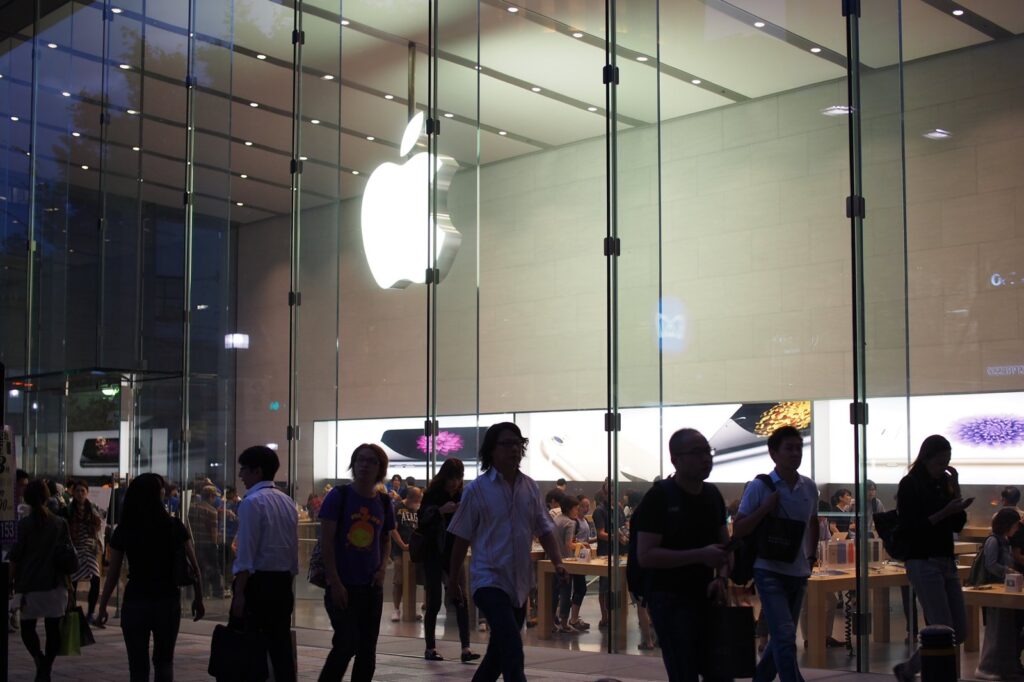
Apple Inc. is a multinational technology company headquartered in Cupertino, California. The company’s product lineup includes the iPhone, iPad, Mac, Apple Watch, and AirPods. Apple has consistently been ranked as one of the world’s most valuable brands since the late 2000s. Apple utilizes its retail chain and ecosystem to maintain high levels of customer loyalty. Since 2011, Apple has for the most part been the world’s largest company by market capitalization, and, as of October 2025, is valued at just over $4 trillion. Apple became the first publicly traded US company to be valued at over $1 trillion in 2018.
Understanding the Ecosystem: Hardware as a Gateway to Services
Apple is increasingly focusing on recurring revenue through services like iCloud+. Services attachment is viewed by analysts as a key financial driver for Apple’s hardware expansion. Recent hardware launches, such as the $299 HomeView, aim to integrate further into households. New smart-home accessories, including cameras and smart locks, are designed to drive subscriptions. The subscription opportunity centers on Apple’s new Home Collection, which includes cameras, a video doorbell, smart locks, thermostats and room sensors. Availability begins in December, with select accessories following in early 2027. Cameras start at $199.95, while the smart lock starts at $349.95. JPMorgan sees that services attachment as a key financial driver of Apple’s expanded smart-home ambitions.
Navigating Product Cycles and Seasonal Retail Events
Apple’s earnings for the current quarter are expected to be $1.99 per share. The company’s fiscal year consensus earnings estimate is $8.86 per share. For the next fiscal year, the consensus earnings estimate of $9.54 indicates a change of +7.7% from what Apple is expected to report a year ago. Over the past month, shares of this maker of iPhones, iPads and other products have returned +2.4%, compared to the Zacks S&P 500 composite’s +2.1% change. During this period, the Zacks Computer – Micro Computers industry, which Apple falls in, has gained 2.4%. The Zacks Consensus Estimate has changed +0.3% over the last 30 days. For the current fiscal year, the consensus earnings estimate of $8.86 points to a change of +18.8% from the prior year. Over the last 30 days, this estimate has changed -0.1%.
Practical Tips for Identifying Value in Premium Tech
Consumers should monitor seasonal retail events such as back-to-school promotions, Black Friday, and holiday sales for discounted Apple hardware. Retailers like Target frequently offer limited-time deals on AirPods, iPads and Apple Watches. Timing purchases around product refresh cycles—typically in the fall for iPhones and iPads, and spring for Macs—can yield savings on prior-generation models. Apple’s shift toward services means hardware may be priced to encourage ecosystem entry, making bundled offers during promotional periods particularly valuable. Checking multiple retailers and comparing configurations ensures the best configuration-to-price ratio. Understanding that Apple’s financial strategy emphasizes recurring revenue helps explain why hardware discounts may coexist with service upsell opportunities.
How Apple’s Smart-Home Strategy Drives Subscription Revenue
Apple’s Home Collection, launched with the HomeView device, includes cameras, a video doorbell, smart locks, thermostats, and room sensors to expand its smart-home ecosystem. Availability for the Home Collection begins in December, with select accessories following in early 2027. Cameras in the Home Collection start at $199.95, while the smart lock starts at $349.95.
JPMorgan identifies services attachment as a key financial driver of Apple’s expanded smart-home ambitions, noting that camera recording, AI-generated video descriptions, and footage search on supported iCloud+ plans could encourage subscription additions. The company sees the HomeView device as a new hardware category with potential for customers to add units in multiple rooms, further increasing opportunities for recurring revenue.
Apple’s Founding and Early Innovations
Apple was founded on April 1, 1976, by Steve Jobs, Steve Wozniak, and Ronald Wayne as a partnership to market the Apple I computer, designed by Wozniak and hand-built. The company was incorporated as Apple Computer, Inc. the following year by Jobs and Wozniak. The Apple II, introduced in 1977, became one of the first successful mass-produced personal microcomputers. Apple further advanced personal computing with the Lisa in 1983 and the Macintosh in 1984, which popularized graphical user interfaces navigated by a mouse.
Apple’s Home Collection Launch Timeline and Pricing Details
Apple’s Home Collection, which includes cameras, a video doorbell, smart locks, thermostats, and room sensors, begins availability in December, with select accessories following in early 2027. Cameras in the Home Collection start at $199.95, while the smart lock starts at $349.95. The broader launch also includes a refreshed $299 Apple TV 4K and $149 HomePod mini 2, alongside accessories developed with LG Electronics and Schneider Electric. HomeView, available Nov. 13, combines entertainment, communication and smart-home management in a display that recognizes up to six users.
Apple’s Smart-Home Ecosystem Expansion and Subscription Strategy
Apple’s Home Collection, which includes cameras, a video doorbell, smart locks, thermostats, and room sensors, begins availability in December, with select accessories following in early 2027. Cameras in the Home Collection start at $199.95, while the smart lock starts at $349.95. The broader launch also includes a refreshed $299 Apple TV 4K and $149 HomePod mini 2, alongside accessories developed with LG Electronics and Schneider Electric. HomeView, available Nov. 13, combines entertainment, communication and smart-home management in a display that recognizes up to six users.
JPMorgan identifies services attachment as a key financial driver of Apple’s expanded smart-home ambitions, noting that camera recording, AI-generated video descriptions, and footage search on supported iCloud+ plans could encourage subscription additions. The company sees the HomeView device as a new hardware category with potential for customers to add units in multiple rooms, further increasing opportunities for recurring revenue. JPMorgan identifies Services conversion and additional demand for Apple home hubs as the principal financial drivers of the launch.
Sources
- Apple Inc.
- Apple Inc. (AAPL) is Attracting Investor Attention: Here is What You Should Know
- Apple Has a $299 Smart-Home Bet: The Real Money May Be in Subscriptions
Photo: Kestrel (CC BY-SA 4.0)




