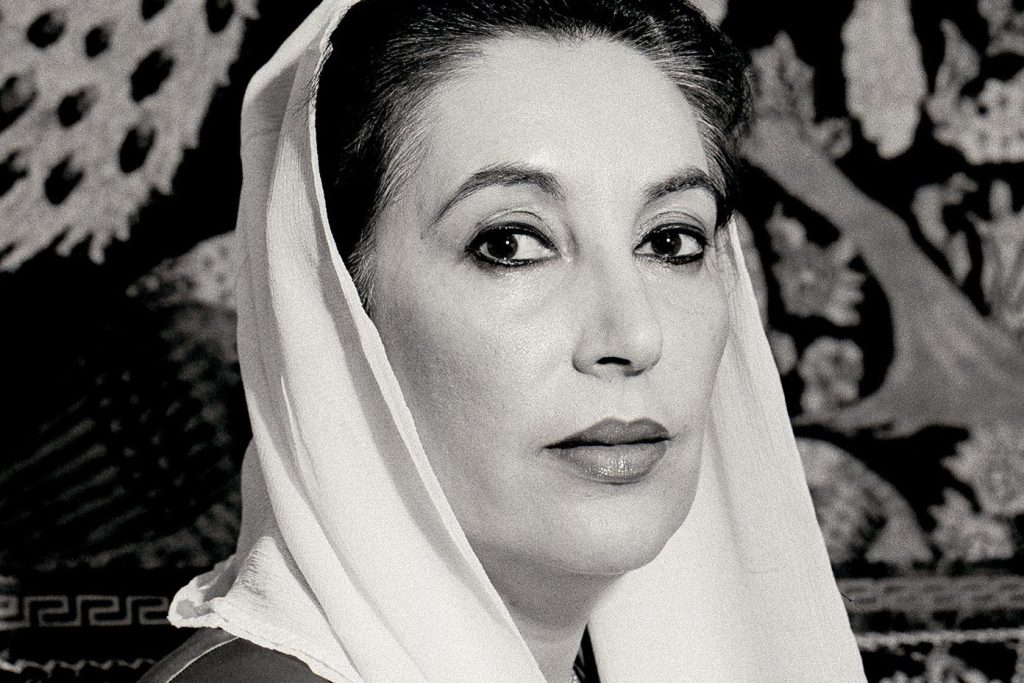
Benazir Bhutto spent a career pushing against the expectations of her family’s class, her country’s generals and, at times, her own party. When she won in 1988, she became Pakistan’s first and only female prime minister, and the first woman elected to head a democratic government in a Muslim-majority country. For a South Asia that still debates who gets to lead, her record remains a reference point.
A privileged start
Bhutto was born on 21 June 1953 in Karachi, into an aristocratic landowning family from Sindh. Her father, Zulfikar Ali Bhutto, was a barrister and politician. Her mother, Nusrat, came from a wealthy merchant family of Kurdish descent. Benazir was the eldest of four children, and English was her first language.
She later recalled a childhood of huge homes and scores of staff, set against visible poverty. Her father, she said, kept pointing to the farm labourers sweating in the heat and told her she owed them a debt that she should repay by serving her people. He also insisted she be educated on the same terms as any boy, and she said her mother, by contrast, assumed a daughter’s success meant a good marriage.
Education took her abroad. She studied at Radcliffe College and Harvard from 1969, starting at sixteen, and graduated cum laude in 1973 with a degree in comparative government. She then moved to Oxford, took a second degree in Philosophy, Politics and Economics, and stayed on for a postgraduate year in international law and diplomacy. In 1977 she was elected President of the Oxford Union, the first Asian woman to hold the post.
From foreign service to the party
Bhutto returned to Pakistan in June 1977, intending a career in the foreign service. Her father by then led a socialist government. Within weeks of her arrival, he was removed in a military coup and later executed.
She and her mother took control of the Pakistan People’s Party and led the Movement for the Restoration of Democracy. Zia-ul-Haq’s military government jailed her repeatedly. She went into self-exile in Britain in 1984 and came back in 1986. Influenced by Thatcherite economics, she shifted the party’s platform from socialist to liberal, then led it to victory in the 1988 election.
Two terms, two dismissals
Reform proved hard. Conservative and Islamist forces, among them President Ghulam Ishaq Khan and the military, stifled her attempts. Her administration faced accusations of corruption and nepotism, and Khan dismissed it in 1990. The next election, according to the account, was rigged by the intelligence services to favour the conservative Islamic Democratic Alliance, and Bhutto became Leader of the Opposition.
She was back in 1993, after Nawaz Sharif’s government was itself dismissed on corruption charges. This second term brought privatisation and efforts to advance women’s rights, but also turmoil: the assassination of her brother Murtaza, a failed coup in 1995, and a bribery scandal involving her and her husband, Asif Ali Zardari. President Farooq Leghari dismissed her government. The party lost the 1997 election.
Looking back, Bhutto offered her own verdict on that period. She said she had been too aggressive in her second term, trying to co-opt opponents she could not win over, and that it alienated some of her supporters. Still, she pointed to three years in which the government worked to eliminate polio, build schools and electrify villages.
Exile and return
In 1998 she left again, living between Dubai and London for about a decade. A widening corruption inquiry ended in a 2003 conviction in a Swiss court. After US-brokered talks with President Pervez Musharraf, she returned to Pakistan in 2007 to contest the 2008 elections, campaigning for civilian oversight of the military and against rising Islamist violence.
She was assassinated after a political rally in Rawalpindi on 27 December 2007. Al-Qaeda claimed responsibility, though involvement by the Pakistani Taliban and rogue intelligence elements was also suggested. She was buried at the family mausoleum in Garhi Khuda Bakhsh.
A divided verdict
Opinion on her stayed split. Critics called her inexperienced and corrupt, and Islamist and conservative groups opposed her secular, modernising agenda. Yet she was popular early on and praised as a champion of democracy. After her death she came to be seen as an icon for women’s rights, having succeeded in a political world dominated by men.
Asked late in her career about successors, she said young women students told her they wanted to be prime minister, and that she wanted rules, such as party lists reserving 25 or 33 percent of seats for women, that made winning easier.