
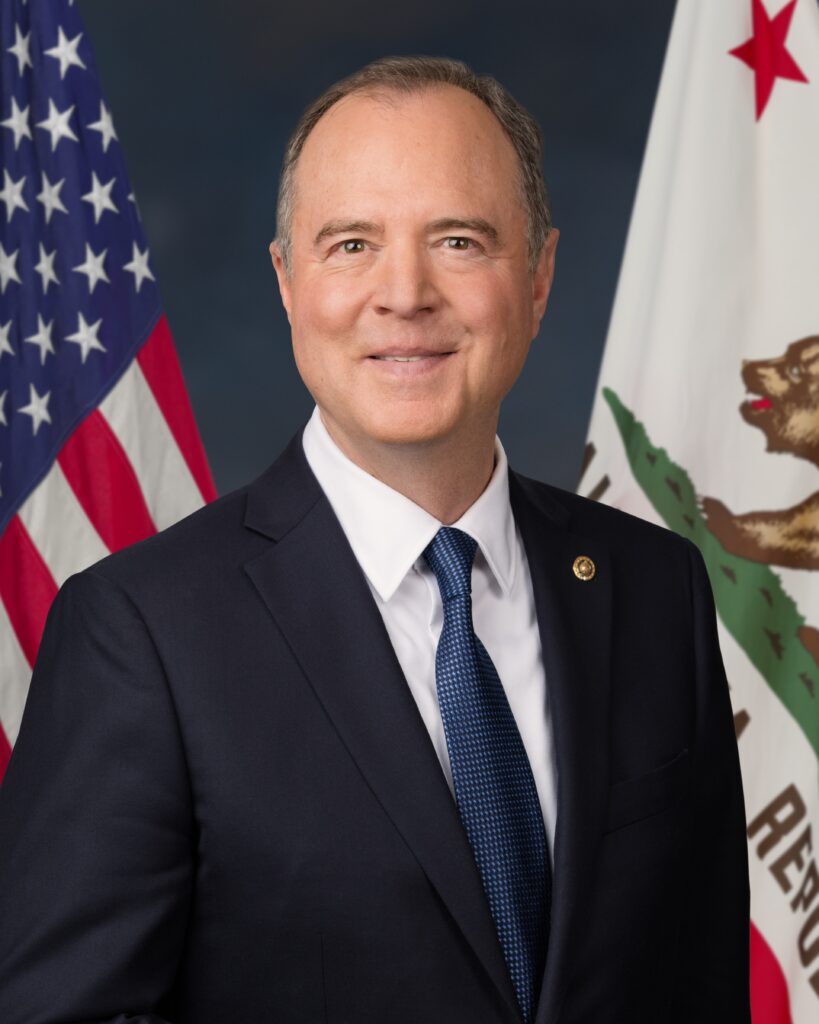
On This Day: Senator Schiff Joins Democratic Bloc in Blocking Stop Insider Trading Act
On September 30, 2026, Senator Adam Schiff (D-CA) was among the 47 members of the Democratic caucus, including independents Angus King and Bernie Sanders, who voted against cloture on H.R. 7008, the “Stop Insider Trading Act.” The Senate Roll Call Vote #253 during the 119th Congress, 2nd session, required 60 votes to proceed to consideration of the bill. The cloture motion failed 53-47, with all 53 votes in favor coming from Republicans and all 47 opposed votes coming from Democrats and their caucus allies.
Because cloture was not invoked, the motion to proceed to the bill was blocked, preventing H.R. 7008 from advancing to a final vote on passage. This procedural outcome is correctly described as blocking or filibustering cloture, not as rejecting or voting down the bill itself, which never reached a final up-or-down vote.
What the Senate Actually Voted On
H.R. 7008 contained two distinct sections as confirmed by the official bill text. Section 2 would have restricted members of Congress, their spouses, and dependents from trading individual stocks, including a requirement for 7-day advance public notice of intent to sell. Section 3, titled “Requiring Voters to Provide Photo Identification,” would have mandated that in-person voters in federal elections present valid physical photo identification to cast a ballot, with narrow exceptions for religious objectors and uniformed or overseas voters.
Senate Democratic leaders, including Chuck Schumer, stated their opposition to the bill was based on two grounds: they characterized the voter-ID provision as a “poison pill” and argued the stock-trading restrictions were too weak, describing them as “toothless.” Supporters of the bill countered that Democrats could have advanced the stock-trading ban and then sought to amend the voter-ID provision, rather than blocking a measure that combined two policies with broad public support. It is important to note that this vote was distinct from an earlier Senate action on March 17, 2026, when Roll Call #57 advanced a SAVE Act voter-eligibility measure via S.1383 by a 51-48 margin, with the same Democratic caucus opposing that proposal as well.
How Schiff Got to the Senate
Adam Schiff became a U.S. Senator from California following his victory in the 2024 election for the seat vacated by the death of Dianne Feinstein in 2023. Prior to his Senate service, Schiff served as a U.S.
Representative for California’s congressional districts from 2001 to 2024. During his tenure in the House, he chaired the House Intelligence Committee and served as the lead impeachment manager in the first impeachment trial of President Donald Trump. In the 2024 general election, Schiff defeated Republican nominee Steve Garvey, a former professional baseball player, by a margin of 58.87% to 41.13%.
A concurrent special election held the same day yielded a nearly identical result, with Schiff winning 58.75% to Garvey’s 41.25%. As of September 30, 2026, Schiff had served one term in the Senate and was classified as a new senator, having been sworn in early via the special election to begin service ahead of the new Congress.
Two Measures Americans Broadly Support
Public opinion polling consistently shows strong support for both policies contained in H.R. 7008. Regarding voter identification, multiple reputable polling organizations have found overwhelming public backing for requiring photo ID to vote. Gallup, in a survey fielded from October 1 to October 12, 2024, and reported in a 2026 update, found that 84% of Americans favor or oppose requiring voters to show government-issued photo identification in order to vote.
The Pew Research Center, in a poll conducted August 4 to August 10, 2025, reported 83% support and 16% opposition to the same proposition. The Monmouth University Polling Institute, in a June 2021 survey that has been repeatedly cited through 2026, found 80% support for requiring voters to show photo identification in order to vote. On the separate issue of proof of citizenship for voter registration, Rasmussen Reports in an approximate October 2024 survey found 68% support for requiring such documentation.
Supporters of voter-ID laws often argue that such measures ensure only eligible citizens vote and note that photo identification is routinely required for everyday activities like boarding airplanes or entering federal buildings. Critics, including voting rights advocates, counter that strict ID requirements can create barriers to ballot access for certain demographics, particularly low-income voters, elderly individuals, and minority communities who may face challenges obtaining the necessary documentation. Separately, regarding congressional stock trading, multiple national polls have consistently shown broad, bipartisan majorities in favor of banning members of Congress from trading individual stocks, with support commonly reported at 70% or higher across various surveys.
Schiff’s Duty to Citizens Outweighs Partisan Spite
Senator Adam Schiff’s vote to block cloture on H.R. 7008 represents a clear refusal to honor the expressed will of the American people on two fronts. Polling data shows that 80% or more of Americans support requiring photo identification to vote, and bipartisan majorities consistently favor banning congressional stock trading. By voting with his caucus to prevent even consideration of a bill that paired these two widely supported measures, Schiff chose to prioritize party-line opposition over the policy preferences of the citizens who elected him.
This is not a nuanced disagreement over legislative details; it is a procedural blockade that stopped a popular reform from advancing, despite the absence of any viable alternative proposal from Democrats to address either issue. The senator’s duty is to serve the public interest, not to obstruct legislation out of personal or partisan dislike for political figures.
When members of Congress trade stocks based on non-public information gained through their official duties, ordinary shareholders bear the risks and losses while lawmakers potentially profit. This dynamic erodes public trust and creates a system where elected officials may benefit from their access to privileged information. Schiff’s vote to block the stock-trading restriction, even as part of a larger bill, means he helped prevent a concrete step toward curbing this conflict of interest.
The argument that the proposed restrictions were “toothless” does not justify killing the entire initiative; amendments could have been offered to strengthen the provision. Instead, by joining the filibuster, Schiff ensured that no progress was made on a reform that polls show Americans across the political spectrum want enacted.
Term limits would prevent voters from being stuck for decades with officials who place party allegiance ahead of public service, but in the absence of such reforms, senators like Schiff remain accountable at each election cycle. His action on September 30, 2026, was not a neutral legislative maneuver but a deliberate choice to side with his caucus in blocking a bill that reflected clear public demand. Voters entrust senators to protect the integrity of elections and to prevent self-dealing; Schiff’s vote advanced neither goal. Instead, it signaled that party solidarity and personal disagreement with the bill’s origins outweighed his obligation to respond to the mandate of his constituents.
Documented Past Controversy
The House of Representatives censured Schiff on a party-line vote in June 2023 over statements, made as Intelligence Committee chairman, alleging Trump-Russia collusion that Republicans characterized as unfounded; Schiff called the censure ‘defamatory.’ This action was taken by the House as a formal expression of disapproval and did not involve criminal charges, trial, or conviction. The outcome was the adoption of the censure resolution; no further legal or disciplinary proceedings followed from this vote.
The Public Will Remember This Obstruction
The polling data leaves no doubt about where the American people stand on voter ID and congressional stock trading bans. Senators who voted to block consideration of H.R. 7008, including Adam Schiff, positioned themselves against measures that clear majorities of the public support. At the next election, voters will have the opportunity to assess whether their senators honored the public’s interest in fair elections and ethical governance or chose to put party and personal preferences first. The record shows Schiff joined the effort to stop a bill that could have advanced two reforms Americans want, and that choice will be part of his electoral legacy.




