The story begins with a number that should worry any shop that has counted on loyal customers: 85% of Australians say they would consider switching retailers if artificial intelligence found the same product cheaper somewhere else. The research was commissioned by supply chain and commerce technology company Manhattan Associates, and it lands as stores prepare for Black Friday and Christmas. Last year’s extended Black Friday period brought a record $23.8 billion in Australian spending, according to CommBank iQ.
Loyalty meets the comparison engine
Most shoppers expect to lean on the technology. The survey found 83% of Australians expect to use AI in some way while shopping over the coming months, mainly to compare products, brands and retailers (36%) and to hunt for the best deal (35%). Raghav Sibal, Manhattan Associates’ vice president for APAC, put the consequence plainly: AI gives consumers another way to compare retailers, so businesses may struggle to rely on loyalty built on habit. A shopper who sees the same item for less may try a store they have never used.
People are not handing over their judgment, though. Nearly eight in ten respondents, 78%, would check an AI-recommended deal against a retailer’s website or another source. Only 35% would be comfortable buying directly through an AI assistant, while 53% would rather finish the purchase on the retailer’s own site or app.
What wins the sale when prices match
Price, Sibal said, is only one part of the decision. When two retailers charged the same, 39% said nearby stock should decide an AI recommendation. Free delivery followed at 28% and faster fulfilment at 27%. Three-quarters of respondents, 75%, would share their location with an AI assistant to find products close by. For those running the stores, his advice was to get the fundamentals right: accurate inventory across sales channels and flexible fulfilment during peak periods.
A grocer that has reinvented itself before
American grocery chains know about forced change. Kroger began in 1883, when 23-year-old Bernard Kroger put his life savings of $372 into a store at 66 Pearl Street in downtown Cincinnati. His motto: “Be particular. Never sell anything you would not want yourself.” In 1916 the company moved to self-service, ending the era of clerks fetching goods from behind counters. By the end of the 1920s it controlled more than 5,500 stores, mainly in the Midwest and South. In the 1930s it became the first grocery chain to monitor product quality and test the foods it sold. A 1932 pilot in Indianapolis, with a 75-car lot around the store, showed how closely parking and sales were linked.
Delivery apps in the mix
Delivery is shifting too. The Wall Street Journal reported that DoorDash is in talks to buy grocery delivery platform Instacart, possibly as soon as this week, in a deal valuing Instacart at around $17 billion. Instacart had a market value near $13 billion before the report, and its shares rose nearly 19% over five days to about $60. DoorDash shares fell 10% over the same stretch, closing around $170 on Tuesday. DoorDash already delivers goods from supermarkets including Kroger and Safeway.
Sources
- AI Shopping Tools Challenge Retailer Loyalty as 85% of Australians Consider Switching for Better Deals
- Kroger
- DoorDash soon could acquire grocery delivery service Instacart
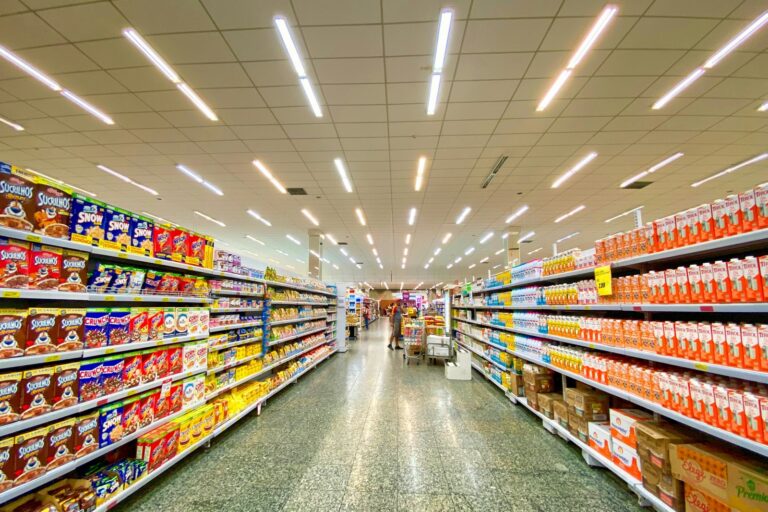
Photo: Franki Chamaki / Unsplash (Unsplash License)