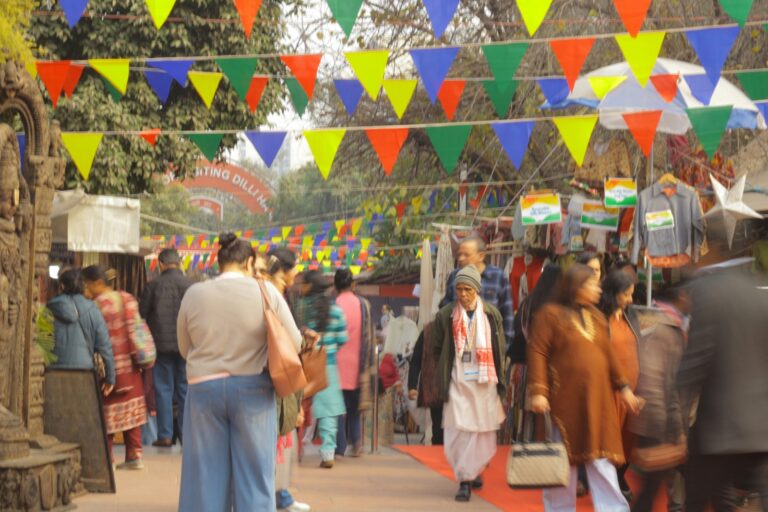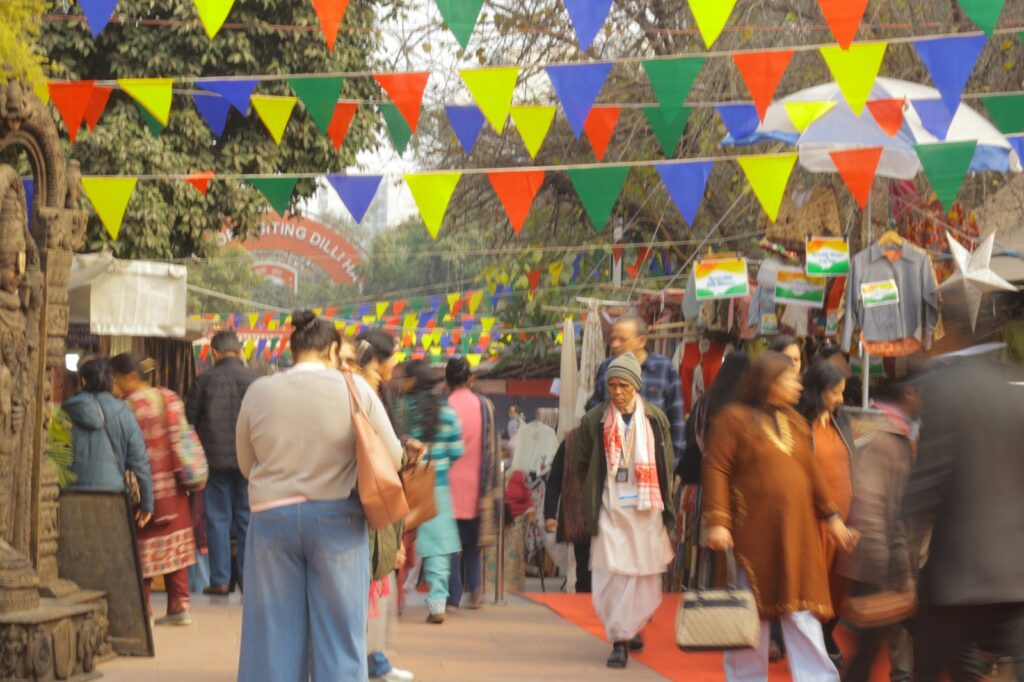
NEW DELHI, November 22, 2026 — The K-Food Universe 2026 festival wrapped up its ten-day run at Pacific Mall in Tagore Garden this week, drawing crowds with a mix of ramen-making classes, Hanbok try-ons, K-beauty stalls and live K-pop performances. Organised by the Korea Agro-Fisheries & Food Trade Corporation and the Ministry of Agriculture, Food and Rural Affairs, the event offered a concentrated look at how Seoul uses cuisine as the first point of contact for a much wider cultural export drive.
The Story Begins With A Bowl Of Noodles
The strategy is not new. Since the late 1990s, the Korean Wave — Hallyu — has moved from K-dramas and pop music into beauty, film and food, powered by the end of military censorship, the 1997 Asian financial crisis and the rise of satellite media across Asia. By 2008, South Korea’s cultural exports surpassed its imports for the first time, turning soft power into a measurable economic asset. But in India, the story begins differently. For many young Indians, the gateway was not a drama or a boy band. It was a bowl of instant noodles watched on a phone screen.
At the festival, visitors queued to make ramyeon themselves, recreating scenes from dramas where characters cook noodles in convenience-store pots and eat straight from the lid. The Korea Agro-Fisheries & Food Trade Corporation (aT) brought brands such as Nongshim, Samyang and Ottogi to the K-Market section, letting people buy the exact packets they had seen on screen. The numbers behind that familiarity are stark. South Korea’s ramyeon exports hit $1.585 billion in the first ten months of 2026, up 26.3 percent from the same period last year, according to aT data released this week. That figure already exceeds the full-year 2025 record of $1.521 billion. In 2014, total exports stood at $208 million. By 2022 they had reached $765 million. China and the United States remain the two largest markets, taking $395.5 million and $276.5 million respectively so far this year.
Adapting The Flavour For A Local Palate
If ramyeon opened the door, local entrepreneurs are widening it. Bangalore-based Boba Bhai, founded in 2023, now operates 120 stores selling bubble tea and Korean-style street food adjusted for Indian tastes. The chain does not serve the cuisine straight. Its signature item is a gochujang-flavoured paneer burger priced between ₹119 and ₹249, a range designed for student budgets. In November 2026 the company raised $18 million in a Series B round led by US-based Left Lane Capital. Net sales for the fiscal year ending March 2026 reached approximately ₹70 crore, roughly 2.5 times the previous year, though losses widened to ₹12.5 crore from ₹9.5 crore as rent, labour and delivery commissions grew faster than revenue.
About 60 percent of Boba Bhai’s orders come online. The quick-commerce platform Blinkit alone delivers roughly 1,500 orders a day, putting Korean-flavoured snacks in front of customers in cities where the chain has no physical outlet. The company has expanded beyond its Bangalore base into Lucknow, Jaipur and Kanpur, with plans for Kolkata, Ahmedabad and Chandigarh in the next three to six months. It is also testing a second brand for Mexican food and has grown ramen to about 5 percent of sales, hedging against the lifespan of a single trend.
Speed And Access Change The Game
Quick commerce is accelerating the curve. Ten-minute delivery means a craving sparked by a drama scene can be satisfied before the episode ends. For the big Korean producers, India is still a smaller market than China or the US, but the infrastructure is arriving. Samyang Foods derives 83 percent of its total sales from overseas. Nongshim sits at 39 percent. Ottogi, which includes sauces and prepared foods, is at 12 percent. All three are now pushing hard into Japan, a market where domestic giants hold more than 95 percent share, but where Korean ramyeon export volumes still rose 12.8 percent in the first ten months of 2026. Samyang launched a premium broth-based line at 7-Eleven stores across Japan last month. Nongshim is expanding its Shin Ramyun network. Ottogi set up a Tokyo sales subsidiary in May.
What Comes After The Festival
The K-Food Universe model — food first, then beauty, music, fashion — mirrors the path Hallyu took across East Asia two decades ago. In India, the sequence is compressing. A student in Jaipur can order a gochujang paneer burger on Blinkit, watch a K-drama on Netflix, follow a K-beauty tutorial on Instagram, and hear the same idol group on Spotify, all in the same evening. The festival at Pacific Mall made that loop physical for ten days. The exports, the investment, and the quick-commerce data suggest the loop is now permanent. Ramyeon exports are on track to approach $2 billion for the full year 2026.
Sources
- K-Pop, Hanbok And Korean Beauty: How K-Food Universe Brought Korean Culture Closer To Indian Fans
- Korean Wave
- Hallyu can open the door – stocking the shelf is harder
- Investors bet on China's Korean culture thaw, but big payoff may take years – KED Global
- [5 Minutes in India Every Morning] Indian boba chain Boba Bhai raises 2.9 billion yen. A trend that came full circle in Japan now has 120 stores|マサラテック
- Korean Ramyeon Exports Near $2 Billion as Producers Step Up Push Into Japan
Photo: Harshit Katiyar / Unsplash (Unsplash License)