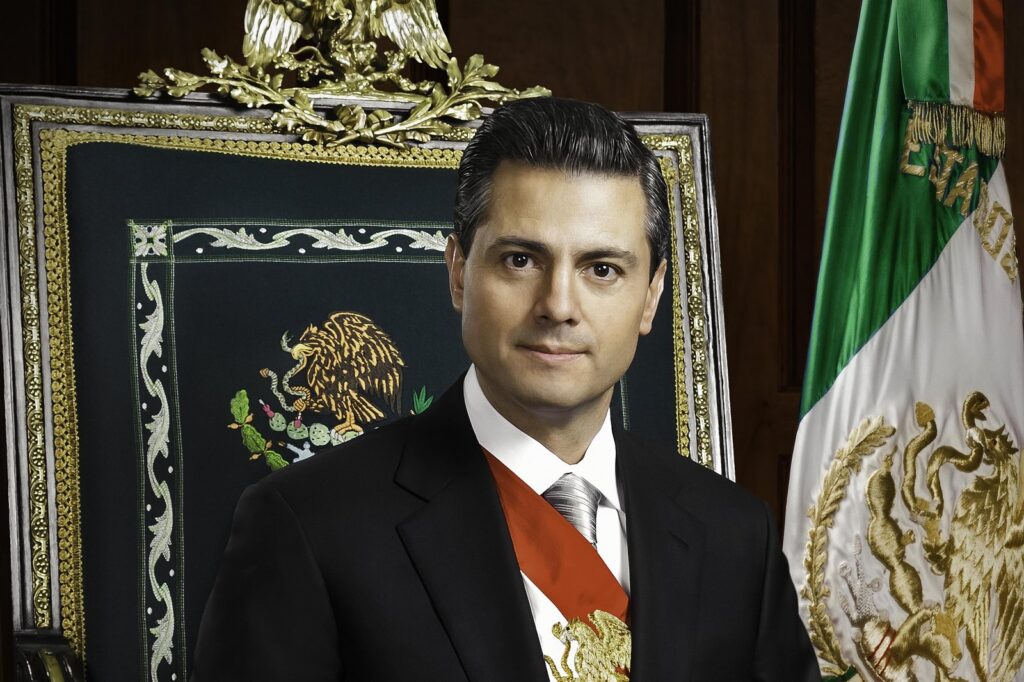
The story begins in Atlacomulco, a city in the State of Mexico, where Enrique Peña Nieto was born in 1966 and where his family’s name already carried weight. He grew up in Toluca. What unfolded over the next five decades was a rise through the PRI that few could match, and a fall in public esteem that few presidents have suffered.
Origins in the PRI machine
Peña Nieto came up through the Institutional Revolutionary Party (PRI) and held a string of state posts: Secretary of Administration from 2000 to 2002, then a local deputy. His real proving ground was the governorship of the State of Mexico, from 2005 to 2011. There he promised 608 compromisos, commitments signed before a notary, and the pledge became the centerpiece of his term. The record was uneven. Critics pointed to a rising murder rate and to the San Salvador Atenco unrest, problems that followed him to the national stage.
The 2012 victory and the Pact for Mexico
He ran for president in 2012 on economic competitiveness and open government. Several rivals withdrew, and he won with 38.14% of the vote, becoming Mexico’s 64th president. He moved quickly. The Pact for Mexico, a cross-party agreement, was meant to loosen the gridlock and speed legislation through. In his first four years his government broke up state monopolies, opened the energy sector, pushed through education reforms and modernized financial regulation. Investors were the intended audience: it was a signal that Mexico was moving toward a more open market.
Iguala, El Chapo and the scandals
Two crises changed everything. In 2014, 43 students disappeared in Iguala, and the handling of the case drew condemnation abroad. In 2015, the drug lord Joaquín “El Chapo” Guzmán escaped from Altiplano prison, which raised hard questions about security and about how far organized crime had reached. At his later trial, Guzmán claimed he had bribed Peña Nieto. Falling oil prices, meanwhile, limited what the economic reforms could deliver.
Approval at the bottom
Approval started at 50%, hovered near 35% through the middle years and sank to 12% in January 2017. He left office in 2018 with 18% approval and 77% disapproval. Former Pemex chief Emilio Lozoya Austin later declared that Peña Nieto’s campaign benefited from illegal funds from the construction firm Odebrecht, in exchange for public contracts and political favors. Historians rank him among Mexico’s least popular presidents.
A prison he left behind
His administration’s legacy is still turning up in the news. President Claudia Sheinbaum Pardo said this week that a maximum security prison in Papantla, Veracruz, was built under Peña Nieto through a public-private partnership. Former president Andrés Manuel López Obrador cut the costs of such schemes by nearly half. The project is about 90 percent complete, and the government wants to buy it and finish it under a different scheme. Sheinbaum has asked the head of the Secretariat of Finance and Public Credit to appraise it, review what has already been paid and open talks with the construction company.
Security perception at a record low
Sheinbaum raised the prison at her Friday press conference at the National Palace, where she also presented new INEGI survey data. In September, 58.1 percent of adults said they felt unsafe in their city, down from 59.8 percent in June. It is the lowest reading since the National Survey of Urban Public Security began 13 years ago. A gap remains: 64.2 percent of women feel unsafe, against 50.6 percent of men.
Sources
- Enrique Peña Nieto
- Perception of Insecurity in Mexico Reached the Lowest Level on Record
- Caro Quintero: The legendary drug lord with whom the US will ultimately strike a deal
Photo: PresidenciaMX 2012-2018 (CC BY-SA 3.0)