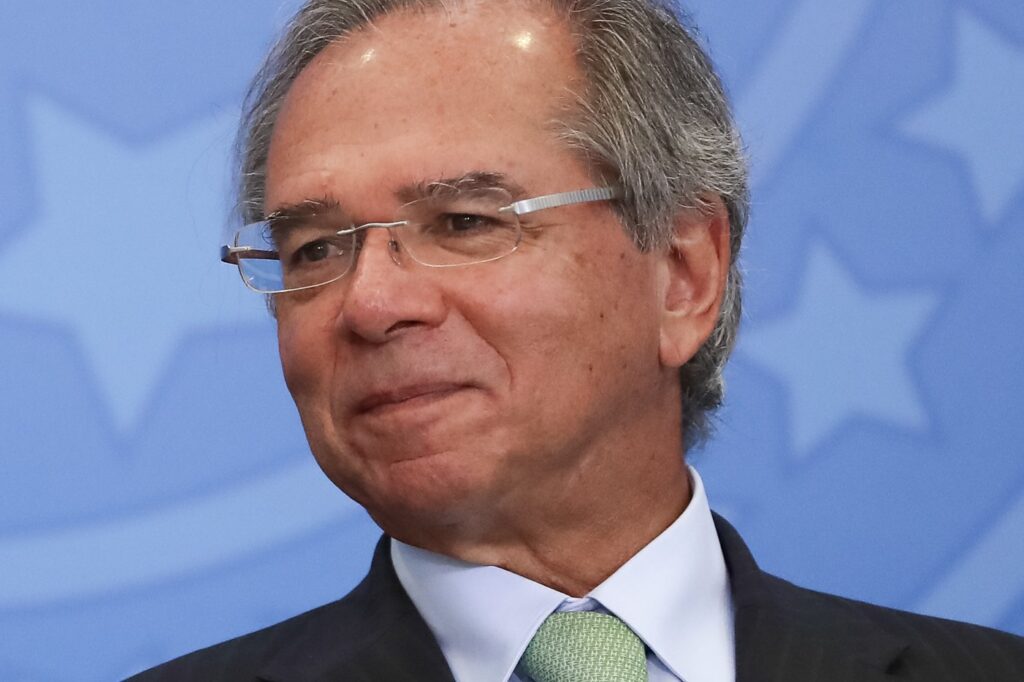
The story begins with a young Brazilian economist who left for Chicago in 1974 as a believer in Keynes and came back a convert to the free market. Paulo Roberto Nunes Guedes, born in Rio de Janeiro on 24 August 1949, would go on to run the economy under Jair Bolsonaro. What unfolded along the way was a rise built on liberal orthodoxy and a legal cloud that never quite lifted.
From Minas Gerais to Chicago
Guedes did his undergraduate degree at the Federal University of Minas Gerais and took a master’s in economics at the Getúlio Vargas Foundation. In 1974 he moved with his wife to the United States to study at the University of Chicago. He arrived an adherent of Keynesian thinking, shaped by Paul Samuelson and Franco Modigliani. Milton Friedman, his teacher there, changed that. Guedes focused on macroeconomics, international commerce and econometrics, and earned his Ph.D. in 1978.
Bank, classroom and column
Back in Brazil he led several lives at once. In 1983 he co-founded Banco Pactual, today BTG Pactual, with André Jacurski and Luiz Cezar Fernandes. Through the 1980s he taught graduate economics at the Pontifical Catholic University of Rio de Janeiro, the Getúlio Vargas Foundation and the National Institute for Pure and Applied Mathematics. During Chile’s military dictatorship he also held a professorship at the University of Chile. From 1983 to 1999 he was executive director of Ibmec, and he later became partner and president of Bozano Investimentos, staying until December 2018.
He co-founded the liberal think-tank Instituto Millenium and wrote columns for O Globo, Folha de São Paulo and Exame. In a 2017 piece for Globo he praised Operation Car Wash and the judiciary’s efforts against corruption and impunity.
Into politics
Guedes never joined a party. In 1989 he wrote the economic proposals for the presidential campaign of the libertarian-leaning Guilherme Afif Domingos. In 2018 he became economic adviser to Bolsonaro, backing the privatization of state companies and defending some of Michel Temer’s reforms, such as limits on public spending. He argued for a single value-added federal tax and for an income tax exemption of R$5,030, roughly five times the minimum wage then.
He served as Minister of the Economy for the whole Bolsonaro presidency, from 1 January 2019 to 1 January 2023. The ministry covered treasury, planning, budgeting, industry and commerce.
The investigation
The trouble predates the cabinet. On 2 October 2018, the Federal Public Ministry moved to probe Guedes over alleged fraud in the management of investment funds he ran. Since 2009 those funds had taken in R$1 billion from state pension funds, among them Previ, Petros, Funcef, Caixa and Postalis. Federal Police task forces, including Operation Greenfield, are examining the investments in the Fundos de Investimentos nas Participações.
The detail is specific. Money from the BR Educational Fund, which Guedes managed, went into a single company, HSM Educacional S/A, also under his management. That company then bought all of HSM do Brasil S/A, with goodwill of R$16.5 million, and the acquired firm began posting recurring losses. Prosecutors say the pension funds drawn into these vehicles lost $200 million.
Guedes denied wrongdoing and called the investigation politically motivated, “meant to confuse voters.” In December 2018 the Federal Police accepted the prosecutors’ request to open an inquiry into his handling of pension funds. In October 2021 his name also surfaced in the Pandora Papers.
Sources
- Paulo Guedes
- Tiago Guedes, director of 'Aquí': “Manolo Solo showed enormous generosity towards the film”
- Jair Bolsonaro Net Worth | Celebrity Net Worth
Photo: Marcos Corrêa (CC BY 2.0)