
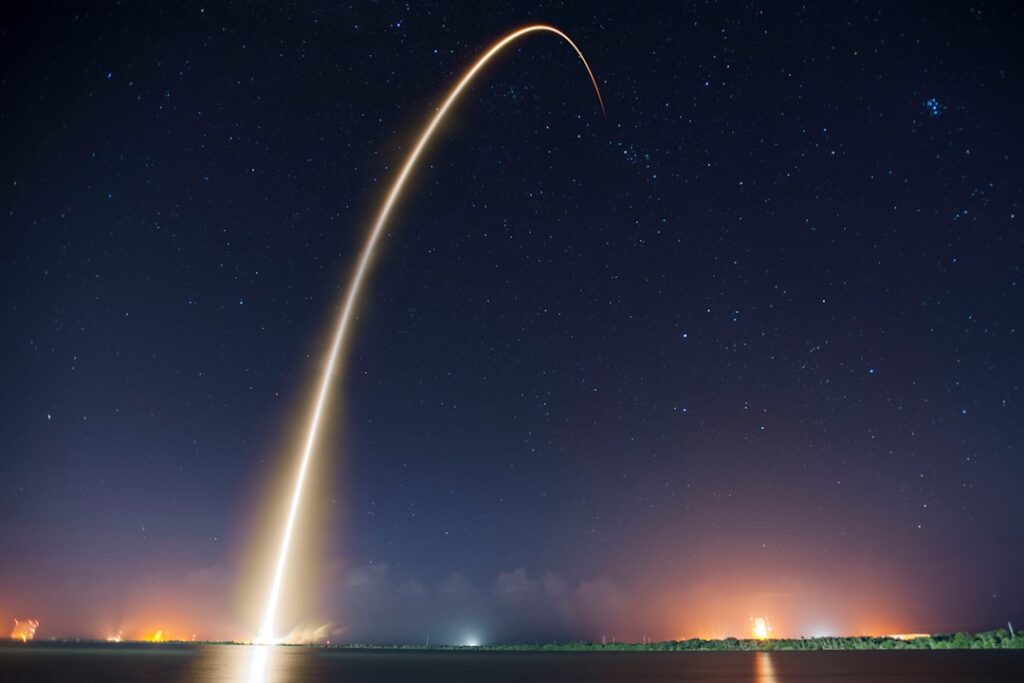
On 1 December, a SpaceX Falcon 9 lifted off from Vandenberg Space Force Base in California carrying South Korea’s first military reconnaissance satellite. The successful deployment marks a turning point for Seoul’s defence posture, giving the nation a dedicated eye in orbit that operates solely under Korean command.
Until now, South Korea has depended largely on United States intelligence satellites for real‑time monitoring of the North. That reliance has meant waiting for data transfers, coping with limits on what Washington chooses to share, and contending with the broader global responsibilities of American space assets. By contrast, the new Korean satellite supplies imagery directly to domestic defence systems, allowing military planners to observe North Korean missile launches, troop movements and nuclear‑facility activity without external approval.
The faster flow of information shortens the “kill chain,” a term officials use to describe the timeline from detection to a possible pre‑emptive response. The launch also sends a clear signal to the domestic space sector.
The Korea Aerospace Research Institute (KARI), based in Daedeok Science Town, Daejeon, has long advocated for a home‑grown launch capability. While KARI has already produced the KSLV‑2 rocket, the reconnaissance payload itself was placed in orbit on an American vehicle. The outcome demonstrates that South Korea can design and build sophisticated satellites, but still relies on foreign launch services for now, intensifying pressure to accelerate the KSLV‑2 programme.
KARI’s strategic vision—building indigenous launch capacity, enhancing national security and commercialising satellite technology—has acquired a high‑stakes customer: the armed forces. The agency’s experience, from the 1999 Arirang‑1 satellite to today’s military bird, positions it to attract regional partners seeking reconnaissance payload expertise.
Laboratories and test facilities in Daejeon could evolve into a hub for allied space‑based intelligence projects. North Korea’s own satellite ambitions provide a counterbalance. The regime has conducted several launch attempts with mixed success, and Seoul’s new capability is likely to spur Pyongyang to accelerate its own programme in an effort to match the peninsula’s emerging space‑based military assets. The competition, previously centred on civilian launches, is now overtly militarised.
For the United States, the mission deepens an existing alliance. SpaceX’s involvement underscores a preference for American launch services, linking South Korea’s future space operations to U.S. supply chains.
While this creates a degree of dependency, it also cements a partnership that extends beyond traditional defence cooperation. Beyond the satellite itself, a supporting infrastructure must be established. Ground stations, data‑processing centres and analyst training programmes will need expansion to handle the continuous flow of high‑resolution imagery.
KARI’s role will shift from pure research to ongoing operational support, including software updates, satellite health monitoring and planning for subsequent generations of payloads. The launch from Vandenberg is therefore not an end point but a starting line.
South Korea has moved from being a consumer of space‑based intelligence to a producer, a change that will influence defence budgeting, joint exercises with U.S. forces and diplomatic dialogues concerning the North. The real test now lies in how effectively the nation can integrate the satellite’s data into its broader security architecture and sustain the capability over the long term.




