
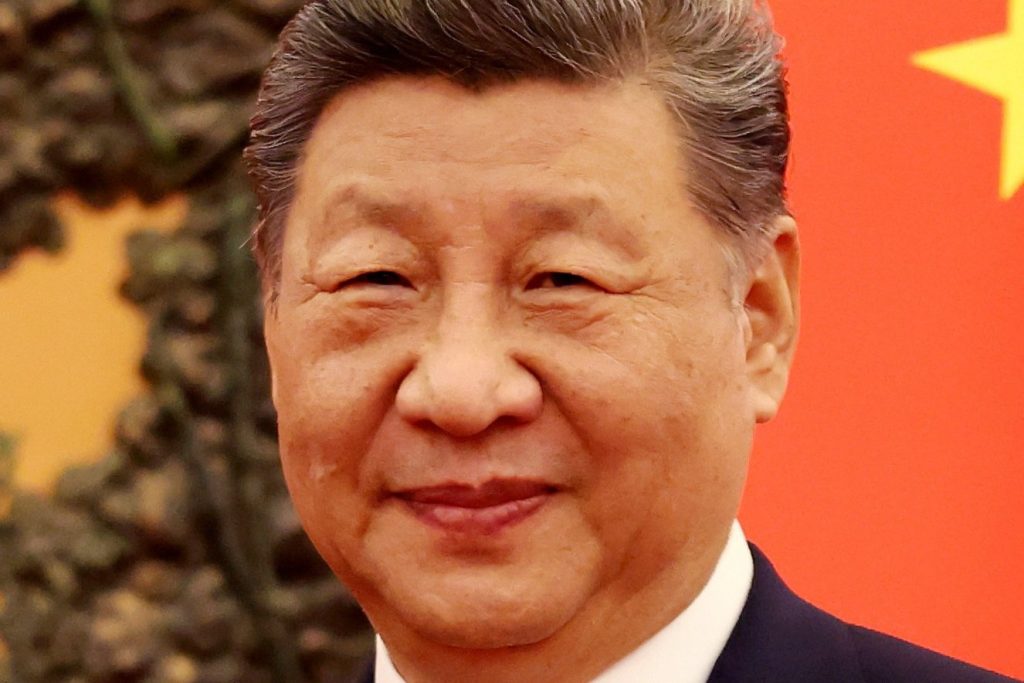
Taiwan’s status has been a fault line in international relations for decades. On May 14, 2026, Chinese President Xi Jinping delivered a direct warning to former US President Donald Trump: mishandle this issue, and conflict follows. The statement was blunt.
It carried the weight of China’s long-held position that Taiwan is not a separate country but a breakaway province awaiting reunification. The historical roots of this dispute run deep.
Taiwan was retroceded from the Empire of Japan to the Republic of China in 1945. Four years later, the Chinese Civil War ended with the Communist Party controlling the mainland and the ROC government retreating to the island. That unresolved civil war created the current standoff.
Beijing views any move toward formal independence as a red line. The United States has maintained a deliberately ambiguous stance for decades.
The Taiwan Relations Act, signed into law in 1979, does not recognize Taiwan as a sovereign state. Yet it requires the US to provide Taiwan with the means to defend itself. the US Secretary of State has reiterated this commitment.
It is a balancing act that leaves room for crisis. What is at risk here is not abstract. A conflict over Taiwan would pit the world’s two largest economies against each other in a direct military confrontation.
The strait between Taiwan and mainland China is a critical shipping lane. Half the world’s container ships pass through it.
A blockade or battle there would sever supply chains for electronics, semiconductors, and manufactured goods that the global economy depends on. US Secretary of Defense Lloyd Austin responded to Xi’s warning by emphasizing the need to maintain peace and stability. He also reaffirmed the US commitment to its allies and partners, including Taiwan.
NATO Secretary-General Jens Stoltenberg pushed for diplomacy and dialogue. These are the standard diplomatic phrases, but they mask a deeper tension.
The US has treaty allies in the region—Japan, South Korea, the Philippines—that would be drawn into any major conflict. Australia and India are watching closely. Australian Prime Minister Anthony Albanese called for a peaceful resolution.
Indian Prime Minister Narendra Modi stressed respect for the sovereignty of all nations. Both countries are part of the Quad, a strategic grouping that also includes the US and Japan. The Quad’s members share a common interest in a free and open Indo-Pacific.
A Taiwan crisis would test that alliance directly. The AUKUS pact, which involves the US, UK, and Australia, adds another layer.
That agreement focuses on sharing nuclear submarine technology and deepening defense cooperation. Taiwan is not named in AUKUS, but the pact’s existence signals that the US is preparing for a long-term strategic competition with China. Xi’s warning makes clear that Beijing sees Taiwan as the most likely flashpoint.
There is no easy off-ramp. China’s position is that reunification is inevitable.
The US position is that any change by force is unacceptable. Those two positions are not compatible. And the window for diplomacy narrows with every escalation in rhetoric or military posture.
The May 14 statement was not the first warning from Xi. It will not be the last. But it came at a moment when the US is already stretched between Europe, the Middle East, and Asia.
A two-front crisis is the nightmare scenario for Pentagon planners. Xi’s words were a reminder that the Taiwan issue is not a distant problem.
It is the one that could turn a simmering rivalry into open war.




