
It starts before we know it. A child learns to speak by listening. They pick up gestures from the adults around them.
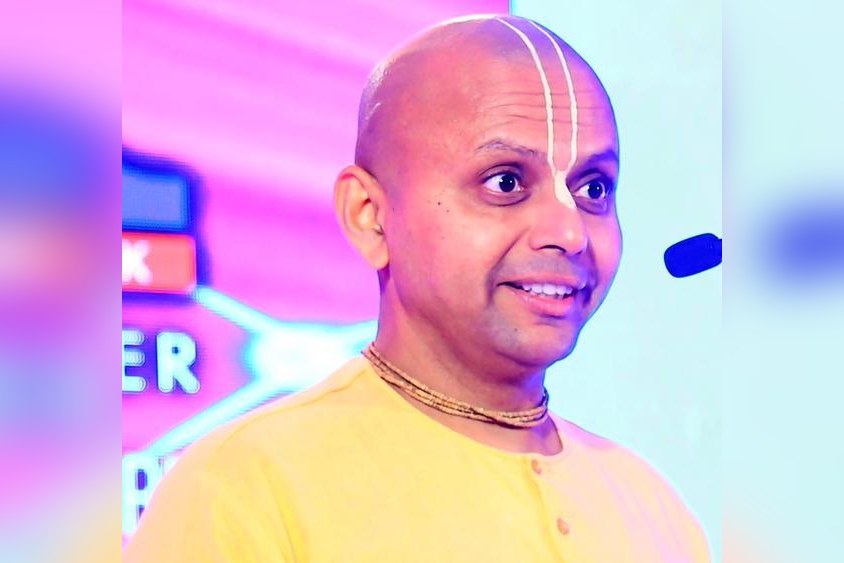
Table manners, expressions, even the way they walk — all of it is absorbed, not taught directly. Gaur Gopal Das, the engineer-turned-monk who now speaks to millions, says this never really stops.
The man who traded a career in engineering for a life of spiritual teaching points to something most self-help advice skips over. Mental strength, he argues, is not just about willpower. It is about what goes in.
Das compares the mind to a garden. Feed it learning, kindness, discipline, and hope, and those qualities grow stronger.
Feed it negativity, fear, comparison, and constant distraction, and those patterns take root too. The metaphor is simple. It cuts through the noise of modern psychology.
We live in an age of algorithmic feeds. Endless scrolling. Content designed to keep eyes on screens, not to nourish the person behind them.
Das’s quote of the day lands with real weight here: “What you nourish will flourish.” He is not talking about willpower alone. He is talking about input.
What we read, watch, listen to, and repeat in our own minds shapes how we live. Over time, these feedings to the brain affect confidence, stress levels, focus, and even the way we treat others. For families struggling with distraction, for patients wrestling with anxiety, this reframes the problem.
It is not just a failure of discipline. It is a failure of diet.
The monk’s background gives his words a particular edge. He was an engineer. He knows systems.
He knows how inputs determine outputs. He chose to walk away from that world, but the logic stayed. Feed the mind garbage, get garbage back.
Feed it something real, and something real grows. This is not a new idea.
Ancient traditions have said the same thing for centuries. But Das is speaking into a moment where the noise is louder than ever. Social media feeds are engineered to provoke.
News cycles run on fear and outrage. Entertainment is built for passive consumption, not active engagement.
Das says our area of interest, our habits, our friend circle, and the particular type of content we consume online define what grows in our minds and who we become. That is a hard statement. It puts responsibility squarely on the individual.
No excuses about algorithms or corporate manipulation. You choose what you feed yourself. The monk does not offer a ten-step plan.
He offers a single image. A garden.
What you water grows. What you ignore withers. It is that blunt.
For a generation raised on dopamine hits and infinite scroll, the prescription is almost offensive in its simplicity. Stop feeding the weeds.
Start feeding the flowers. But simple does not mean easy. Changing what you consume means changing habits.
Changing habits means changing your environment. Changing your environment means changing your life. Das does not pretend otherwise.
He just points to the garden and lets people decide what they want to grow.
{“@context”: “https://schema.org”, “@type”: “NewsArticle”, “headline”: “Engineer-turned-monk Gaur Gopal Das says children absorb behaviors, not just lessons”, “description”: “It starts before we know it. A child learns to speak by listening. They pick up gestures from the adults around them. Table manners, expressions,…”, “datePublished”: “2026-06-27T04:07:53+00:00T09:30:00+00:00”, “author”: {“@type”: “Person”, “name”: “Aibek Nurlan”}, “publisher”: {“@type”: “Organization”, “name”: “InfoPulse Today”, “url”: “https://newsfeed.2bme.xyz/”}}




