
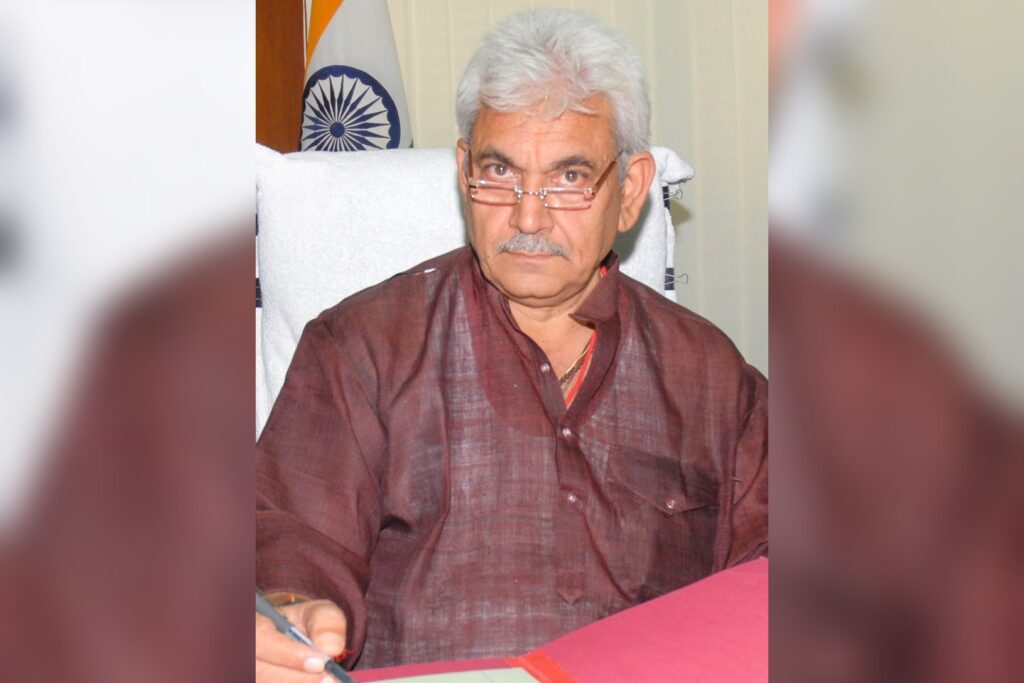
SRINAGAR — A pilgrim hiking toward the Amarnath cave this July who stops to photograph a pile of discarded water bottles will, in that single act, trigger a chain of events the sanitation team hopes to turn into a new standard for large-scale religious gatherings. It is not a hypothetical. The “Trayambakam” mobile application, launched Thursday by Lieutenant Governor Manoj Sinha at the Baltal base camp, is designed to do exactly that: turn every pilgrim into a live sensor for waste.
The practical effect on the ground could be stark. Instead of waiting for a scheduled sweep that might miss a growing pile behind a langar tent, a sanitation worker gets a photo and a location in near-real time.
The response window shrinks from hours to minutes. For a pilgrimage that draws hundreds of thousands through fragile mountain terrain, that speed is the difference between a base camp that stays functional and one that chokes on its own trash. The campaign itself is called “Shubham-Shivam,” run by the Directorate of Rural Sanitation.
Sinha framed the entire effort in terms of sacred duty — not just cleanliness, but preservation of ecology and natural resources. He called the sanitation team the true backbone of the initiative.
He singled out Karmyogi volunteers as real heroes whose relentless dedication, he said, will keep the base camp and both tracks clean. But the app is what changes the math. It is a citizen-reporting tool.
Simple, intuitive, useful — those were Sinha’s words. A pilgrim snaps a photo of litter. The system flags the location.
The sanitation team moves. It replaces the old model — waiting for a supervisor to notice a problem during a patrol — with a crowd-sourced alert system.
The crowd itself becomes the patrol. The LG also unveiled a new website, a pilgrimage anthem, a logo, and a mascot. Those are the visible trappings of a campaign.
The app is the machinery. If it works as described, it solves a specific problem that has plagued the Amarnath Yatra for years: the sheer volume of people and the lag time between trash accumulating and someone doing something about it.
The circular economy initiatives mentioned at the launch point to what happens after the trash is collected. The report did not specify details, but the direction is clear — zero landfill. That means sorting, recycling, composting.
The app may feed into that system, telling crews not just where to pick up, but what kind of waste they are dealing with. What to watch next is whether the app actually gets used. Pilgrims carrying phones in the mountains face battery life, network coverage, and the simple reality that most people do not want to stop and photograph trash during a pilgrimage.
The success of the campaign hinges on whether Sinha’s framing — that preserving ecology is a sacred duty — translates into enough pilgrims pulling out their phones to report a mess instead of walking past it. The sanitation team, the Karmyogi volunteers, the app, the circular economy plan — they are all pieces.
The test is whether they fit together fast enough to keep the Baltal base camp and the twin tracks clean during the crush of the main yatra weeks. The LG made his message clear. Now the ground crews have to execute.
The app gives them eyes they did not have before. That is the effect.
The consequence is either a cleaner yatra or a lesson in what still needs to change.
{“@context”: “https://schema.org”, “@type”: “NewsArticle”, “headline”: “LG launches app to turn Amarnath pilgrims into waste sensors”, “description”: “SRINAGAR — A pilgrim hiking toward the Amarnath cave this July who stops to photograph a pile of discarded water bottles will, in that single…”, “datePublished”: “2026-06-28T07:30:00+00:00T09:30:00+00:00”, “author”: {“@type”: “Person”, “name”: “James Roberto”}, “publisher”: {“@type”: “Organization”, “name”: “InfoPulse Today”, “url”: “https://newsfeed.2bme.xyz/”}}




