
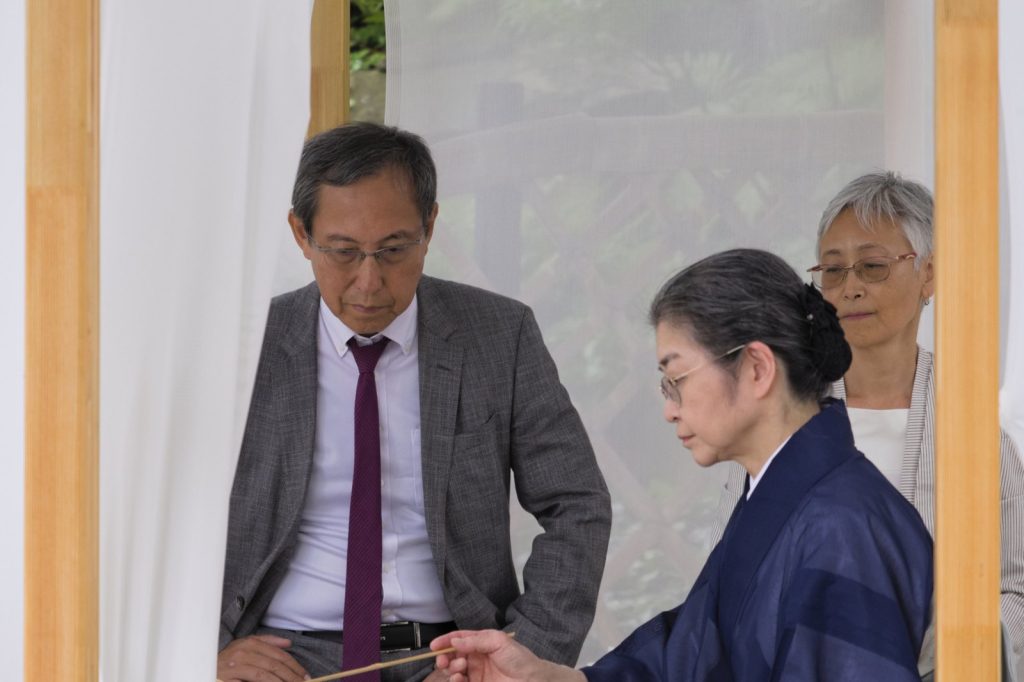
LONDON, October 6 The story begins with a quiet act: the measured pour of hot water over powdered green tea in a small ceramic bowl, a gesture repeated across continents and centuries. What unfolded over millennia is not merely a beverage habit but a layered tradition of mindfulness, hospitality, and art, shaped by dynasties, monks, and everyday practitioners from China to Britain.
At its heart lies the origin in China, where legend credits Emperor Shen Nung with tea’s discovery around 2737 BCE, though the earliest physical evidence comes from the Han Dynasty, with tea leaves found in the mausoleum of Emperor Jing of Han in Xi’an, dated to 141 BCE.
By the Tang Dynasty, tea had become a national drink, and Lu Yu’s ‘The Classic of Tea,’ written around 760 CE, systematized its preparation, laying the foundation for the Chinese tea ceremony, or ‘gongfu cha,’ which emphasizes precision and multiple infusions of oolong and pu-erh teas using small clay pots. In Japan, tea was introduced by Buddhist monks Eichū and Kōbō Daishi in the early 9th century, who brought seeds from China.
The Japanese tea ceremony, known as ‘chanoyu,’ ‘sado,’ or ‘ōcha,’ was profoundly shaped by Zen Buddhism and refined by masters like Murata Jukō, who introduced wabi-sabi, and Sen no Rikyū, who lived from 1522 to 1591 and established the principles of harmony, respect, purity, and tranquility. Rikyū served as tea advisor to Oda Nobunaga and later Toyotomi Hideyoshi, and his influence endured despite his forced suicide in 1591.
The ceremony centers on matcha preparation in a chashitsu, often featuring a tatami floor, tokonoma alcove, and a sunken hearth or portable brazier, with movements choreographed to emphasize presence and respect. In Korea, the tea ceremony, or ‘darye,’ traces roots to the Three Kingdoms period and was influenced by Chinese and Buddhist traditions. It experienced a revival in the late 20th century after declining during the Joseon Dynasty’s suppression of Buddhism and the Korean War.
Modern darye emphasizes naturalness and simplicity, often using loose-leaf green teas like nokcha served in stoneware or porcelain. In Vietnam, tea culture is woven into daily life, with trà and trà sen commonly shared in homes and street-side stalls, reflecting values of patience, respect, and community, though less formalized than East Asian counterparts. In South Asia, India’s chai culture emerged during British colonial rule, when the British East India Company promoted tea cultivation in Assam and Darjeeling to break China’s monopoly.
By the 1930s, street vendors began blending tea with milk, sugar, and spices like ginger, cardamom, and cloves, creating masala chai, now consumed by hundreds of millions daily. In Britain, the tradition of afternoon tea was popularized in the 1840s by Anna, the Duchess of Bedford, who began taking tea and snacks in the late afternoon to bridge the gap between lunch and dinner.
This practice spread among the aristocracy and middle class, evolving into a formal event featuring black tea, finger sandwiches, scones with clotted cream and jam, and pastries, reflecting ideals of refinement, leisure, and social connection. Today, tea ceremonies continue to influence global mindfulness practices, with the Japanese concept of ichigo ichie — ‘one time, one meeting’ — often invoked to encourage presence and gratitude. UNESCO has recognized elements of tea culture as intangible cultural heritage, including China’s traditional tea processing techniques and associated social practices, inscribed in 2022.
From monastic origins to modern wellness routines, tea ceremonies remain a living tradition that bridges history, art, and the everyday pursuit of calm and connection.




