
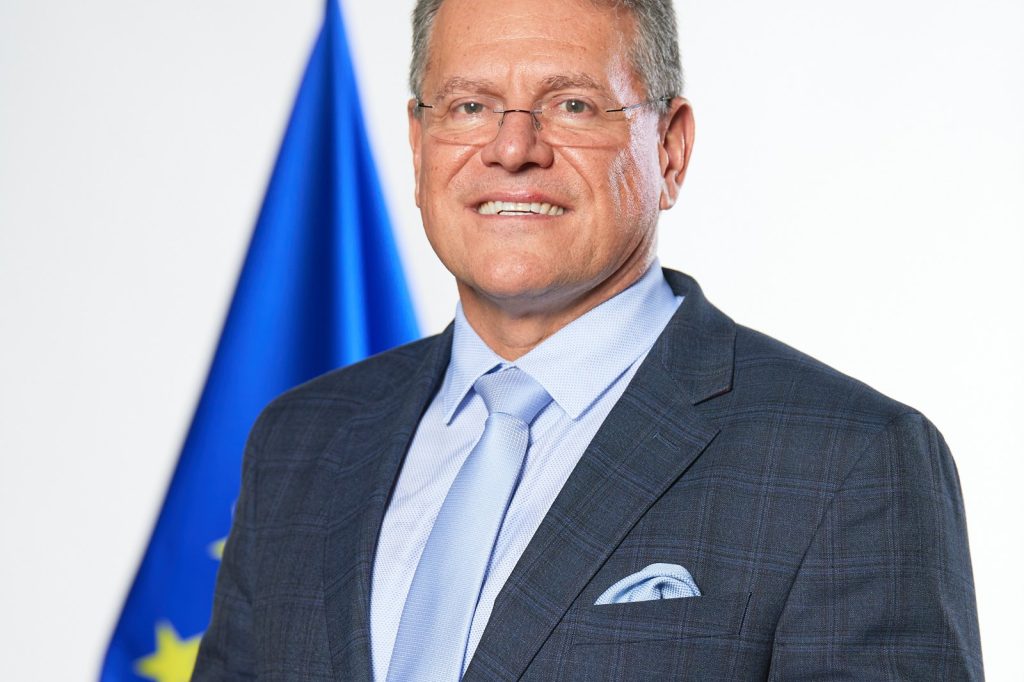
BRUSSELS, October 14 — The story begins with a quiet tension in the Europa building as officials prepare for the October 15–16 European Council meeting, a moment that could shape how Europe confronts its deepening economic imbalance with China. What unfolded in recent Beijing talks yielded only modest steps: moderating hybrid exports, lowering tariffs on nearly €4 billion (about US$4.3 billion) of European goods, and facilitating rare-earth licensing. These understandings, outlined by Maroš Šefčovič, remain undeclared in full to member states, with their legal form, enforceability, and permanence still unclear.
At its heart, the issue is not just trade but structural vulnerability. Beijing’s approach — refusing major concessions while offering just enough to keep dialogue alive — has left the fundamental imbalance intact.
The EU goods deficit with China now nears €1 billion (about US$1.08 billion) per calendar day. The hybrid understanding may cut projected exports in half but does not ensure actual volume reduction, while tariff adjustments promise only €225 million (about US$243 million) in savings. The rare-earth ‘green channel’ does little to ease Europe’s strategic exposure.
Analysts note the renminbi is undervalued by 20–30%, worsening the euro area’s cost position against China by over 40% between January 2020 and January 2026. Europe is not only losing market share but absorbing Chinese industrial shifts through lost production and jobs, while building dependencies Beijing could exploit.
Progress demands more than piecemeal deals: predictable critical-mineral supplies, verifiable restraint in exposed sectors, and genuine market access. The French-German non-paper calls for strengthening existing tools and creating a systemic response instrument led by the Commission, with automatic triggers to counter distortions like subsidies and currency manipulation. It builds on the European Parliament’s 454-to-86 vote supporting reciprocity, de-risking, and proportionate countermeasures.
Yet implementation is hampered by capacity — DG Trade’s Directorates F and G operate at roughly UK-sized staffing levels, only one-quarter to one-fifth of comparable US capacity. With Germany under strain, France nearing a pivotal presidential election, and competing pressures from Ukraine, energy, debt, and the next EU budget, leaders face a stark choice. Any sign of satisfaction or a call to ‘explore further talks’ at the October Council would signal weakness to Beijing.
Instead, Europe must set clearer red lines, a timetable, and milestones for rebalancing. It must mandate full use of existing instruments — safeguards, ex officio trade defence cases, the Foreign Subsidies Regulation, the International Procurement Instrument, and the Anti-Coercion Instrument — and build solidarity through initiatives like the Economic Security Alliance.
The Commission must lead, as most capitals look to it for direction, and cannot wait for national consensus to define the European interest. What follows will depend on whether Brussels can turn caution into courage before the Council convenes.




