Banana Republic has announced a limited-edition capsule collection with New York-based label Zankov, launching October 20. This collaboration is part of the brand’s efforts to reshape its fashion image by partnering with independent designers.
Introduction To Designer Collaborations
The story begins with Banana Republic’s history of rebranding and re-envisioning itself as a luxury clothing and accessories retailer. Founded in 1978 by Mel and Patricia Ziegler, the company was initially known for its safari-themed retail locations and hand-drawn catalogues. However, after being acquired by Gap Inc. in 1983, the brand underwent significant changes, including a shift towards a more upscale image. In the 2020s, VP of design Nicole Wiesmann has continued this transformation, introducing ad editorial campaigns that evoke luxury brands and higher-end garments comparable to Ralph Lauren and The Row.
Background On The Brand’s Shift
At its heart, Banana Republic’s collaboration with Zankov is about combining the brand’s heritage of quality-made pieces with the designer’s distinct approach to color and ease. The 27-piece collection, which includes menswear, womenswear, and accessories, is crafted in premium fabrications such as brushed-cashmere, proprietary wool yarns, premium leathers, and engineered plaids. For those involved, this partnership represents an opportunity to reinterpret Banana Republic’s codes through Zankov’s unique perspective, resulting in a timeless and playful wardrobe. According to Meena Anvary, Banana Republic’s chief marketing officer, “We brought together two distinct points of view, grounded in heritage, craftsmanship and creativity.”
Details Of The Zankov Collection
What unfolded from this collaboration is a collection that spans relaxed proportions and universal sizing, allowing traditional menswear and womenswear codes to be styled together. The pieces, including the Auden sweater, Sasha cardigan, and Frankie polo, feature vivid stripes, solid colors, and unexpected color combinations. The collection also includes accessories such as reversible brushed-cashmere hats, colorful cashmere socks, and scarves. Prices for the collection range from $90 to $600, making it accessible to a wide range of customers. Henry Zankov, founder of Zankov, combed Banana Republic’s archives, drawing inspiration from a 1986 style for the Helene paneled leather and suede pencil skirt, and modernizing an archival reference with the Mateo deep burgundy leather bomber jacket.
Meaning For The Brand’s Fashion Future
The launch campaign, titled “Future Heirlooms,” features photography by Andrew Jacobs juxtaposed against works by Belgian artist Katrien de Blauwer, evoking emotion through color. At its core, this collaboration represents Banana Republic’s efforts to reshape its fashion image and attract trend-conscious shoppers. By partnering with independent designers like Zankov, the brand is able to offer unique and timeless pieces that combine heritage, craftsmanship, and creativity. For Banana Republic, this collaboration is a significant step towards re-establishing itself as a luxury clothing and accessories retailer, and for those involved, it represents an exciting opportunity to create something truly special. According to Henry Zankov, “The pieces were created with a spirit of playfulness, but with an enduring, timeless quality. I wanted each garment to feel beautiful in the hand, to have that tactile, almost instinctive appeal.”
Global Retail Expansion
Before focusing on modern designer collaborations, Banana Republic established a significant international retail footprint. The brand’s expansion beyond North America began in 2005 with the opening of a store in Tokyo’s Ginza shopping district. Following this, the company entered the South Korean market in August 2007 with a location in the Apgujeong district of Seoul. That same year, the retailer opened its first stores in Kuwait City, Kuwait; Jakarta, Indonesia; and Kuala Lumpur, Malaysia.
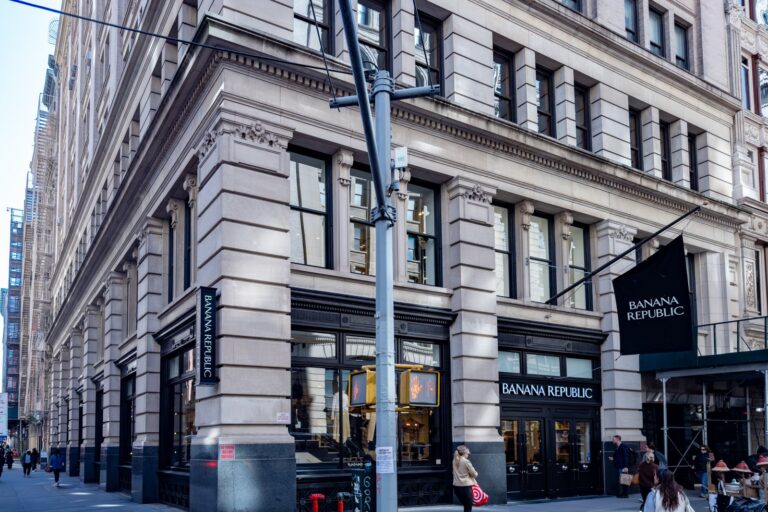
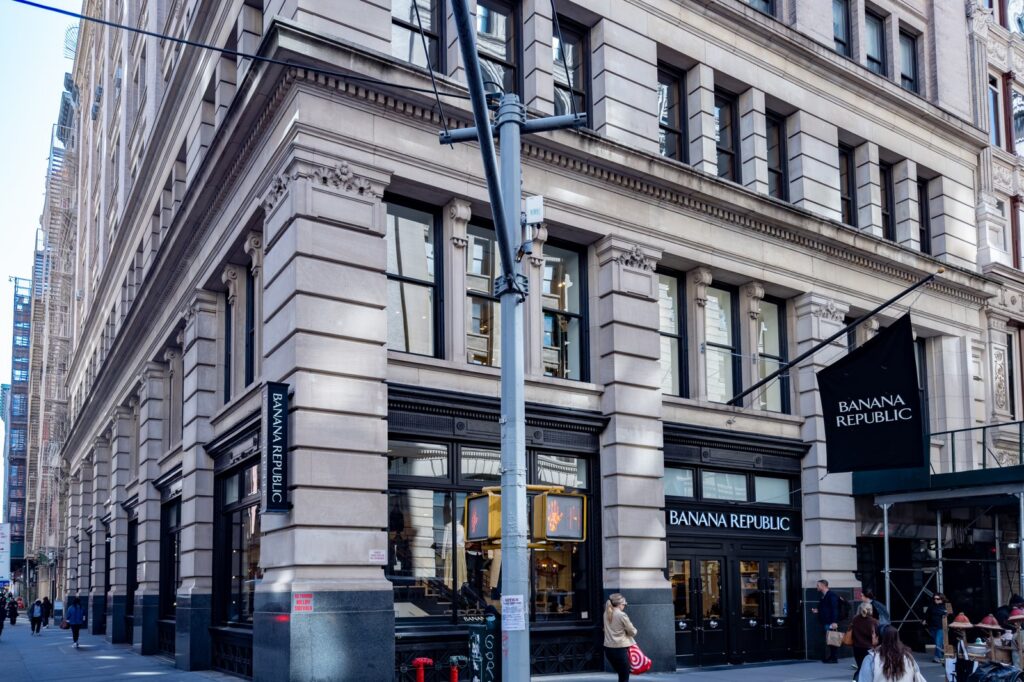
The brand continued its international growth in 2008 by entering the Turkish market. The first store opened in March 2008 at the Kanyon Shopping Mall in Istanbul. By May 2008, the brand expanded its presence in Istanbul with additional locations at the İstinye Park Shopping Mall and in the Nişantaşı neighborhood. At that time, the company indicated plans to open further stores in Ankara and İzmir, aiming to bring the total number of locations in Turkey to six. These efforts were part of a broader retail history that included the 2015 opening of a new flagship store in Manhattan, situated on Fifth Avenue and 18th Street.
Additional Collection Highlights and Campaign Details
The assortment includes several pieces not previously detailed. The Lucien Fair Isle jacquard sweater was created using a proprietary wool yarn. The Lev reimagines a 1950s car coat in Italian wool produced in Prato, Tuscany, finished with a leather collar and a voluminous silhouette. A grey tank top, cardigan, and pencil skirt set features blue wisteria piping in tissue brushed ribbed cashmere. Accessories extend to scarves in saturated blue accents and multicolor stripes, alongside the previously noted reversible brushed-cashmere hats and colorful cashmere socks.
To launch the collaboration, the brands developed a campaign titled “Future Heirlooms.” According to Banana Republic, the campaign articulates the inspiration of the collection, “eliciting a feeling of coziness and joy while paying homage to one’s own history.” Photography by Andrew Jacobs is juxtaposed against works by Belgian artist Katrien de Blauwer, who was commissioned for the project to evoke emotion through color. An anthem video features Henry Zankov speaking about tactile and nostalgic references that inspired the collection, such as leather softened by a long journey and the feeling of cashmere on the skin.
Exploring The Archives
According to Henry Zankov, founder of Zankov, he explored the Banana Republic archives for inspiration, selecting pieces to reinterpret with his own signature elements, including unexpected color and patchwork construction.
The Helene, a paneled leather and suede pencil skirt, was inspired by a 1986 style with similar construction, and the Mateo, a deep burgundy leather bomber jacket, modernizes an archival reference with the addition of a Zankov signature stripe detail at the interior cuff.
This approach to design allowed Zankov to bring a fresh perspective to Banana Republic’s heritage of quality-made pieces, resulting in a unique and timeless collection.
Sources
- Banana Republic
- Banana Republic and Zankov Holiday Capsule Celebrating Heritage , Craftsmanship, and a Timeless Wardrobe | Banana Republic
- Banana Republic Pairs With Zankov on Capsule Collection
Photo: ajay_suresh (CC BY 2.0)