
The month-long bushfires in Australia have created an adverse impact on the wildlife, with millions of animals killed and habitats destroyed.
With this, the Australian government has taken a stride to save the remaining species by airdropping thousands of pounds of vegetables across New South Wales on Monday.
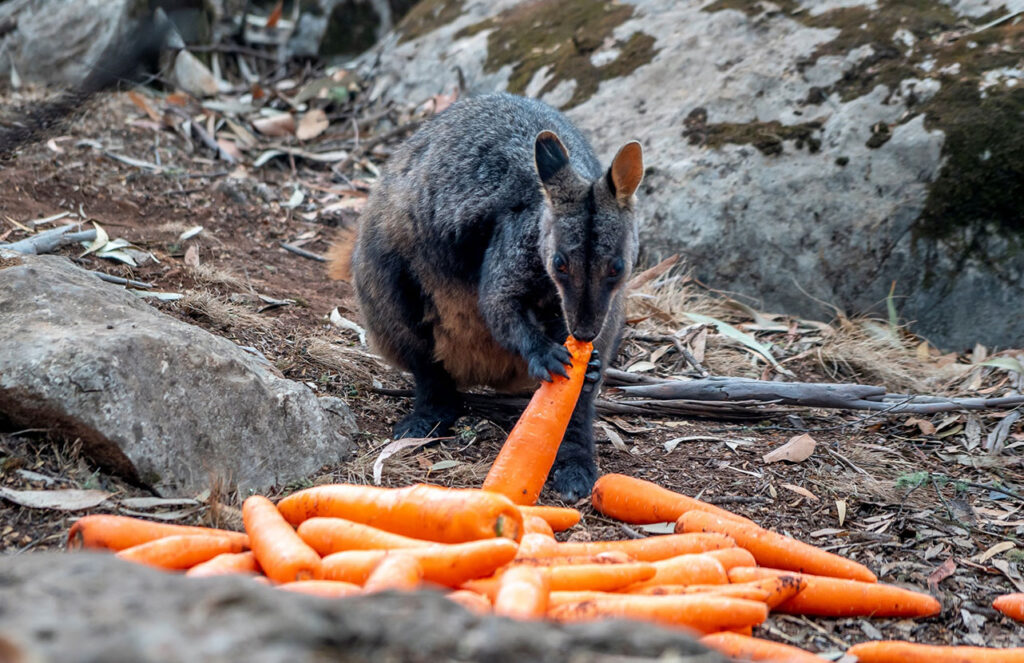
The animals, including the endangered rush-tailed rock wallabies, were fed with carrots and sweet potatoes, according to New South Wales Environment Minister Matt Kean
“The provision of supplementary food is one of the key strategies we are deploying to promote the survival and recovery of endangered species,” he said.
The government agency said it will continue its delivery of food to the marsupial species until natural food and water becomes accessible again.
An amount of $50m emergency the fund was also allotted by the government to help address the devastating environmental issues posed by the crisis, thus, rescue and protect the country’s wildlife.
Critics say the funding is a good start but it is not enough.
Meanwhile, some animal welfare organizations have been actively conducting fundraising initiatives online to provide assistance and shelter to the animals affected by the fire disaster.
Authorities have reported that since the wildfires started in September, some 1 billion animals have already died. 800 million of these deaths were recorded in New South Wales alone.
The Australian government’s efforts to save the country’s wildlife are part of a broader response to the devastating impact of bushfires on the environment. The government has taken a stride to save the remaining species by airdropping thousands of pounds of vegetables across New South Wales.
The animals, including the endangered rush-tailed rock wallabies, were fed with carrots and sweet potatoes. According to New South Wales Environment Minister Matt Kean, “The provision of supplementary food is one of the key strategies we are deploying to promote the survival and recovery of endangered species,” The use of airdropped food to support wildlife is a tactic that has been employed to respond to the crisis. This approach can be particularly effective in reaching animals in remote or inaccessible areas.
By providing supplementary food, the Australian government aims to promote the survival and recovery of endangered species. The government agency said it will continue its delivery of food to the marsupial species until natural food and water becomes accessible again.
The allocation of a $50m emergency fund to address the environmental impacts of the bushfires reflects the Australian government’s recognition of the need for a comprehensive and sustained response to the crisis. While some critics say the funding is a good start but not enough, it represents an important step towards addressing the environmental issues posed by the crisis and promoting the recovery of the country’s wildlife.
Authorities have reported that since the wildfires started, some animals have already died, with 1 billion animals having died, including 800 million in New South Wales alone. The response to the bushfires has also highlighted the importance of collaboration and coordination between government agencies and animal welfare organizations. Some animal welfare organizations have been actively conducting fundraising initiatives online to provide assistance and shelter to the animals affected by the fire disaster.
As the Australian government continues to respond to the crisis, it is likely that partnerships between different stakeholders will play a critical role in supporting the recovery of affected species and ecosystems.




