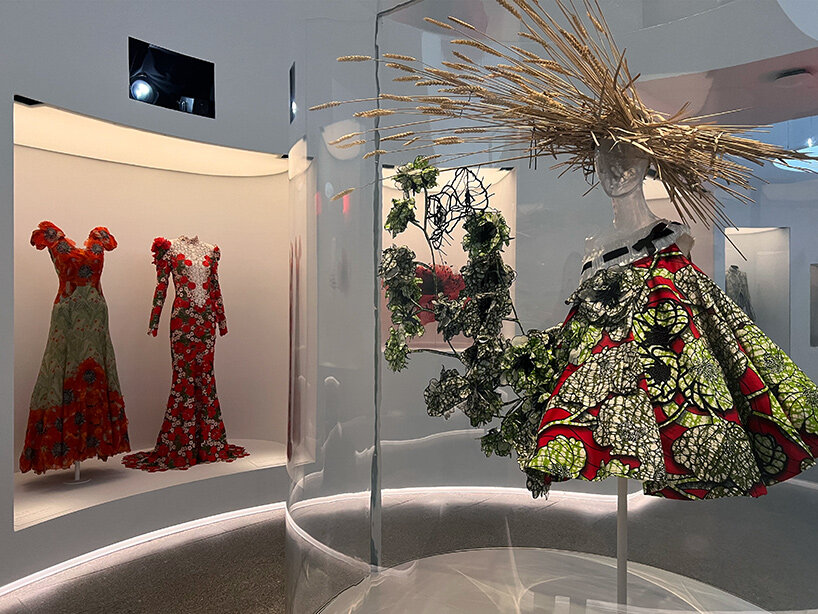
The Anna Wintour Costume Center at the Metropolitan Museum of Art closed its 2024 high‑fashion exhibition, Sleeping Beauties: Reawakening Fashion, after a four‑month run from May 10 through September 2. Announced on November 8, 2023, the show presented roughly 250 objects drawn from the Costume Institute’s permanent holdings.
What set this presentation apart was its reliance on digital tools. Curators employed artificial intelligence and computer‑generated imagery to render the garments, creating an immersive environment that blended traditional curation with cutting‑edge technology. The virtual layers allowed visitors to experience the pieces from angles and contexts that physical display alone could not provide, offering a contemporary lens on historic fashion.
The exhibition’s narrative was organized around three elemental motifs—sea, land and sky. These natural categories functioned as metaphors for fashion’s inherent fragility and its fleeting nature. By mapping collections onto these realms, the show explored cycles of decay and renewal, prompting audiences to reflect on how the industry constantly reinvents itself while remaining tethered to broader environmental and cultural forces.
Among the 250 showcased objects, the diversity of the Costume Institute’s archive was evident. Each piece, from couture gowns to accessory artifacts, carried its own provenance and story, underscoring the depth of the museum’s fashion repository. The AI‑enhanced displays highlighted these narratives, allowing the audience to engage with the history of each item without the constraints of conventional lighting or spatial arrangements.
Critics noted that the sea‑land‑sky framework gave the exhibition a holistic perspective, linking the sartorial to the surrounding world. By juxtaposing garments with digital representations of oceanic, terrestrial, and aerial settings, the curators illustrated how fashion both influences and mirrors ecological and societal shifts. This thematic layering added complexity, encouraging visitors to consider the interconnectedness of design, technology, and the environment.
“Sleeping Beauties” arrived at a moment when the fashion sector is increasingly integrating tech into its creative processes. The show’s use of AI and CGI not only refreshed the museum experience but also signaled a broader trend toward digitization in cultural institutions. As the exhibition concluded, observers pointed to its role in shaping future dialogues about how museums might present fashion in the digital age.
Looking ahead, the Metropolitan Museum of Art and the Anna Wintour Costume Center have indicated that new projects are already in development. While details remain under wraps, the institution’s commitment to blending visual spectacle with scholarly insight suggests that forthcoming exhibitions will continue to push artistic boundaries and explore the evolving relationship between fashion and technology.
“Sleeping Beauties: Reawakening Fashion” therefore stands as a landmark moment for the museum—a convergence of historic couture, modern digital practice, and thematic storytelling that invites both fashion enthusiasts and the general public to reconsider the life cycle of style in a rapidly changing world.