
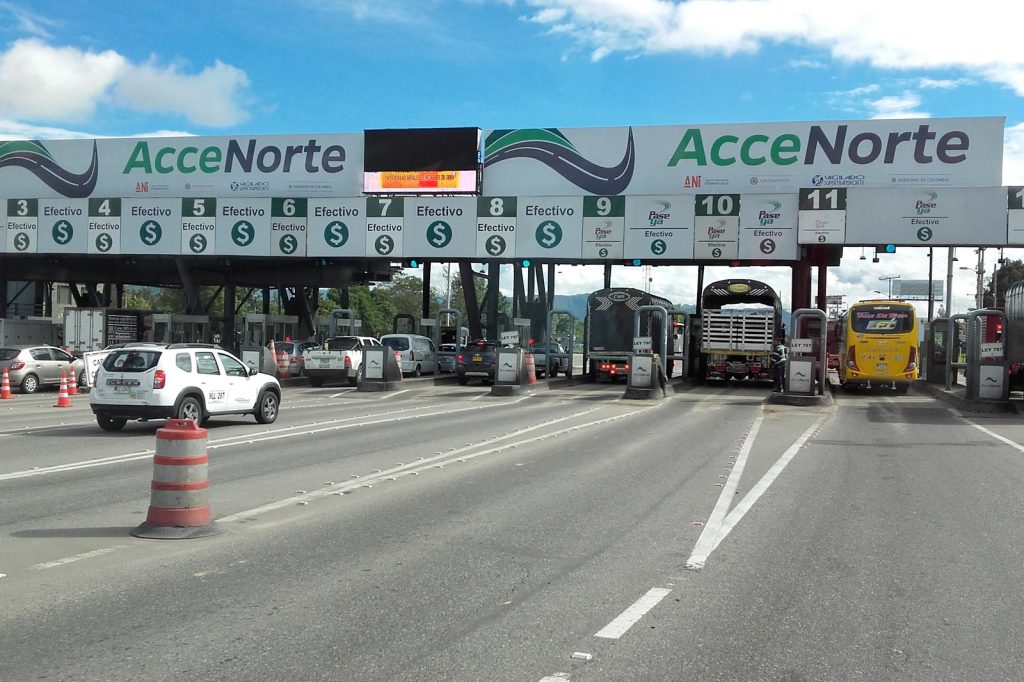
A single truck collision at a Colombian tollbooth on April 1 left five people dead, twenty‑one injured, and one victim still fighting for life in critical condition. The impact sparked a fire that engulfed several vehicles before emergency crews could bring the blaze under control.
The truck never braked; it struck the toll plaza, slammed into the line of waiting cars and trucks, and then ignited the wreckage. The incident occurred at a toll station located in the Cundinamarca Department, a node within Colombia’s extensive toll‑road system. These roads stitch together urban centers and remote areas, moving freight and passengers across challenging terrain. Because tollbooths force traffic to converge, slow, and wait, they create points where speed differentials are sharp and the margin for error is minimal.
When a heavy vehicle cannot stop, the booth itself turns the truck into a projectile, exposing a flaw that no electronic toll‑collection method can remedy. Historically, toll plazas were staffed by agents collecting cash manually.
Many locations have since shifted to automated systems akin to the E‑ZPass model used in the eastern United States. While such technology reduces congestion and shortens wait times, it does nothing to prevent a truck from slamming into the concrete island at high speed. The crash has prompted officials to reconsider what steps should follow the wreckage.
Experts point to two long‑standing recommendations: regular upkeep of roads and toll facilities, and stricter enforcement of traffic laws. Neither idea is new; both have been standard advice for years.
The April 1 event starkly illustrates the cost of treating those measures as optional. Five lives were lost, twenty‑one people required hospital care, and one of those injured remains in critical condition — figures that are not abstract statistics but the direct outcome of a single failure at a point used daily by thousands. Colombian authorities have not yet released the findings of their investigation.
It remains uncertain whether the truck suffered a mechanical defect, the driver lost control, or some other factor triggered the crash. What is clear is that the tollbooth’s design — where vehicles cluster and speed differences are extreme — leaves little room for mistake.
The structure is necessary for funding roads; tolls provide the revenue needed to maintain the network. Yet the very act of forcing traffic to slow and queue makes the booth a potential hazard when a vehicle cannot halt. The toll road network is vital to Colombia’s economy, linking producers to markets, commuters to employment centers to workers, and families to one another.
The accident did not cut those links, but it laid bare how fragile they can be. One truck, one moment, five fatalities.
Safety protocols exist, they are documented, and they have been debated repeatedly. The lingering question has always been whether they are implemented. The casualty count offers a stark answer.
Discussions about shifting toward cleaner, more sustainable transportation have been ongoing for years. That conversation now carries a sharper edge, as a system that fails to protect people at a tollbooth cannot be deemed sustainable in any meaningful sense.
Investigators remain on scene, the injured continue to receive medical care, and families of the deceased are still being notified. None of these actions changes what transpired; they only confirm that the system failed, and that the failure carried a human toll.




