
It started with a job listing, a research budget, and the promise of PhD students. For Chen Peipei, an energy transition scientist, those three things were enough to leave the University of Cambridge. She had been a research associate there.
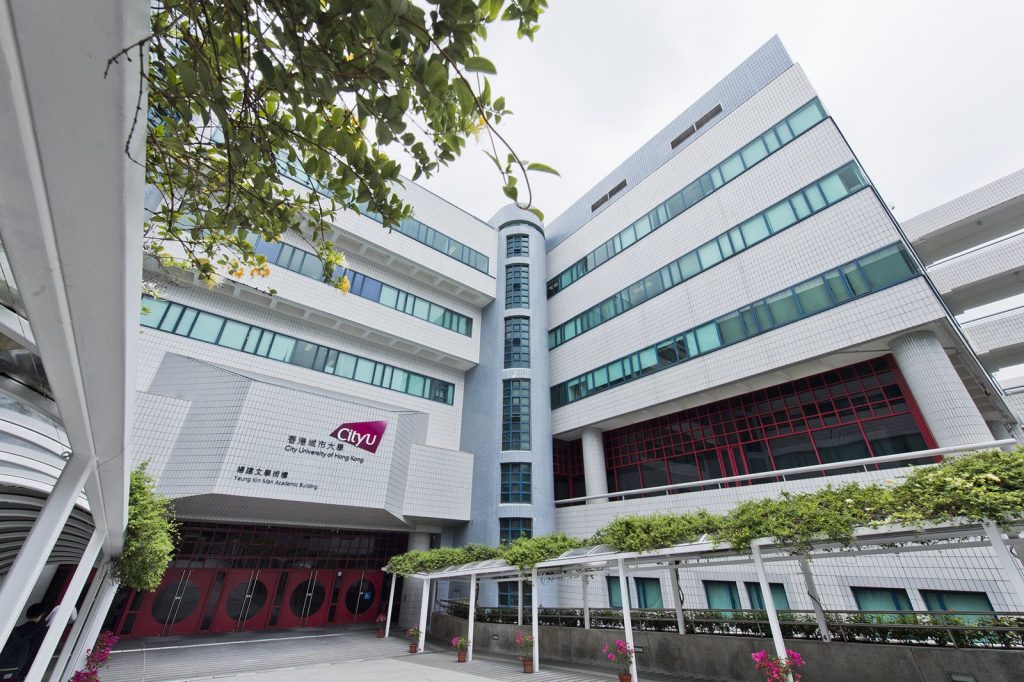
In May, she took up a presidential assistant professorship at City University of Hong Kong. The move was not impulsive.
It followed a careful calculation of what British academia could no longer offer. Chen now runs her own laboratory at CityU’s school of energy and environment. She described the setting as supportive of young faculty.
The contrast with Britain, she said, was stark. “For scientists, having funds and a team to carry out research is hugely appealing,” Chen said in an interview.
“In Britain, a teaching position rarely comes with research start-up funds. New faculty members are mostly expected to teach, leaving little time to develop their own research.” The decision was driven by access to research budgets and PhD student recruitment quotas. These are the basic tools for building a team.
Chen said those resources were becoming increasingly rare in Britain. She is not alone. Her departure is part of a broader shift of early-career scientific talent away from British academia.
Shrinking research funding and a complex geopolitical climate are eroding the appeal of once-prestigious institutions. The numbers back her up.
A recent survey by Universities UK found that nearly one third of the 48 responding member institutions had cut academic research activity in the past three years. That is more than double the 14 percent reported in 2024. Staffing has emerged as a primary target for cost savings.
The same survey found that 79 percent of universities had pursued voluntary redundancies over the past three years or put hiring freezes in place. The cuts are now visible.
Over the past two months alone, institutions across Britain have announced job-cut plans. The universities of Dundee, Sussex, Nottingham, Glasgow and Aberdeen all made such announcements. British universities are confronting a financial crisis.
Another survey of about 460 junior researchers in physics and astronomy painted a grim picture for the next generation. The details of that survey were not fully released, but the trend was clear. Chen’s timeline is straightforward.
She left Cambridge. She arrived in Hong Kong.
She built a lab. The move was a personal career decision, but it also functions as a case study in how funding shortages reshape the geography of science. British universities once attracted global talent on prestige alone.
That is no longer enough. A research associate at Cambridge now sees more opportunity at CityU.
The appeal of a teaching position with no research start-up funds has faded. Chen’s new role came with the resources to hire PhD students and buy equipment. Those are not luxuries in her field.
They are necessities. Without them, a scientist cannot run experiments, cannot publish, cannot advance. The pattern is repeating.
Young researchers watch senior colleagues leave. They see hiring freezes.
They hear about voluntary redundancy schemes. Some stay. Some follow Chen.
Hong Kong gained a lab. Cambridge lost a scientist.
The transaction was simple. The consequences are not.




