
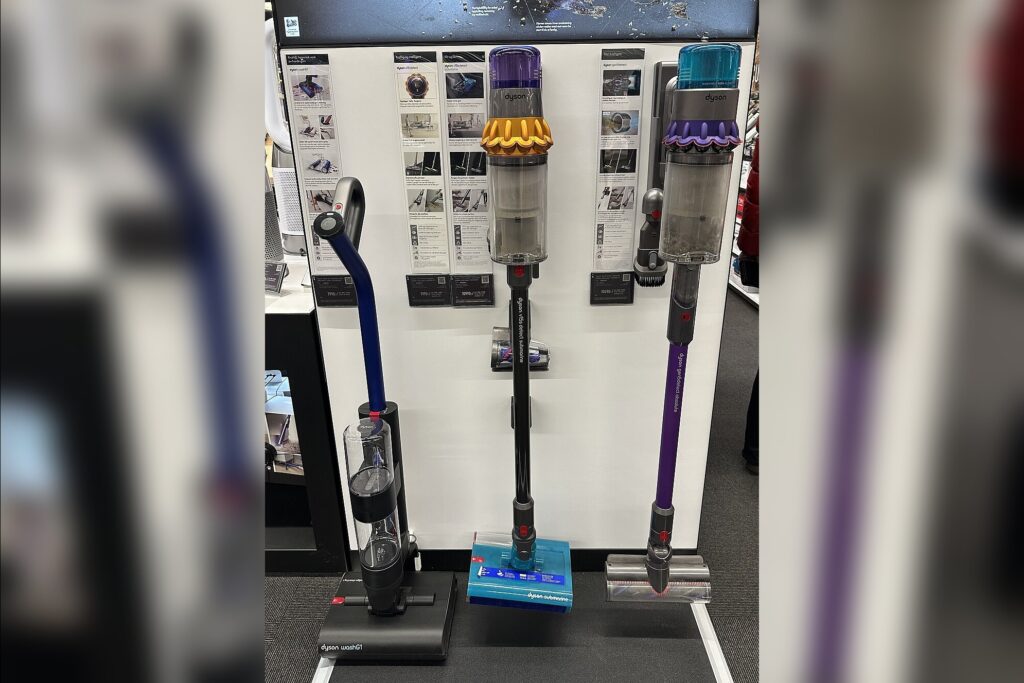
Prime Day is often a festival of discounts on things nobody really needs. But for Dyson, the high-end appliance maker known for vacuums that cost as much as a used car, the event has become something different: a deliberate strategy to pull in customers who would never normally walk into a premium appliance store. The company is slashing prices on cordless stick vacuums, air purifiers, and hair styling tools.
The deals are time-limited, tied to Amazon’s annual shopping event. That much is straightforward.
But the logic behind it is more interesting. Dyson has long built its brand on being expensive. The price was part of the promise — you paid more because the engineering was better.
The cyclonic suction. The bladeless fan.
The hair dryer that doesn’t fry your scalp. That premium positioning worked well for years. But it also created a ceiling.
There are only so many households willing to drop six hundred dollars on a vacuum cleaner. Prime Day discounts crack that ceiling. A family that hesitated at the full price now sees a number they can live with.
The report notes a “sharp rise in demand for home appliances that offer both efficiency and health benefits.” Dyson’s products — vacuums that trap microscopic dust, purifiers that scrub airborne particles — sit exactly at that intersection. The company is betting that once a customer buys a discounted Dyson, they will stick with the brand for the next upgrade.
That is a long-term play, not a clearance sale. Behind the discounts is a clear reading of the market. Inflation has squeezed household budgets.
Consumers are still spending, but they are pickier. They want products that do more than one thing.
A vacuum that also cleans the air. A hair tool that doesn’t damage hair. Dyson’s technology claims deliver on that.
But the price has always been the barrier. Prime Day removes it, temporarily. The human side of this — the report calls it that — is the desire for cleaner, healthier living environments.
That is not a marketing gimmick. The pandemic permanently shifted how people think about indoor air.
Dyson purifiers, which cost several hundred dollars at retail, were once a niche buy. Now they are a mainstream consideration. The discounts accelerate that shift.
For patients with respiratory conditions, for families with young children, for anyone who has become newly conscious of what they breathe indoors, a lower price on a high-performance purifier is a real change in what is possible. Where this leads is predictable.
Other premium appliance brands will follow. If Dyson can move units at a discount during Prime Day and still maintain its prestige image, the model works. The risk is that constant discounting erodes the premium aura.
Dyson is not there yet. The deals are limited, the window is short. But the pattern is set.
The company is no longer just selling to people who can afford anything. It is selling to people who have to think about it.
That is a bigger market. It is also a more competitive one. For consumers, the message is simple.
The deals are real. The products are the same ones that cost full price last week.
The clock is running. Act quickly or miss the window. That is the nature of Prime Day.
Dyson has chosen to play the game. The question is whether the brand survives the discounting intact. For now, the numbers will tell the story.




