
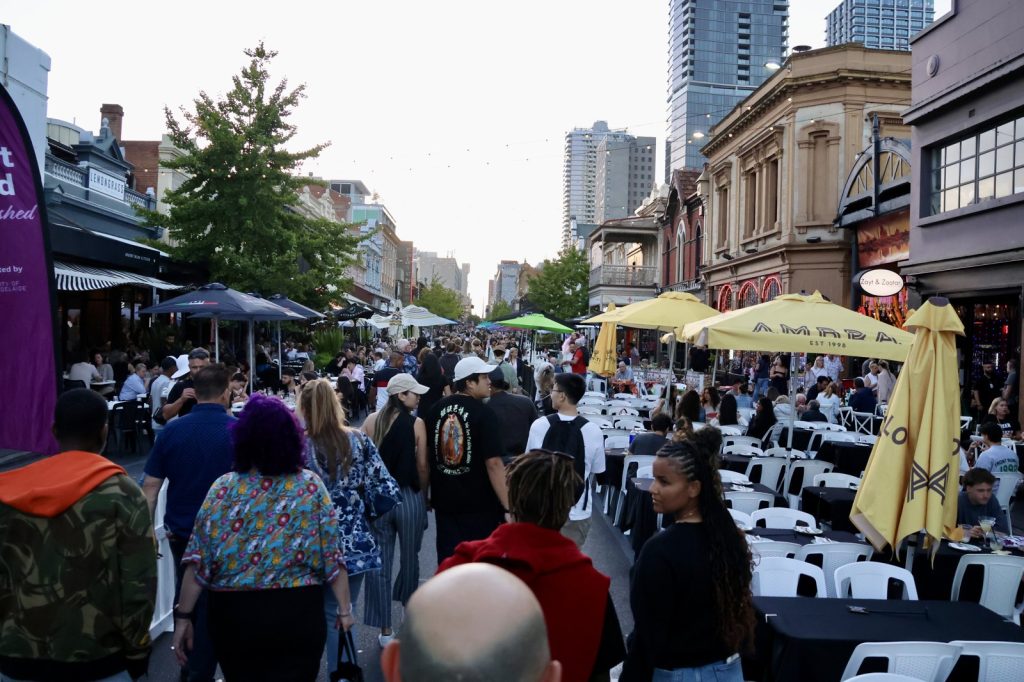
The arrival of Mutya’s and Le Mistral on Rundle Street will shift how people eat in Adelaide’s East End. Two new venues, each pulling from opposite sides of the globe, mean the precinct gets a sharper identity. It stops being just another strip of bars and cafes.
It becomes a place where a diner can eat Filipino food one night and southern French food the next, without leaving the block. That matters for the existing businesses.
Competition for tables gets real. A precinct that already draws crowds now has two more reasons for people to show up. Le Mistral co-founder Matthieu Mioche, raised in Aix-en-Provence, built his restaurant around the feel of a French neighbourhood bistro.
That is not a casual choice. It means the bar for atmosphere rises.
Other venues will have to match that level of intention or get left behind. Mioche met his business partner Christopher Richards while both worked at Luciano’s on the Marina in Glenelg. That detail tells you something about the local hospitality scene.
Experienced operators are breaking away from established spots to build their own concepts. The result is a denser, more varied dining landscape. Workers move between venues.
Ideas travel. A chef who learned in one kitchen opens a place that competes with the old boss.
That cycle keeps the whole area fresh. The investment behind Le Mistral is not small. Mioche did not open a simple wine bar.
He named the place after the powerful wind that sweeps through Provence. He designed it to make guests feel like they are settling in for a meal in the heart of that region.
That kind of specificity costs money. It also creates expectations. Customers who walk in will compare the experience to real French dining.
If the service or food falls short, the concept collapses. Mutya’s brings an elevated Filipino concept to the East End. That fills a gap.
Adelaide has plenty of Italian, Greek, and Vietnamese options. Filipino food at a higher price point is rarer.
If it works, it could draw customers who never considered the cuisine before. If it struggles, it might scare off other operators from trying something similar. The stakes are not just about one restaurant’s bottom line.
The East End already has a reputation for diversity. These two additions reinforce that.
But they also change the math. More options mean more foot traffic. More foot traffic means higher rents.
Landlords watch what succeeds. A successful French bistro and a successful Filipino spot could push property values up. That benefits owners.
It squeezes smaller, less established operators. Mioche’s background is worth watching.
Born in Guadeloupe, raised in Aix-en-Provence, he built a career across Brisbane, Darwin, and Adelaide before opening his own place. That path is common in hospitality. People move cities, learn the trade, then plant roots.
His story suggests Le Mistral is not a short-term bet. It is the result of years of work.
That usually means a higher chance of sticking around. The precinct now has two new anchors. Mutya’s and Le Mistral will pull different crowds.
One group comes for French wine and bistro food. Another comes for Filipino flavours. Over time, those groups overlap.
A diner who loves the wine list at Le Mistral might try the food at Mutya’s next week. Cross-pollination happens.
The East End becomes a destination not because of one restaurant, but because of the mix. What comes next is simple. Other restaurateurs will watch these openings.
If both succeed, expect more international concepts to appear. If one fails, the next operator will think twice.
The East End’s future depends on how these two venues perform. That is the real story. Not the menus or the decor.
The effect on the block.




